
Travel Planning
How to Avoid Crowds in Italy Without Missing Its Masterpieces
An approach to Italian cultural travel that begins with knowing where the art is, rather than simply knowing where the tourists aren't.
By Backstage Italy · · 35 min read
An approach to Italian cultural travel that begins with knowing where the art is, rather than simply knowing where the tourists aren't.
There is something slightly absurd about travelling thousands of kilometres to Florence, deciding that the Uffizi is too crowded, and spending the afternoon looking for somewhere that has not yet appeared on Instagram.
The Uffizi is crowded for a reason.
So is the Sistine Chapel.
So is the area around Piazza San Marco.
These places contain some of the most significant works of art and architecture in European history. Their popularity does not diminish their importance.
But Italy has a peculiar relationship with its cultural heritage.
While hundreds of people wait to see one celebrated painting, an equally interesting work by the same artist may be hanging in a church a few streets away.
A museum may be overwhelmed by visitors in one gallery while its other rooms receive remarkably little attention.
An entire city can become associated with a handful of monuments, leaving much of its artistic and architectural history outside the conventional tourist itinerary.
Understanding how to avoid crowds in Italy begins with recognising this distinction.
You do not necessarily need to go somewhere else.
Sometimes you need to look somewhere else.
How to Avoid Crowds in Italy: The Short Answer
The most effective approach combines five decisions:
- Travel outside the busiest periods whenever possible.
- Stay overnight in destinations that attract large numbers of day visitors.
- Reserve major cultural attractions at carefully selected times.
- Explore important artworks beyond the best-known museums.
- Organise the itinerary around cultural interests rather than a standard sightseeing list.
The objective is not to find an Italy without visitors.
It is to create enough space to appreciate the places you came to see.
| Instead of | Consider |
|---|---|
| Visiting Venice for the day | Spending three or four nights in the city |
| Visiting every famous museum in Florence | Combining the Uffizi with churches and sculpture collections |
| Seeing ancient Rome in one demanding day | Dividing the city's history across several visits |
| Visiting Italy only in July or August | Considering autumn, winter or early spring |
| Following the same route as every first-time visitor | Designing a journey around a particular cultural subject |
| Adding another crowded destination | Spending longer in the place you already know |
None of these approaches guarantees solitude.
They do, however, give you considerably more control over the experience.
Stop Confusing Popularity With Cultural Importance
Some of Italy's most significant artistic destinations attract relatively modest international attention compared with Rome, Florence and Venice.
This is not because they contain less important art.
It is because international tourism tends to concentrate around recognisable images.
Michelangelo's David.
The Colosseum.
The Rialto Bridge.
The leaning tower of Pisa.
These images are familiar even to people who have never visited Italy.
The frescoes of the Camera degli Sposi in Mantua are less recognisable to the general travelling public, but their importance within the history of Renaissance painting is considerable.
The mosaics of Ravenna are among the great achievements of early Christian and Byzantine art.
The Palazzo Ducale in Urbino offers an extraordinary introduction to Renaissance court culture.
None should be described merely as an alternative to somewhere more famous.
They deserve attention in their own right.
A culturally informed itinerary can change the way you distribute your time across Italy.
Instead of asking which places everyone else is visiting, ask what you would like to understand.
When Is the Best Time to Visit Italy to Avoid Crowds?
The assumption that there is a single quiet season in Italy is misleading.
Venice, Rome, Piedmont and the Amalfi Coast operate according to different calendars.
A month that is relatively quiet in one destination can be particularly busy in another.
January and February: for cities and museums
Outside major holidays and events, winter can be a particularly rewarding period for cultural travel.
Rome, Florence, Turin, Milan and Bologna offer substantial indoor cultural programmes.
The shorter days encourage a different rhythm: museums, historic interiors, cafés, exhibitions and restaurants.
You may have fewer hours of daylight, but there is no particular reason to need fourteen hours of sunshine when the principal purpose of the journey is looking at paintings.
Venice requires more careful consideration because Carnival can bring substantial visitor numbers.
The precise event dates should be checked before arranging a winter stay.
March and early April: before the main spring season
Early spring can be attractive for travellers interested in architecture, gardens and cultural history.
Weather conditions remain variable, and Easter can considerably affect demand and opening arrangements.
For a quieter cultural journey, consider dates away from major holiday weekends.
The advantage is not necessarily lower prices.
It is the possibility of experiencing cities before the principal spring travel period becomes fully established.
May and June: beautiful, but not particularly quiet
May is frequently described as the ideal month to visit Italy.
The problem is that a great many other people have received the same recommendation.
Florence, Venice, Rome and popular Tuscan destinations can experience substantial demand during late spring.
June also brings increasing activity to the lakes and coastal regions.
These months can still be excellent for travelling, but we would approach them through careful timing and accommodation selection rather than assume they represent a quiet season.
July and August: change the geography or change the rhythm
Summer is a demanding period for anyone who wants to combine major cultural sites with a relaxed pace.
The heat can make crowded public spaces particularly tiring.
Coastal destinations, islands, popular lakes and mountain resorts have their own seasonal demand.
Rather than attempting a conventional sightseeing itinerary in midsummer, consider beginning cultural visits earlier, returning to your accommodation during the hottest part of the day and leaving evenings for the city itself.
Alternatively, develop a journey around higher altitudes, countryside accommodation and a smaller number of urban destinations.
September: not necessarily shoulder season
September has become an exceptionally desirable period for travelling in Italy.
The weather can remain attractive, cultural institutions are active and many travellers prefer it to the hottest summer months.
As a result, some cities and countryside destinations remain busy.
A September holiday should be planned with the same attention to reservations as a spring journey.
October and November: particularly interesting for cultural travel
Later autumn can offer a different experience of Italy.
Museums, churches, architectural collections and regional restaurants become especially important as coastal holidays lose some of their seasonal appeal.
Piedmont's autumn food and wine calendar can attract substantial demand, so the region should not automatically be treated as a quiet alternative.
For Rome, Florence, Milan and other cultural cities, November can be particularly interesting outside major events.
| Period | Crowd considerations | Particularly suitable for |
|---|---|---|
| January–February | Often quieter outside holidays and events | Art, architecture, museums |
| March–April | Easter and spring demand require attention | Cities, gardens, cultural travel |
| May–June | Popular across many Italian destinations | Carefully organised city and countryside journeys |
| July–August | Summer demand, heat and coastal crowds | Mountains, selected rural stays, early cultural visits |
| September | Frequently busy despite the end of summer | Regional travel with advance planning |
| October–November | Often more manageable in cultural cities; selected regional events remain busy | Gastronomy, exhibitions, historic interiors |
| December | Demand varies around Christmas and New Year | Winter cultural journeys |
These are general seasonal observations, not measured predictions of visitor numbers.
For practical reservation timelines, read How Far in Advance Should You Plan a Trip to Italy?
The Importance of Staying Overnight
One of the simplest ways to experience Italy differently is to remain somewhere after the day visitors leave.
This is particularly evident in Venice.
But it also applies to places such as Siena, Orvieto, San Gimignano and many smaller Italian towns.
A day trip compresses your visit into the hours during which most other visitors are present.
An overnight stay gives you access to the beginning and end of the day.
The streets have a different character before shops open. Restaurants operate according to a different rhythm in the evening. The architecture becomes easier to appreciate without simultaneously navigating large groups.
There is also a practical advantage.
You do not need to complete every important visit within four or five hours.
You can return to a church later, spend more time in a museum or decide that lunch deserves the rest of the afternoon.
For this reason, we generally recommend spending at least three nights in Venice and two or three nights in smaller cultural destinations when the itinerary allows.
Read How Many Days Do You Really Need in Italy? for our approach to distributing time across an Italian journey.
How to Avoid Crowds in Florence Without Missing the Renaissance
Florence is one of the clearest examples of how international tourism can concentrate around a remarkably narrow set of cultural institutions.
The Uffizi and the Accademia are important museums.
But the Renaissance was not produced for museums.
It developed within churches, monasteries, workshops, merchant houses and public buildings.
Some of its most interesting works remain in those settings.
Visit the Uffizi with a particular purpose
We would not recommend avoiding the Uffizi simply because it is popular.
Its collections deserve attention.
But rather than attempting to see everything, decide what interests you.
Perhaps you want to understand the transition from late medieval painting to the Renaissance.
Perhaps your interest is Botticelli, the representation of the human figure or the relationship between Florentine patrons and artists.
Reserve a timed visit through the official booking system.
Consider an early admission or a later available slot, depending on the museum's opening arrangements and your preferred programme.
Neither guarantees quiet galleries.
Timed admission also does not eliminate every security or entry queue.
Official ticket information: Uffizi Galleries: tickets
A specialist guide can help structure the visit around a subject rather than a succession of famous paintings.
Santa Maria Novella
Masaccio's Holy Trinity is one of the works that fundamentally changed the representation of architectural space in Western painting.
It is not hanging in the Uffizi.
It belongs to the church of Santa Maria Novella.
The basilica also contains the Tornabuoni Chapel, decorated by Domenico Ghirlandaio and his workshop.
The frescoes provide an unusually interesting opportunity to examine the clothing, architecture and social world of Renaissance Florence within biblical narratives.
Spend time looking at the people in the paintings.
You begin to understand something about the city in which they were commissioned.
Santo Spirito
Brunelleschi's architectural language becomes particularly clear inside Santo Spirito.
The restrained interior offers an opportunity to understand Renaissance ideas about proportion and space without relying entirely on paintings.
The complex also contains a wooden crucifix attributed to the young Michelangelo.
The contrast with the monumental David is remarkable.
It introduces an entirely different aspect of the artist's work.
Check the visiting arrangements for the church and the spaces containing the sculpture.
Santa Felicita
Near Ponte Vecchio, Santa Felicita contains one of the most striking paintings of sixteenth-century Florence.
Pontormo's altarpiece in the Capponi Chapel is commonly known as the Deposition.
Its colours, composition and treatment of the human figure represent a departure from the visual order traditionally associated with the High Renaissance.
You may have walked past the church repeatedly without knowing what was inside.
That is one of the peculiar pleasures of Florence.
A major work of art can be part of an apparently ordinary walk through the city.
The Bargello
Anyone particularly interested in Renaissance sculpture should devote time to the Bargello.
Its collections include Donatello, Michelangelo, Verrocchio and Giambologna.
Donatello's bronze David alone offers enough material for a substantial discussion of sculpture, patronage and the relationship between Renaissance artists and classical antiquity.
The museum provides a useful context for Michelangelo's work beyond the single sculpture that dominates many visitors' understanding of Florentine art.
Official information: Musei del Bargello
Orsanmichele
Orsanmichele is one of the buildings that best explains the relationship between commerce, religion and public art in Florence.
Its history as a grain-market structure, subsequently transformed into a religious building, is inseparable from the role of the city's guilds.
The sculptural programme associated with the exterior niches brings together several major figures of early Renaissance art.
Many of the original statues are preserved inside the museum, while copies occupy exterior niches.
A visit makes it possible to understand sculpture as part of the city's economic and civic history rather than an isolated artistic achievement.
Palazzo Davanzati
For someone interested in interiors, domestic life and the material culture of historic Florence, Palazzo Davanzati deserves particular attention.
The building introduces the relationship between architecture and the everyday life of wealthy medieval and early Renaissance households.
It can provide context for the interiors represented in Florentine painting.
This is a different kind of museum visit.
Its interest lies partly in understanding how people inhabited the city.
A more interesting two-day Florence programme
| Day | Morning | Afternoon |
|---|---|---|
| First day | Focused Uffizi visit | Independent exploration and selected churches |
| Second day | Bargello and Orsanmichele | Santo Spirito, Santa Felicita and the Oltrarno |
The exact sequence should reflect actual opening hours, admission arrangements and the location of your accommodation.
The intention is to combine the celebrated museum with places that explain the world in which its works were created.
How to Avoid Crowds in Rome Without Missing Its History
Rome is frequently experienced through a handful of monumental images.
The Colosseum.
The Vatican.
The Trevi Fountain.
The Pantheon.
All deserve attention.
But they represent only a small part of a city whose historical layers extend across several millennia.
Trying to visit them all in one day can turn an extraordinary city into an exercise in transportation and waiting.
Separate ancient Rome and the Vatican
For most travellers, we would organise the Colosseum and Roman Forum on a different day from the Vatican Museums.
Each requires time, attention and considerable walking.
Combining them simply because both are described as essential attractions can make the experience unnecessarily demanding.
Use official reservation systems and select the available admission times that fit the rest of the day.
Official Colosseum information: Colosseum Archaeological Park: opening times and tickets
Official Vatican Museums information: Vatican Museums
A private guide does not necessarily provide special admission or bypass security procedures.
Centrale Montemartini
Centrale Montemartini presents classical sculpture inside a former electricity-generating station.
The relationship between Roman marble and industrial machinery produces one of the city's most distinctive museum interiors.
It is an excellent choice for travellers interested in ancient sculpture, industrial architecture or the history of museum presentation.
The collection offers a different visual experience from the conventional archaeological museum.
Official museum information: Musei in Comune Roma
Palazzo Massimo alle Terme
The archaeological collections of Palazzo Massimo provide an opportunity to understand Roman domestic decoration, portraiture, sculpture and painting.
For travellers particularly interested in ancient interiors, its frescoes and mosaics can be more relevant than spending another hour moving between outdoor archaeological monuments.
The relationship between the objects and the buildings in which they originally existed deserves attention.
Check the current museum arrangements and galleries open to visitors.
Santa Prassede
Rome's early medieval history receives considerably less attention than its ancient and Baroque architecture.
The mosaics of Santa Prassede introduce another aspect of the city's artistic development.
The Chapel of San Zeno is particularly significant for its mosaic decoration.
Its scale encourages a more intimate kind of looking than the monumental interiors associated with the city's principal tourist routes.
As with other active places of worship, visiting arrangements should respect religious services.
San Luigi dei Francesi
For those interested in Caravaggio, some of the artist's most celebrated works remain in the Roman churches for which they were commissioned.
The Contarelli Chapel in San Luigi dei Francesi contains his paintings relating to Saint Matthew.
Seeing them within the chapel offers a different understanding of their composition, lighting and religious purpose.
The church can itself attract substantial visitor numbers.
We would consider it an important cultural visit, not a guaranteed quiet alternative.
Palazzo Barberini
Palazzo Barberini offers another way to approach Rome's Baroque culture.
Its architecture and painting collection allow visitors to consider the relationship between artistic patronage, aristocratic life and the political ambitions of seventeenth-century Rome.
The palace itself is part of the experience.
Looking at a painting inside a building conceived during the same cultural period can create associations that are harder to establish in a conventional museum setting.
A more considered approach to Rome
Rather than trying to see every major attraction, organise several days around historical periods.
One day for ancient Rome.
Another for the development of Christian Rome.
A third for Renaissance and Baroque patronage.
This creates a more coherent cultural experience.
It also distributes the visits across a wider range of places.
How to Avoid Crowds in Venice Without Avoiding Venice
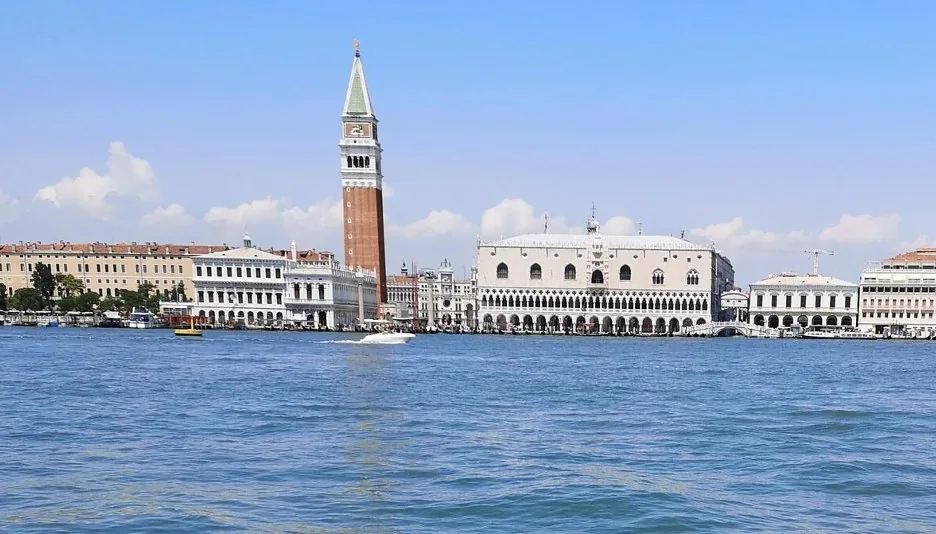
Venice's tourism problem is particularly visible because so much pedestrian movement is concentrated along a relatively small number of routes.
The areas around Rialto and Piazza San Marco can become extremely busy.
Yet the city has several other neighbourhoods with their own architecture, institutions, histories and residential life.
The difference between them can become apparent within a relatively short walk.
Begin with Piazza San Marco, but do not end there
The Basilica and Doge's Palace are essential to understanding Venice's political and religious history.
We would recommend visiting them with sufficient time and a particular purpose.
Check official admission arrangements and reserve appropriate tickets in advance.
Then allow the rest of the journey to extend beyond the city's principal ceremonial centre.
Venice was a republic built around trade, religious institutions, neighbourhoods, craft production and complex relationships with the surrounding lagoon.
Much of that history is visible elsewhere.
Scuola Grande di San Rocco
Tintoretto's paintings at the Scuola Grande di San Rocco represent one of the most substantial artistic programmes in Venice.
The relationship between the paintings and the architecture of the building is fundamental to the experience.
Rather than seeing a single Tintoretto in isolation, you encounter a programme developed across walls, ceilings and individual rooms.
For travellers interested in Venetian painting, the Scuola deserves as much attention as many better-known attractions.
Official information: Scuola Grande di San Rocco
Basilica dei Frari
The Frari brings together painting, sculpture, architecture and the history of Venetian patronage.
Titian's Assumption of the Virgin and Pesaro Madonna are particularly significant.
Their presence within the church allows the viewer to understand their original scale and relationship to the surrounding space.
The basilica also contains important funerary monuments and works by other artists.
It is a substantial cultural destination rather than a brief alternative stop.
Palazzo Mocenigo
Venice's commercial history was inseparable from the production and circulation of luxury objects.
Palazzo Mocenigo introduces this aspect of the city through historic interiors and collections associated with costume, textiles and perfume.
For travellers interested in decorative arts, the museum can provide a particularly rewarding direction.
It also helps explain an aspect of Venetian wealth that is not immediately apparent from the city's principal monuments.
Querini Stampalia
The Fondazione Querini Stampalia offers a different encounter with Venetian cultural history.
The historic residence and Carlo Scarpa's architectural interventions create a relationship between inherited interiors and twentieth-century design.
For someone interested in architecture, this combination can become a principal reason to visit.
It also demonstrates why Venice should not be understood exclusively through medieval and Renaissance buildings.
Cannaregio, Dorsoduro and Castello
These neighbourhoods can provide different experiences from the principal tourist routes, although individual streets and attractions may still become busy.
Cannaregio introduces important aspects of residential and Jewish Venetian history.
Dorsoduro combines cultural institutions, churches, workshops and residential streets.
Castello extends towards parts of the city that remain closely connected with everyday Venetian life.
The objective is not to treat residential neighbourhoods as attractions to be consumed.
It is to recognise that Venice remains a living city.
Walk respectfully, avoid obstructing narrow passages and remember that bridges and doorways belong to the practical life of the people who use them.
Stay in Venice rather than commuting into it
For culturally interested travellers, we generally prefer accommodation within the historic island city when practical and appropriate to the budget.
It allows mornings and evenings to become part of the visit.
A morning walk through Venice before the principal day-trip movements develop can reveal architectural details that are difficult to appreciate later.
An evening after dinner can be equally rewarding.
The city should not need to be experienced entirely between the arrival and departure times of a regional train.
Venice access rules in 2027
Venice has announced the continuation of its visitor access fee system in 2027.
Applicable dates, procedures and exemptions should be checked through the official municipal portal before travelling.
The rules may differ according to accommodation arrangements and the category of visitor.
Do not assume that staying overnight automatically removes every administrative requirement.
Official visitor information: Venezia Unica: access fee
Milan: An Italian City Beyond Its Two Famous Images
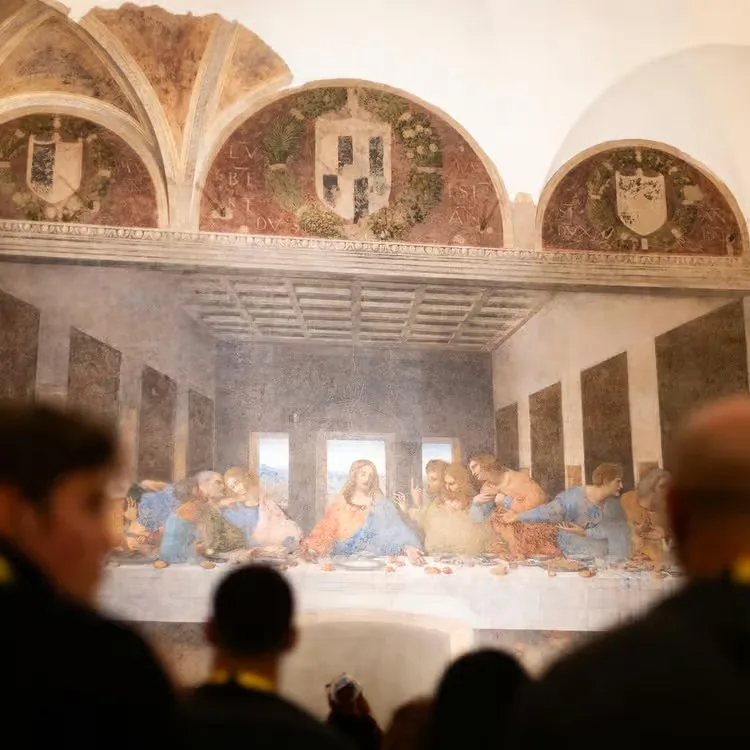
Many first-time visitors associate Milan primarily with the cathedral and Leonardo's Last Supper.
Both are significant.
Neither adequately represents the city's cultural history.
Milan is particularly interesting for travellers drawn to interiors, private collecting, contemporary design and twentieth-century architecture.
The city's house museums
Milan's historic residences offer several different perspectives on collecting and domestic life.
Villa Necchi Campiglio provides an opportunity to examine twentieth-century architecture, interiors and the lifestyle of Milan's industrial bourgeoisie.
The Poldi Pezzoli and Bagatti Valsecchi museums present different relationships between private collecting, historic decorative arts and the conception of the home.
These institutions can form the basis of a cultural journey rather than serve as occasional additions to a conventional sightseeing programme.
Pinacoteca Ambrosiana
The Ambrosiana provides an important encounter with Milanese cultural history, painting, drawing and the development of scholarly collections.
For someone interested in Leonardo, it can also provide valuable context for the artist's relationship with the city.
Check which works and manuscripts are currently displayed.
A different kind of Milan itinerary
Rather than arranging a single introductory tour followed by a train to Florence, consider spending three nights in Milan.
One day might focus on historic collecting.
Another could explore twentieth-century architecture.
A third could introduce contemporary Italian design.
Such a programme depends less on the availability of one particular attraction.
It also offers a more substantial understanding of the city.
Italy's Great Artistic Destinations Beyond the Famous Three
Rome, Florence and Venice dominate many first-time itineraries.
But several other Italian cities contain cultural collections and architectural programmes that justify a journey of their own.
They may offer a different relationship between visitor numbers and cultural importance, although no destination should be treated as permanently uncrowded.
Ravenna: Byzantine mosaics
Ravenna contains an extraordinary concentration of early Christian and Byzantine mosaic art.
The Basilica of San Vitale, Mausoleum of Galla Placidia and Basilica of Sant'Apollinare Nuovo introduce different aspects of the city's artistic and religious history.
Their significance extends far beyond the conventional history of Italian painting.
The mosaics demonstrate the relationship between political authority, theology, architecture and artistic production in late antiquity.
For travellers interested in the artistic relationships between Italy and the eastern Mediterranean, Ravenna can become the central destination of a journey.
We would consider spending two or three nights rather than treating the city as a brief stop between larger destinations.
Official visitor information: Ravenna Tourism
Mantua: Renaissance court culture
Mantua offers an extraordinary introduction to the relationship between art and political power at an Italian Renaissance court.
The Gonzaga family's artistic patronage transformed the city and its palaces.
Andrea Mantegna's Camera degli Sposi at the Palazzo Ducale and Giulio Romano's architectural and decorative programme at Palazzo Te are particularly important.
These works belong to different moments in the development of Renaissance art.
Seeing them within the same city allows the visitor to examine the changing ambitions of courtly patronage.
Specific rooms may require separate or timed reservations.
Plan the visits accordingly.
Two or three nights can provide a substantial cultural introduction.
Urbino: the architecture of humanism
Urbino is one of the most interesting places in Italy for understanding Renaissance court culture and intellectual history.
The Palazzo Ducale is inseparable from the ambitions of Federico da Montefeltro.
Its architecture, interiors and collections provide a context for thinking about humanism, scholarship, political authority and artistic patronage.
The Galleria Nazionale delle Marche includes important works by artists associated with the development of Italian Renaissance painting.
For travellers interested in Piero della Francesca, Urbino can form part of a wider journey through central Italy.
The town should not be reduced to a short photographic stop.
Arezzo: Piero della Francesca
Arezzo is particularly important for anyone interested in Renaissance painting.
Piero della Francesca's fresco cycle of the Legend of the True Cross in the Basilica of San Francesco offers a substantial encounter with the artist's treatment of space, colour and narrative.
The experience deserves time and preparation.
Reservations and admission arrangements should be checked in advance.
Rather than make Arezzo one of several rushed Tuscan excursions, consider using it as a cultural focus in its own right.
Parma: Correggio and the painted interior
Parma is frequently associated with food.
Its artistic heritage deserves equal attention.
Correggio's work in the cathedral and the city's religious buildings introduces a particularly important development in the representation of illusionistic space.
The city's architecture, theatre traditions and collections provide further reasons to remain for several days.
Parma can be combined with a journey through Emilia-Romagna without treating gastronomy and cultural history as separate activities.
Turin: collections, architecture and historic interiors
Turin provides an entirely different urban experience from the more familiar Renaissance cities.
Its royal residences, grand squares, historic cafés and cultural institutions reflect the history of the House of Savoy and the development of modern Italy.
The Museo Egizio is one of the city's principal cultural institutions and can itself attract substantial demand.
But the city's interests extend considerably beyond it.
Architecture, decorative arts, automotive history, publishing and contemporary art can each become the basis of a Turin itinerary.
For a traveller who has already visited Florence and Venice, Turin may provide a particularly interesting next encounter with Italy.
Which Italian Cities Should You Visit for Different Artistic Interests?
| If you are interested in | Consider |
|---|---|
| Byzantine and early Christian art | Ravenna, Rome, Venice |
| Renaissance painting | Florence, Arezzo, Urbino |
| Renaissance sculpture | Florence, Padua, Rome |
| Court culture and historic interiors | Mantua, Urbino, Turin |
| Baroque painting and architecture | Rome, Naples, Turin |
| Venetian painting | Venice, including churches and confraternity buildings |
| Twentieth-century architecture | Milan, Turin, selected areas of Rome |
| Decorative arts and collecting | Milan, Florence, Venice |
| Illusionistic ceiling painting | Parma, Rome, Mantua |
| Medieval religious architecture | Assisi, Orvieto, Spoleto, Pisa |
This is not a ranking of quieter destinations.
It is a way of organising travel according to cultural interests rather than the relative popularity of individual cities.
The result may naturally distribute your time across places that attract different visitor patterns.
The most interesting alternative to a crowded museum is often a better understanding of what you wanted to see there.
Can Private Tours Help You Avoid Crowds?
A private tour can improve the experience of a busy cultural institution.
But it is important to understand what it can and cannot do.
During ordinary opening hours, a private guide generally shares the museum or historic site with other visitors.
The advantage is not that the other visitors disappear.
It is that the visit can be organised differently.
A specialist may know how to structure a route around the traveller's interests, when it is sensible to move to another room and which less frequently discussed works provide useful context.
The programme can respond to the visitor rather than follow a fixed group itinerary.
Private guiding is not the same as private access
There are several distinct arrangements:
| Arrangement | What it generally means |
|---|---|
| Private guided tour | Your own guide during ordinary visiting arrangements |
| Small-group tour | A guided visit shared with a limited number of participants |
| Timed admission | Entry reserved for a specified period |
| After-hours visit | Admission outside ordinary public opening hours, where officially available |
| Exclusive-use visit | Access reserved for a particular group under specific authorised arrangements |
These services should not be described interchangeably.
A private guide does not automatically provide private museum access.
Timed admission does not guarantee empty galleries.
After-hours and exclusive-use arrangements depend on the institution, permissions, availability and the nature of the proposed visit.
Before paying for a premium experience, establish exactly what the arrangement includes.
For more information about professional cultural planning and destination expertise, read Italy Travel Designer vs Travel Agent: What's the Difference?
Are Early Morning Museum Visits Always Better?
Not necessarily.
The first available admission has become a popular recommendation among travellers hoping to avoid crowds.
This can make some early sessions particularly desirable.
An early visit may still be appropriate, especially if it suits your energy levels and the rest of the itinerary.
But there are other considerations.
Some museums become more manageable later in the afternoon. Certain institutions offer extended evening openings during particular seasons or exhibitions.
Others have specific patterns of group admission.
These arrangements differ across institutions and may change.
We would consider:
- The actual opening hours for the intended date.
- Timed admission availability.
- Special exhibitions and events.
- Weekly closure patterns.
- Public holidays and free-admission days.
- The expected length of the visit.
- Whether a later admission leaves enough time before closing.
There is no universally quiet museum hour.
A carefully selected visit is more useful than a generic recommendation to arrive early.
Do Weekdays Make Italy Less Crowded?
Sometimes.
Weekdays outside major holidays can be a sensible starting point for visiting popular attractions.
However, local events, school groups, institutional closures and travel patterns complicate the comparison.
A Tuesday immediately after a museum's weekly closure may not necessarily be quieter than another available day.
A free-admission Sunday may attract substantial demand.
A weekday during a major design exhibition in Milan can be busier than an ordinary weekend.
We would use weekdays as one consideration rather than an absolute rule.
The specific cultural calendar matters more than the name of the day.
Avoid Concentrating Every Important Visit in the Same Day
Crowds become particularly exhausting when they are combined with a demanding schedule.
A morning in a busy museum may be manageable.
A second crowded attraction in the afternoon, followed by another timed admission and a dinner reservation across the city, creates a different experience.
The fatigue comes partly from the number of people and partly from the lack of control over your time.
We prefer to give each day one principal cultural purpose.
For example:
- A specialist visit to the Uffizi followed by an afternoon in Florentine churches.
- An introduction to ancient Rome followed by lunch and independent exploration.
- Several hours studying Tintoretto followed by an evening walk through Venice.
- A morning examining historic interiors in Turin followed by time in the city's cafés.
The absence of a demanding afternoon programme makes the important morning visit considerably easier to enjoy.
This is particularly valuable in summer, when heat and visitor numbers can affect the entire rhythm of a cultural day.
How to Design an Italy Itinerary With Fewer Crowds
The following examples illustrate how major cultural destinations can be combined with places that offer different experiences of Italian art and architecture.
These are illustrative itineraries, not available travel packages or guarantees of quieter conditions.
Seven days: Venetian painting and Byzantine art
| Destination | Nights | Cultural focus |
|---|---|---|
| Venice | 4 | Venetian painting, churches and maritime history |
| Ravenna | 2 | Early Christian architecture and mosaics |
| Total | 6 |
The journey allows time for Venice beyond its principal landmarks.
Ravenna introduces an important cultural relationship with the eastern Mediterranean.
The sequence creates connections between the two cities rather than simply adding another destination.
Transportation and transfer arrangements should be checked according to the chosen accommodation and travel dates.
Ten days: a journey through Renaissance Italy
| Destination | Nights | Cultural focus |
|---|---|---|
| Florence | 4 | Painting, sculpture and religious architecture |
| Arezzo | 2 | Piero della Francesca |
| Urbino | 3 | Renaissance court culture and architecture |
| Total | 9 |
This is a particularly interesting route for travellers who want to understand Renaissance art beyond the conventional Florence museum itinerary.
The geographical arrangement benefits from carefully planned road transportation, particularly between Arezzo and Urbino.
Ten days: Italian collecting, design and courtly culture
| Destination | Nights | Cultural focus |
|---|---|---|
| Milan | 3 | Historic collections and twentieth-century design |
| Turin | 3 | Architecture, historic interiors and royal patronage |
| Mantua | 3 | Renaissance court culture |
| Total | 9 |
This itinerary provides three very different perspectives on the relationship between art, architecture, private collecting and political authority.
It can be particularly rewarding for someone who has already visited Italy's principal Renaissance cities.
Fourteen days: a broader cultural journey
| Destination | Nights |
|---|---|
| Venice | 3 |
| Ravenna | 2 |
| Florence | 3 |
| Arezzo | 2 |
| Rome | 3 |
| Total | 13 |
This route retains several of Italy's most celebrated artistic destinations while introducing additional cultural perspectives.
Some transfers may require railway connections or private transportation.
The route should be refined according to actual schedules, museum opening arrangements and arrival or departure airports.
For a complete approach to developing a private itinerary, read How to Plan a Luxury Trip to Italy: An Insider's Guide.
What About the Italian Coast and Countryside?
Crowd avoidance is not limited to museums.
The Amalfi Coast, Lake Como, Capri and Cinque Terre can experience substantial seasonal demand.
But replacing every famous coastal destination with a supposedly undiscovered village creates its own problems.
Small towns may have limited infrastructure. A place receiving fewer international visitors may still be busy with domestic tourism.
The more useful question is whether the destination suits the kind of holiday you want.
If your priorities are landscape, architecture, food and several quiet days at a beautiful property, consider the relationship between accommodation and geography.
A countryside estate in Umbria might be more appropriate than another expensive coastal hotel.
Lake Maggiore may be interesting for someone drawn to historic villas and gardens.
A longer stay in Cilento may suit someone who wants a Mediterranean journey with archaeological interests.
These places should be chosen for their particular qualities.
Not merely because they are less photographed.
Can Spending More Help You Avoid Crowds in Italy?
A larger travel budget can provide greater control over transportation, accommodation and certain individually arranged experiences.
It may allow you to stay in Venice rather than visit for the day.
It may make it possible to arrange a specialist guide for a particular museum visit.
It may provide access to officially available after-hours arrangements or private cultural appointments.
But there is no guaranteed relationship between expenditure and visitor numbers.
A €2,000-a-night hotel does not make the Uffizi quieter.
A private driver cannot eliminate traffic on the Amalfi Coast.
An expensive guided tour does not necessarily provide exclusive access to a historic building.
Often, the most effective way to improve the experience is to spend the same budget differently.
Stay longer.
Choose another season.
Reduce the number of transfers.
Arrange one excellent specialist visit instead of several general tours.
For examples of how different travel budgets can support different kinds of Italian journeys, read What €10,000, €20,000 and €50,000 Can Buy You in Italy.
Travel Without Creating Another Tourist Problem
There is something contradictory about publishing lists of supposedly undiscovered places and then encouraging thousands of people to visit them.
Smaller Italian destinations are not simply alternative spaces into which tourism can expand indefinitely.
They are communities with their own needs, housing, infrastructure, religious institutions and working lives.
Travelling more thoughtfully means recognising these limits.
When visiting churches, respect religious services, dress requirements and photography restrictions.
When walking through residential areas, remember that narrow streets and doorways are used by people who live there.
When visiting workshops, understand that the business exists independently of its value as a visitor experience.
When exploring smaller towns, use local services and businesses where appropriate rather than arrive solely for a photograph.
An interesting encounter with Italy does not require treating every beautiful place as a tourism product.
Our Approach at Backstage Italy
Our work in Italian cultural travel began in 2016.
One of the things that experience has taught us is that the quality of a cultural journey depends considerably more on knowledge than on the number of places visited.
We would rather spend a morning understanding the relationship between Ghirlandaio's paintings and Florentine society than arrange a succession of museum reservations simply because they are available.
We would rather devote several days to Venice and Ravenna than spend a week trying to visit every city in northern Italy.
And we would rather explain why a particular church or collection matters than promise that nobody else will be there.
Crowds are a practical consideration.
They should influence the dates, timing and structure of an itinerary.
They should not determine which works of art are worth seeing.
The purpose of our cultural background is to help travellers make more interesting decisions about Italy.
Sometimes that means visiting an internationally celebrated masterpiece.
Sometimes it means recognising the significance of a building you would otherwise have walked past.
Often, it means doing both.
Interested in experiencing Italy through its art, architecture and cultural history without spending every day following the same tourist routes? Discuss a private cultural journey with Backstage Italy.
For families, see our notes on cultural experiences designed for families.
We have also written about where to go on your second trip to Italy.
Frequently Asked Questions
What is the best way to avoid crowds in Italy?
Travel outside major holiday periods when possible, stay overnight in popular day-trip destinations, reserve important attractions in advance and build your itinerary around a wider range of cultural institutions.
What are the least crowded months to visit Italy?
January, February and November can offer quieter conditions in many cultural cities outside major holidays and events. Visitor patterns differ by region, so check local festivals, exhibitions and seasonal operating arrangements.
Is September crowded in Italy?
September can be busy, particularly in Rome, Florence, Venice and popular countryside destinations. It should not automatically be considered a quiet shoulder-season month.
How can I avoid crowds in Florence?
Combine important museums such as the Uffizi with churches, sculpture collections and historic interiors. Consider the Bargello, Orsanmichele, Santa Maria Novella and Palazzo Davanzati, subject to their actual opening and admission arrangements.
How can I avoid crowds in Venice?
Stay overnight, explore the city outside the principal day-trip hours and distribute cultural visits across different neighbourhoods. Reserve major attractions in advance and allow time for independent exploration.
How can I avoid crowds in Rome?
Visit the Vatican Museums and ancient Rome on separate days. Consider additional cultural institutions such as Centrale Montemartini, Palazzo Massimo and Palazzo Barberini. Plan according to current admission arrangements rather than assume any museum will be empty.
Which Italian art cities are less visited than Florence?
Ravenna, Mantua, Urbino, Arezzo and Parma are important cultural destinations that are generally less prominent in conventional international first-time itineraries. Their visitor numbers vary according to season, events and individual attractions.
Are private tours in Italy less crowded?
A private guide allows the visit to be organised around your interests and preferred pace. However, ordinary private tours usually take place alongside other visitors. Exclusive access is a separate arrangement.
Can you visit the Uffizi without crowds?
There is no guaranteed crowd-free time during ordinary public opening hours. Timed admission, carefully selected visiting periods and a focused programme can make the experience more manageable.
Is winter a good time for an art trip to Italy?
Yes. Winter can be particularly rewarding for museums, churches, historic interiors and exhibitions. Check holiday closures, local events and seasonal opening hours.
Should I avoid Italy in August?
Not necessarily. August requires a different approach, particularly in popular coastal destinations and during intensive city sightseeing. Consider fewer accommodation changes, appropriate countryside or mountain stays and cultural visits during suitable hours.
Can a luxury travel planner arrange private museum visits?
A travel planner may be able to coordinate officially available individual or after-hours arrangements, depending on the institution and supplier. Such access is never automatic and must be confirmed separately.
How many days should I spend in Italy to avoid rushing?
Ten to fourteen days provide a useful starting point for a multi-destination journey. Fewer accommodation bases and longer individual stays can reduce the need to visit important attractions during inconvenient or particularly busy periods.
Look at Italy Differently
There are paintings in Florence that have remained within the buildings for which they were created for hundreds of years.
There are Venetian churches whose interiors explain the city's artistic history more effectively than another hour spent around its most recognisable square.
There are entire Italian towns whose architecture belongs to some of the most significant developments in European cultural history, yet rarely appears in a conventional first-time itinerary.
You do not need to avoid Italy's masterpieces.
You need enough time, knowledge and curiosity to recognise that there are considerably more of them than the familiar list suggests.
Sometimes the best way to escape a crowd is not to leave the city.
It is to understand the city a little better.
Editorial note: Recommendations concerning quieter periods are general observations rather than guarantees of visitor numbers. Museum displays, conservation work, religious services, admission procedures and opening arrangements can change. Always consult official institutions before visiting. The itineraries are illustrative cultural recommendations.
There is more to Italy than the places everyone knows.
Our background in Italian art, architecture and cultural history informs the private journeys we design. We can help you experience celebrated masterpieces alongside the places, collections and stories that give them context.
Design your cultural journeyMore from the journal
Travel Planning
How to Plan a Luxury Trip to Italy: An Insider's Guide
How we turn your interests into a day-by-day plan for Italy.
Travel Planning
How Many Days Do You Really Need in Italy?
Why a week can be enough, why two weeks are considerably better, and why the number of places you visit is a rather poor measure of a holiday.
Travel Planning
How Far in Advance Should You Plan a Trip to Italy?
An Italian travel booking calendar, from the hotels worth reserving a year ahead to the museum tickets you cannot buy until a month before departure.