
Travel Planning
How Far in Advance Should You Plan a Trip to Italy?
An Italian travel booking calendar, from the hotels worth reserving a year ahead to the museum tickets you cannot buy until a month before departure.
By Backstage Italy · · 27 min read

An Italian travel booking calendar, from the hotels worth reserving a year ahead to the museum tickets you cannot buy until a month before departure.
Every year, somewhere around March, people begin looking for a particular hotel on the Amalfi Coast for July.
They have found photographs of the terrace, read several articles about the property and decided that this is where they would like to spend their summer holiday.
The hotel may still have rooms. The room they actually want, however, is another matter.
At roughly the same time, someone planning a visit to Rome in September is trying to buy Colosseum tickets that have not yet been released.
These two travellers have opposite problems.
One has started too late. The other is trying to confirm something too early.
Knowing when to book an Italy trip means understanding that different parts of the journey operate according to entirely different calendars.
Hotels, museum admissions, private guides, opera performances and trains do not become available at the same time.
The useful skill is knowing which reservations determine the rest of the itinerary and which can wait.
When Should You Start Planning a Trip to Italy?
For a well-designed private trip to Italy, six to nine months before departure is a sensible starting point.
If you are travelling during summer, considering a particularly desirable hotel, organising a multigenerational family holiday or attending a major cultural event, beginning nine to twelve months ahead can be worthwhile.
A straightforward city break outside major holiday periods can often be arranged two or three months in advance, sometimes considerably closer to departure.
The following table provides a practical framework.
| Type of Italy trip | Recommended planning lead time |
|---|---|
| Short city break | 1–3 months |
| First trip to Rome, Florence and Venice | 4–6 months |
| Luxury multi-region itinerary | 6–9 months |
| Lake Como or Amalfi Coast in summer | 9–12 months |
| Private villa during peak season | 9–15 months |
| Multigenerational family holiday | 6–12 months |
| Major celebration or private event | 9–18 months |
| Autumn food and wine journey | 4–8 months |
| Winter cultural city break | 2–4 months |
| Christmas or New Year at a popular destination | 6–9 months |
These are our recommended planning windows, not mandatory reservation deadlines.
Availability depends on the property, region, dates, group size and particular services required.
You can organise an excellent trip to Italy at relatively short notice. You simply need to accept that some choices may no longer be available.
Italy Booking Timeline: What to Reserve and When
| Reservation | Recommended time to start looking |
|---|---|
| Landmark luxury hotels | 6–12 months ahead |
| Peak-season coastal hotels | 9–12 months ahead |
| Private villas | 9–15 months ahead |
| International flights | 4–9 months ahead |
| Private travel designer | 6–12 months ahead |
| Specialist cultural guides | 3–6 months ahead |
| Private drivers | 2–4 months ahead |
| Private boats in popular destinations | 3–6 months ahead |
| Opera and major performances | According to the official sales calendar |
| Leonardo's Last Supper | According to quarterly ticket releases |
| Colosseum | 30 days before the visit, under current rules |
| Uffizi Galleries | As soon as preferred dates are available |
| Vatican Museums | As soon as preferred dates are available |
| High-speed trains | Usually 1–3 months ahead, or earlier for important journeys |
| Sought-after restaurants | When the restaurant opens reservations |
| Ordinary neighbourhood restaurants | Several days to a few weeks ahead |
| Final logistics and reconfirmations | 1–2 weeks before departure |
Some reservations can be made considerably earlier than these suggested windows. Others cannot be confirmed until the supplier releases its inventory.
Starting research and making a binding reservation are two different things.
Nine to Twelve Months Before Italy: Reserve the Things That Shape the Journey
The earliest stage of planning should concentrate on arrangements that are difficult to replace.
Usually, this means accommodation.
It can also mean a private villa, an important family celebration, an opera performance or another experience that explains why you are travelling on particular dates.
Hotels with very few rooms
Some of Italy's most interesting hotels are remarkably small.
A property with twelve rooms cannot accommodate additional guests simply because demand increases.
Even when a hotel has availability, it may have only one or two rooms with the particular view, terrace or configuration you want.
This matters considerably in places such as Lake Como, Capri and the Amalfi Coast.
A room overlooking an internal courtyard may technically belong to the same hotel as a suite with a magnificent terrace above the sea. The two stays can nevertheless feel entirely different.
If a particular room is central to your idea of the holiday, begin early.
The same principle applies to connecting rooms for families, ground-floor accommodation for travellers with mobility requirements and villas with suitable bedroom arrangements.
Private villas
Villa planning involves rather more than finding a beautiful property.
Families need to consider bedroom configurations, accessibility, pool safety, staffing, distances to restaurants and whether the location requires several cars.
Some properties impose minimum stays or restrict arrival and departure days during peak periods.
If several families are travelling together, the villa may determine everyone's dates.
For a July or August stay, we would begin researching suitable properties during the preceding autumn.
Before paying a deposit, establish the full cost of the arrangement, including any additional staffing, housekeeping, utilities, deposits and local taxes.
Special occasions
A significant birthday, anniversary or family gathering introduces another kind of limitation.
The date may be fixed. Several people may need to travel from different countries. Restaurants, accommodation and transportation need to work for the group as a whole.
A private dinner for twelve people can be relatively straightforward.
A celebration involving a historic venue, accommodation for several generations, live music, transportation and individually arranged experiences is a more substantial project.
Begin planning according to the complexity of the occasion rather than simply counting the number of travel days.
Six to Nine Months Before Italy: Establish the Route
Once you have identified the essential dates and accommodation requirements, decide how the journey should fit together, including deciding how many days to spend in Italy.
This is the point at which a private travel designer can be particularly useful.
It is considerably easier to improve an itinerary before the hotels have been booked than afterwards.
Imagine that you have reserved five nights on Lake Como, three nights in Venice and four nights in Positano.
Those may all be wonderful destinations.
But if the reservations are non-refundable, the opportunity to improve the route has already become limited.
At this stage, we would normally consider:
- Arrival and departure airports.
- The number of accommodation bases.
- Travel distances between destinations.
- Seasonal transportation.
- Which hotels require early commitment.
- Cultural experiences that may affect the itinerary.
- The overall budget.
- The amount of private assistance required.
For our complete approach to geographical planning, accommodation and daily itineraries, read How to Plan a Luxury Trip to Italy: An Insider's Guide.
When should you book flights to Italy?
For long-haul travel, beginning to compare flights four to nine months ahead is a reasonable starting point.
Travellers visiting Italy during school holidays or major events, or requiring particular premium-cabin seats, may benefit from beginning earlier.
There is no universal date on which international flights to Italy become cheapest.
Airline schedules, fare availability, departure cities and demand differ substantially.
Before booking, consider whether returning from a different Italian airport would make the itinerary easier.
A journey beginning in Venice and ending in Rome does not necessarily need to include a return journey to Venice simply because you initially searched for a round-trip flight.
Sometimes a more expensive open-jaw ticket can reduce the overall cost and inconvenience of the trip.
Do not confirm flights solely because a particular hotel is available. Make sure the route as a whole is workable.
Three to Six Months Before Italy: Arrange the People You Want to Meet
There is an important difference between booking a private tour and booking a particular person.
Italy has many professional guides.
But if you want someone with a particular knowledge of Renaissance sculpture, historic textiles, Venetian architecture or modern Italian design, your options become considerably narrower.
The same applies to craftspeople, specialist food experiences and individually arranged visits.
Private cultural guides
For spring, summer and early autumn travel, we would begin discussing important cultural visits several months ahead.
This is particularly relevant in Rome, Florence and Venice, where demand for experienced guides can be substantial.
If the subject matters more than the destination, earlier planning becomes even more useful.
A traveller interested in the history of Venetian trade may need someone whose expertise is different from that of a guide introducing Venice to a first-time visitor.
A family travelling with children may require a completely different approach to the same museum.
Reserve the person whose knowledge and way of working suit the assignment.
The museum ticket can follow when its official booking window opens. (See also planning cultural visits around crowds.)
Artisan workshops and private cultural arrangements
A workshop is a working business before it is a place for travellers to visit.
A textile producer may have commercial commitments. A glassmaker may be working on a particular commission. An independent artist may be preparing an exhibition.
Appointments need to fit around their actual work.
For this reason, it can be useful to begin discussions well before departure, particularly if the experience is an important part of the itinerary.
A responsible travel planner will establish whether a visit is possible before presenting it as a confirmed arrangement.
Private boats
For Lake Como, Capri and the Amalfi Coast, selected private boat arrangements can be worth discussing several months ahead during popular travel periods.
The available vessels, routes, crew arrangements and prices depend on the season.
Before booking, clarify what is included, whether the vessel suits the group and what happens if weather conditions prevent departure.
A particular boat may require advance commitment.
The exact route may still need to remain flexible.
Private drivers
For countryside journeys in Tuscany, Piedmont, Umbria or Puglia, private drivers are often worth arranging two to four months ahead.
Earlier planning may be helpful for large groups, extended multi-day itineraries or travel during particularly busy periods.
A straightforward airport transfer can frequently be organised closer to departure.
The distinction is whether you require a specific vehicle and driver for several connected arrangements or simply transportation from one address to another. It is also worth knowing when private drivers are preferable to trains.
When to Book Museum Tickets in Italy
This is where many travellers become unnecessarily confused.
Some museums release tickets months in advance. Others operate much shorter booking windows.
A visit can be planned long before the actual admission ticket becomes available.
There is no need to postpone an entire itinerary because one museum has not yet opened reservations.
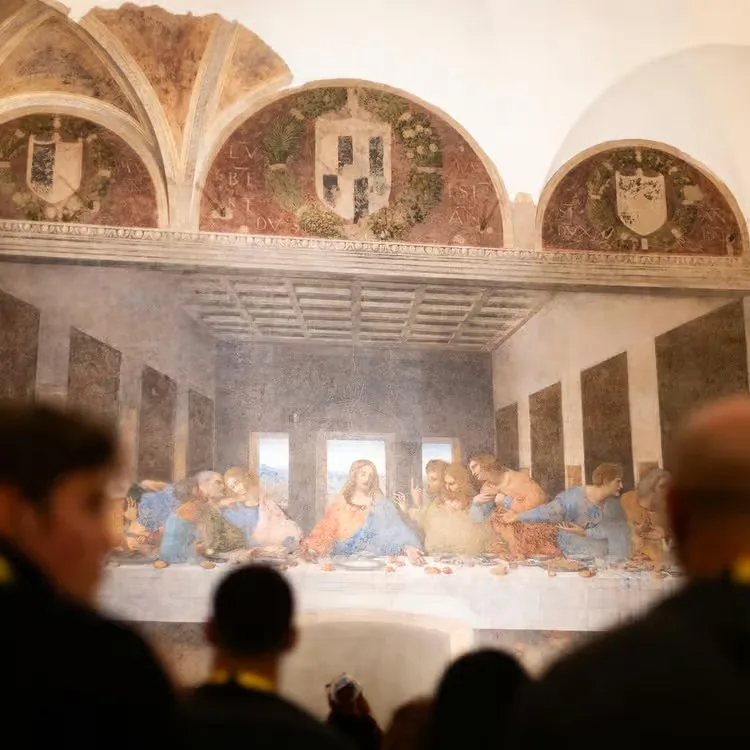
Leonardo da Vinci's Last Supper, Milan
Leonardo's Last Supper is one of the Italian cultural visits for which advance preparation is particularly important.
Admission must be reserved, and visitor numbers are controlled because of the conservation requirements of the painting.
The official museum generally releases tickets in batches covering upcoming months, rather than using a simple daily rolling booking window.
If seeing the painting is important to your Milan visit, check the release announcements and be prepared to reserve when tickets for your dates become available.
It may be useful to remain flexible about which day of your stay you visit.
Official source: Museo del Cenacolo Vinciano: how to plan your visit
The Colosseum, Rome
Under the current booking system, Colosseum tickets become available 30 days before the intended visit.
The archaeological park requires visitors to reserve a specific entry time.
This means someone planning a Rome trip six months ahead cannot necessarily complete every museum reservation at the same time as their hotel bookings.
Establish your preferred day and monitor the official ticket website when the relevant booking window approaches.
Particular ticket categories, including access to restricted areas, may have limited availability.
Do not assume that purchasing a private guided tour automatically guarantees admission to every area of the archaeological park.
Official source: Colosseum Archaeological Park: opening times and tickets
The Vatican Museums
The Vatican Museums attract considerable demand, particularly during popular travel periods.
We recommend checking the official ticket calendar early and reserving suitable dates once they become available.
Avoid relying on a universal booking window quoted by an unofficial travel blog. The actual inventory and arrangements can change.
The visit should also be planned around the interests and physical needs of the people travelling.
A three-hour introduction may be suitable for some visitors. Others may prefer a longer visit with a specialist.
Official source: Vatican Museums
The Uffizi Galleries, Florence
The Uffizi recommends reserving admission in advance, especially during busy periods.
For spring and autumn travel, we would begin checking availability several weeks or months before departure, depending on the intended dates.
The official website provides access to ticket categories and booking information.
If you are arranging a private visit, coordinate the admission time with your guide.
There is little value in reserving the first available slot without considering how it fits into the rest of the day.
Official source: Uffizi Galleries: tickets
Opera, ballet and concerts
Performance tickets follow their own sales calendars.
At Teatro alla Scala in Milan, individual productions have specified sales-opening dates.
Some performances become available well before the travel date.
If an evening at La Scala is an essential part of your journey, begin with the theatre's season programme rather than selecting travel dates and hoping that a suitable performance will be available.
The same principle applies to opera festivals, concerts and other cultural events across Italy.
Official La Scala ticket sales calendar: Teatro alla Scala: ticket sales calendar
Italian cultural reservations at a glance
| Cultural experience | Booking approach |
|---|---|
| Leonardo's Last Supper | Monitor official batch release announcements |
| Colosseum | Current sales window opens 30 days before the visit |
| Vatican Museums | Check official calendar and reserve available dates |
| Uffizi Galleries | Advance booking recommended |
| La Scala | Follow individual production sales dates |
| Private workshops | Discuss availability with the relevant business or planner |
| Specialist guided visits | Arrange the guide early; coordinate admission separately |
Booking procedures checked in November 2026. Always consult the official institution for the rules applicable to your intended visit.
One to Three Months Before Italy: Trains and Restaurants
By this point, the main journey should be taking shape.
Accommodation is confirmed. The important private experiences have been discussed. The route makes sense.
Now the more ordinary reservations can be organised.
When should you book trains in Italy?
High-speed trains between Italy's major cities can be booked in advance, although actual availability depends on the operator, route and timetable.
Trenitalia currently states that its Frecciarossa, Frecciargento and Frecciabianca services can be reserved up to twelve months ahead, subject to released inventory.
That does not mean every service is available a year in advance.
For many itineraries, checking and booking important high-speed rail journeys one to three months before departure is sufficient.
Consider booking earlier if you require particular departure times, premium service categories or seats together for a larger group.
Some cheaper fares have more restrictive modification and cancellation conditions.
For regional trains, advance purchasing is often less important than understanding the relevant ticket and validation requirements.
Official Trenitalia information: Trenitalia: buying and using national tickets
When should you book restaurants in Italy?
Restaurant reservations are particularly difficult to generalise.
A small restaurant with eight tables and an international reputation may require considerable advance planning.
A well-regarded neighbourhood trattoria may accept reservations only a few weeks ahead.
Some restaurants release tables through online platforms. Others prefer telephone reservations. Some operate according to seasonal opening schedules.
If a restaurant matters particularly to you, find out when it accepts reservations rather than simply trying to book as early as possible.
For destination restaurants and prominent fine-dining establishments, we would begin researching two to four months ahead, or earlier for exceptional demand.
For ordinary restaurants in popular cities, several days or weeks may be sufficient.
Do not reserve every lunch and dinner months before departure.
You may discover that an important restaurant is more convenient on a different evening, or that after several ambitious dinners you would prefer something simple.
Italy rewards a certain amount of flexibility.

When to Book Italy According to Your Travel Season
The season can change the planning calendar considerably.
A September holiday in Venice is not organised in the same way as a February visit to Rome.
Spring in Italy: March to May
Begin planning during the preceding autumn if you intend to travel around Easter, major cultural events or particularly desirable spring weekends.
May can be extremely popular in Florence, Rome, Venice and Tuscany.
It is also a significant period for gardens, countryside accommodation and lakeside properties.
For April and May 2027, beginning in late 2026 is sensible, particularly if specific hotels or cultural arrangements are important.
Remember that Easter Sunday falls on 28 March in 2027.
Opening hours, transport demand and hotel availability should be considered around the Easter period.
Summer in Italy: June to August
For a summer holiday centred on Lake Como, Capri, the Amalfi Coast or Sardinia, we recommend beginning nine to twelve months ahead.
By January, it is worth having a reasonably clear idea of your route and accommodation preferences.
This does not mean that every hotel will be unavailable by spring.
It means the range of suitable rooms and properties may become narrower.
August requires additional attention to Ferragosto on 15 August and the broader Italian holiday period.
Coastal destinations can be particularly busy, while some independent businesses in major cities may close for their own summer holidays.
Always check individual operating dates.
Autumn in Italy: September to November
September should not automatically be treated as shoulder season.
In many of Italy's cultural cities and popular countryside destinations, it remains a period of substantial demand.
For wine-focused journeys through Piedmont or Tuscany, autumn can be particularly important.
Harvest activity, local events and gastronomy-related travel can affect accommodation and the availability of individual producers.
For October travel centred on Piedmont's food culture, beginning in spring is a sensible approach.
Some seasonal coastal hotels reduce operations or close later in autumn.
Do not assume a seaside itinerary designed for September will work identically in November.
Winter in Italy: December to February
Winter can provide considerably more flexibility for cultural travel.
Rome, Florence, Venice, Turin and Milan may be easier to organise outside major events and holiday periods.
Christmas, New Year, Carnival and the ski season create their own demand patterns.
For a Christmas or New Year stay at a particular luxury hotel, or a winter holiday in a sought-after Alpine destination, beginning several months ahead is advisable.
An ordinary February city break can often be arranged much closer to departure.
When Should You Book Italy for 2027?
If you are planning Italy for 2027, several confirmed cultural dates are already worth considering.
Even if you do not intend to attend these events, they can influence accommodation demand and the atmosphere of a city.
Milan: Salone del Mobile
13–18 April 2027
The international furniture and design fair will take place at Fiera Milano Rho.
The associated design activity across Milan makes this a particularly important period for anyone interested in contemporary Italian interiors, architecture and design.
Accommodation and specialist appointments are worth considering early.
Public admission arrangements and access to individual events should be checked separately.
Official event information: Salone del Mobile.Milano: exhibitions
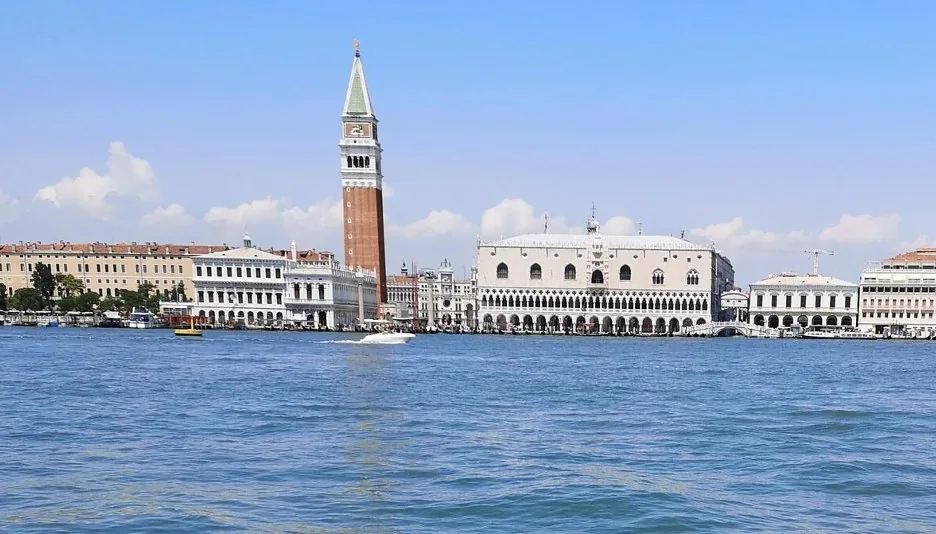
Venice: Architecture Biennale
8 May–21 November 2027
The 2027 International Architecture Exhibition will run throughout much of the main Venice travel season.
The announced pre-opening dates are 6 and 7 May.
The exhibition is particularly relevant for travellers interested in contemporary architecture, urban culture and design.
Opening periods can bring additional demand for accommodation and specialist services.
Do not assume that access to pre-opening events is included in ordinary exhibition admission.
Official event information: La Biennale di Venezia: Architecture 2027
Easter
28 March 2027
Easter can affect opening arrangements, accommodation demand and transport schedules throughout Italy.
Rome is a particularly important destination during this period, although individual events and access arrangements should be checked against official announcements.
Ferragosto
15 August 2027
Ferragosto is an annual Italian public holiday and an important date within the summer travel period.
If you intend to spend August on the coast or in the mountains, consider accommodation and transport well ahead.
For city itineraries, check which independent restaurants, shops and workshops will be operating.
A practical 2027 planning calendar
| Intended travel period | Recommended time to begin |
|---|---|
| Easter and April 2027 | Autumn–winter 2026 |
| May and June 2027 | Autumn 2026–January 2027 |
| July and August 2027 | Autumn 2026, particularly for premium coastal stays |
| September 2027 | Winter 2026–27 |
| October and November 2027 | Winter–spring 2027 |
| Christmas and New Year 2027 | Spring–summer 2027 |
These are recommended starting periods for private and luxury journeys.
They are not deadlines after which travelling to Italy becomes impossible.
Event dates verified against official announcements in November 2026. Admission procedures, associated programmes and schedules may subsequently change.
Which Italian Destinations Need the Earliest Planning?
Not every part of Italy requires the same preparation.
The principal difference is often the number of suitable properties relative to the demand for them.
| Destination | Recommended lead time for private luxury travel | Main consideration |
|---|---|---|
| Lake Como | 6–12 months | Premium rooms and landmark lakeside hotels |
| Amalfi Coast and Capri | 9–12 months for summer | Limited prime accommodation and boat arrangements |
| Venice | 4–8 months | Room categories, cultural events and specialist guides |
| Florence and Tuscany | 4–8 months | Spring and autumn demand, villas and private visits |
| Rome | 3–6 months | Cultural reservations and holiday periods |
| Dolomites | 6–9 months for popular seasons | Mountain resorts and preferred accommodation |
| Piedmont | 4–8 months | Autumn gastronomy and wine-focused arrangements |
| Puglia | 6–9 months for summer | Desirable masserie and countryside properties |
| Sicily | 4–8 months | Regional logistics, coastal stays and private services |
| Milan | 3–6 months, earlier for major events | Design fairs, fashion events and hotel demand |
A flexible traveller may successfully organise any of these destinations closer to departure.
A traveller who wants a particular room, a particular guide and particular dates should allow more time.
What Happens If You Book Italy Too Late?
The most common consequence of late planning is not that you cannot travel.
It is that you have less control over the choices.
The hotel with the room you wanted may only have a different category available. The guide specialising in your particular subject may already have commitments.
The countryside property that suited the itinerary may no longer be available for the required sequence of nights.
You can still organise a holiday.
But you may need to make decisions according to availability rather than preference.
This can also affect the budget.
If the reasonably priced rooms at suitable hotels are gone, you may find yourself choosing between a more expensive room and an entirely different property.
The same applies to transportation and flights.
Late planning does not always mean higher prices, but it can reduce the range of alternatives.
For a broader understanding of how accommodation, transportation and individual experiences affect the total cost, read How Much Does a Luxury Trip to Italy Cost in 2027? You may also find it useful to see what different Italy vacation budgets can buy.
Can You Plan a Luxury Italy Trip at the Last Minute?
Yes.
Some of the most interesting Italian journeys can be organised with only a few weeks' notice.
The essential condition is flexibility.
If you contact a travel designer in June asking for a specific suite at a particular hotel in Capri for the first week of August, there may be little that anyone can do.
If instead you are interested in a beautiful Mediterranean holiday, good food and a quiet place to stay, the possibilities are broader.
Perhaps the right journey is through inland Sicily rather than Capri.
Perhaps a historic country estate in Umbria suits the available dates better than a hotel on Lake Como.
Perhaps a shorter trip concentrated around one city will be more rewarding than a hurried attempt to assemble a multi-region itinerary.
For last-minute travel, we would begin by considering:
- Destinations with suitable accommodation available.
- Flexible arrival and departure dates.
- Fewer changes of hotel.
- Alternative cultural institutions and experiences.
- Realistic transportation arrangements.
- Suppliers that can be confirmed without excessive uncertainty.
A last-minute journey should be designed differently from one planned a year ahead. We have written a separate guide to planning a last-minute luxury trip to Italy.
Trying to reproduce exactly the same itinerary with fewer available options rarely produces the best result.
Can You Book Italy Too Early?
There are some disadvantages to confirming everything too far ahead.
Flight schedules may change.
Exhibition programmes may not have been announced.
Restaurants may not yet know their opening arrangements for the following season.
Train inventory may not have been released.
Booking a restrictive hotel rate before establishing the geographical route can also create unnecessary problems.
The earliest stages of planning are often better spent deciding what the journey should contain rather than paying for every reservation that happens to be available.
Before committing to a non-refundable booking, understand how that reservation affects the rest of the itinerary.
Where appropriate, consider flexible cancellation conditions, particularly when important related arrangements remain uncertain.
Do not confuse a complete itinerary with a fully prepaid itinerary.
The Final Two Weeks Before Departure
The last stage of planning should be relatively uneventful.
If the route, accommodation and important experiences have already been organised, there should be little reason to redesign the journey.
This is the time to check details.
- Confirm flight and train schedules.
- Reconfirm private transfers and meeting points.
- Check museum admission instructions.
- Verify restaurant reservations.
- Confirm dietary and accessibility requirements.
- Review seasonal ferry and boat schedules.
- Check official transport notices and possible strikes.
- Save supplier contact details.
- Review travel insurance and current entry requirements.
- Keep essential reservations accessible offline.
For private transportation, ensure that the supplier has the correct arrival details and relevant contact information.
For Venice, establish exactly how you will reach the hotel from the station or airport.
For countryside stays, check how you will travel to restaurants and other places outside the property.
These are ordinary details, but they can determine how pleasantly the journey begins.
When Should You Contact an Italy Travel Designer?
The best time is generally before making the reservations that are difficult to change.
For a luxury multi-region journey, we recommend beginning the conversation six to twelve months ahead.
You do not need to know exactly which cities you want to visit.
You do not need to have selected the hotels.
You do not even need a complete itinerary.
In fact, it is often more useful if those decisions remain open.
An initial discussion can help establish whether your dates are suitable for the kind of holiday you want, which regions work together and which reservations deserve immediate attention.
It also provides an opportunity to discuss the budget before expensive commitments are made.
Our work in Italian cultural travel began in 2016, and one of the practical lessons from those years is that the timing of the planning process can influence the journey almost as much as the itinerary itself.
A knowledgeable travel designer should be able to distinguish between things that genuinely require early action and things that can comfortably wait.
For more information about professional planning services, read Is Hiring a Private Travel Planner for Italy Worth It?
If you are unsure which kind of professional assistance you need, read Italy Travel Designer vs Travel Agent: What's the Difference?
Planning Italy for 2027? Discuss your dates and ideas with Backstage Italy before committing to the main reservations.
See also our guide to planning a luxury family holiday in Italy.
For larger groups, see our guide to planning a family reunion in Italy.
We have also written about common mistakes when organising Italian reservations.
Frequently Asked Questions
How far in advance should I book a trip to Italy?
For a multi-destination private journey, six to nine months is a useful starting point. For luxury coastal accommodation, private villas and peak-season family travel, nine to twelve months or more can be worthwhile. Short city breaks can often be organised closer to departure.
Is six months enough time to plan a trip to Italy?
Yes, six months is generally sufficient for many Italian itineraries. Particularly desirable hotels, villas, major events and some specialist arrangements may require earlier planning.
Is three months too late to book Italy?
No. Three months can be sufficient for a rewarding trip, especially if your dates, destinations and hotel preferences are flexible. You may have fewer choices in highly sought-after destinations during peak travel periods.
When should I book Italy for summer 2027?
For June, July and August 2027, we recommend beginning during autumn or winter 2026, particularly for Lake Como, Capri, the Amalfi Coast, Sardinia and private villas.
Other Italian destinations may allow considerably more flexibility.
How far in advance should I book Amalfi Coast hotels?
For a particular luxury hotel or premium room during summer, nine to twelve months ahead is a sensible planning window. Travellers with flexible dates and accommodation preferences may be able to book considerably later.
When should I book Lake Como hotels?
For popular late-spring and summer dates, begin researching six to twelve months ahead, particularly if you want a landmark property, lake-facing suite or specific room configuration.
How far in advance can I book Colosseum tickets?
Under the booking rules checked in November 2026, ticket sales open 30 days before the visit. Check the official Colosseum website for any changes before travelling.
When should I book tickets for Leonardo's Last Supper?
The museum releases tickets in batches covering future months. Monitor the official release announcements rather than relying on a fixed number of days before your visit. Advance reservations are required.
How early should I book restaurants in Italy?
It depends on the restaurant. Begin researching particularly sought-after restaurants several months ahead and reserve when their booking calendars open. Ordinary neighbourhood restaurants may require only a few days or weeks of notice.
When should I book trains in Italy?
One to three months ahead is a useful practical window for many high-speed rail journeys. Some services become available much earlier. Book important travel dates and premium seating when suitable inventory is released.
When should I hire a private travel planner for Italy?
For a complex private itinerary, six to twelve months ahead is generally preferable. Ideally, involve the planner before confirming non-refundable accommodation and transportation.
Is it possible to book a luxury trip to Italy one month in advance?
Yes, provided you are flexible about destinations, accommodation and individual experiences. A last-minute itinerary should be designed around what is genuinely available rather than attempt to reproduce a programme that would have required earlier reservations.
Plan Early, Book at the Right Moment
Planning a journey a year ahead does not mean that every hour of the holiday should be decided a year ahead.
It means giving yourself the opportunity to choose the things that matter.
The room with the right view.
The guide whose knowledge suits your interests.
The countryside property that allows you to spend four days exploring a region without constantly changing hotels.
The evening at the theatre that gives your journey a particular reason.
Other decisions can wait.
A restaurant discovered a week before departure may be as interesting as one reserved six months earlier.
An afternoon without a programme may turn out to be the most enjoyable part of the holiday.
We prefer an itinerary in which the important arrangements are secure and the less important ones remain open.
That is usually the best reason to begin planning Italy early.
Editorial note: Recommended planning windows in this article reflect practical travel-planning considerations rather than guaranteed booking deadlines. Official museum procedures, transport booking policies and announced 2027 event dates were checked in November 2026. Individual suppliers may change their schedules, reservation policies and operating conditions.
Before you book Italy, let’s talk.
Whether you are planning next summer or travelling in a few weeks, we can help you understand which arrangements deserve your attention now and what can comfortably wait.
Tell us your preferred dates, interests and the kind of journey you have in mind.
Start planning your Italy tripMore from the journal
Travel Planning
How to Plan a Luxury Trip to Italy: An Insider's Guide
How we turn your interests into a day-by-day plan for Italy.
Travel Planning
Is Hiring a Private Travel Planner for Italy Worth It?
What professional travel planning actually buys you, when it makes financial sense, and when you are better off organising Italy yourself.
Travel Planning
How Much Does a Luxury Trip to Italy Cost in 2027?
A practical guide to hotel prices, private experiences, and what is actually worth paying for.