
Travel Planning
How Many Days Do You Really Need in Italy?
Why a week can be enough, why two weeks are considerably better, and why the number of places you visit is a rather poor measure of a holiday.
By Backstage Italy · · 31 min read
Why a week can be enough, why two weeks are considerably better, and why the number of places you visit is a rather poor measure of a holiday.
Italy is small only on a map.
This becomes particularly apparent when someone begins planning a first visit.
Rome seems relatively close to Florence. Venice is only a little further north. Lake Como looks like a reasonable addition, and it would be a shame to come all the way to Italy without seeing the Amalfi Coast.
Before long, a ten-day holiday contains six destinations, several railway journeys, a domestic flight and an extraordinary amount of luggage management.
The problem is not that these places are impossible to combine.
The problem is what happens to the time between them.
After years of working in Italian cultural travel, we have become rather more interested in how long someone stays in a place than in how many places they manage to visit.
Two days in Florence can introduce you to the Renaissance.
Five days can begin to explain the city that produced it.
Those are different experiences.
How Many Days in Italy Is Enough?
For a first trip to Italy, 10 to 14 days is an ideal starting point.
Seven days can be enough for two or three well-connected destinations, while five days are better devoted to one city or a compact geographical area.
With three weeks, you can begin to combine several regions without organising the entire holiday around transportation.
The right duration depends on your interests, arrival and departure points, and how much time you want to spend actually being somewhere.
| Trip duration | Accommodation bases | What we would recommend |
|---|---|---|
| 3 days | 1 | One Italian city |
| 5 days | 1–2 | A city with nearby excursions |
| 7 days | 2–3 | Two major cities or one compact region |
| 10 days | 3 | A balanced first trip or a substantial regional journey |
| 14 days | 3–4 | Cities, countryside and a quieter final destination |
| 21 days | 5–6 | Several connected regions at a comfortable pace |
| 30 days | 5–8 | Extended regional travel and longer stays |
These are recommended limits rather than rules.
A traveller spending fourteen days in Sicily may have a considerably more interesting holiday than someone spending the same amount of time visiting seven different Italian cities.
All itinerary examples below count arrival and departure as travel days. A ten-day trip therefore normally includes nine nights in Italy.
The Difference Between Ten Days and Ten Days of Holiday
When people tell us they have ten days in Italy, the first thing we want to know is how those days have been calculated.
Are they arriving in Rome at nine in the morning?
Or landing in Milan at six in the evening after an overnight flight?
Is the tenth day available for sightseeing?
Or does it involve leaving the hotel at six in the morning to reach an airport?
The difference can be substantial.
A ten-day international trip may contain only eight full days in Italy.
Every change of accommodation then introduces another period of time that needs to be accounted for.
Packing. Checking out. Reaching the railway station. Travelling. Arriving. Leaving luggage at the new hotel. Waiting for the room to become available.
Even an efficient transfer can occupy a significant part of the day.
Italy's high-speed railway makes travel between its main cities remarkably practical. Italo, for example, publishes direct Rome–Florence journey times of approximately one hour and twenty-five minutes, depending on the service.
But that is the time spent on the train.
It is not the time between leaving your room in Rome and sitting down comfortably in Florence.
Official railway information: Italo: Rome–Florence route
For a journey of ten days involving three accommodation bases, there are two principal intercity transfers.
For the same journey involving six bases, there are five.
The difference is not necessarily visible when looking at an itinerary on paper.
It becomes very visible by the end of the holiday.
For a detailed explanation of how to combine different forms of transportation, read our guide Private Drivers or First-Class Trains in Italy?
Is Three Days Enough for Italy?
Three days are enough for an introduction to one Italian city.
They are not enough for a general introduction to the country.
If you have two nights and approximately three calendar days, choose somewhere that suits your interests and resist the temptation to add another destination.
Three days in Rome
A first visit might include an introduction to ancient Rome, a walk through the historic centre and time in one important museum or church.
We would not attempt to combine the Colosseum, Roman Forum, Vatican Museums, Borghese Gallery, Trastevere and a day trip to Pompeii within such a short stay.
Choose what interests you most.
Rome will still be there when you return.
Three days in Florence
Florence works particularly well for a short cultural holiday because much of its historic centre can be explored on foot.
One day might focus on Renaissance painting.
Another could be devoted to architecture, churches and the Oltrarno.
There should also be time for the city between the monuments: the small streets, cafés, workshops and domestic scale of its historic buildings.
Three days in Venice
Two nights in Venice offer something that a day trip cannot.
You can experience the city early in the morning and again in the evening, when the streets and canals develop a different atmosphere.
A concentrated cultural programme and time to walk independently can make even a short stay rewarding.
If you have only three days, we would choose the city according to your interests rather than attempt to choose Italy's universally best destination.
There isn't one.
Is Five Days Enough for Italy?
Five days and four nights can provide an excellent introduction to a particular city and its surrounding area. This is also a useful length when planning a spontaneous trip to Italy.
The temptation is to spend two nights in Rome and two in Florence.
That is possible, especially with convenient arrival and departure airports.
But there are other approaches.
Option one: Florence and Tuscany
Spend four nights in Florence.
Arrange one or two private cultural visits in the city, followed by a day in the surrounding countryside.
Depending on your interests, the excursion could focus on historic architecture, wine or a particular Tuscan town.
Return to the same hotel each evening.
You will have experienced several aspects of Tuscany without repeatedly moving your luggage.
Option two: Naples and Campania
Spend four nights in Naples.
Explore the city's archaeology, religious architecture and food culture.
Dedicate a day to Pompeii or Herculaneum, according to your interests and the available time.
A further excursion might introduce another part of the region.
Trying to include Naples, Pompeii, Capri, Positano, Amalfi and Ravello within four nights would considerably change the pace of the trip.
It would also leave relatively little time to understand Naples itself.
Option three: Milan and Lake Como
Spend two nights in Milan and two nights beside Lake Como.
Milan provides the urban element: architecture, design, art and restaurants.
The lake offers a different landscape and a quieter conclusion.
The practicality of this arrangement depends on your chosen hotel and departure airport.
For a short trip, avoid selecting a lakeside property whose location introduces unnecessarily complicated airport transfers.
Five days work best when the journey has a clear geographical focus.
Is Seven Days Enough for a First Trip to Italy?
Yes, although a week requires some decisions about what to leave out.
Seven days and six nights are sufficient for a meaningful first experience of Italy.
For most travellers, we would suggest either two substantial city stays or three shorter stays connected by high-speed rail.
The classic seven-day Italy itinerary
| Destination | Nights |
|---|---|
| Rome | 2 |
| Florence | 2 |
| Venice | 2 |
| Total | 6 |
This is possible and geographically logical, particularly if you arrive in Rome and depart from Venice.
It provides an introduction to three of Italy's most important cultural cities.
The disadvantage is that you will have relatively little time in each one.
There is enough time for selected cultural visits, but not for extensive day trips or a particularly relaxed pace.
We would not add Lake Como, the Amalfi Coast or Cinque Terre.
The week is already full.
A slower seven-day Italy itinerary
| Destination | Nights |
|---|---|
| Rome | 3 |
| Florence | 3 |
| Total | 6 |
This is the version we would consider for someone visiting Italy for the first time who is particularly interested in art and history.
Three nights in Rome allow for more than a single introduction to its ancient monuments.
Three nights in Florence provide time for Renaissance art, architecture and the neighbourhoods beyond the principal museums. We have also written about experiencing Italy's masterpieces without rushing.
Depending on your priorities, part of the Florence stay could be devoted to a nearby excursion.
You would see fewer cities.
You might understand considerably more.
Seven days in northern Italy
An alternative for travellers less interested in the conventional first-time itinerary:
| Destination | Nights |
|---|---|
| Milan | 2 |
| Turin | 2 |
| Langhe countryside | 2 |
| Total | 6 |
This is a journey through modern design, aristocratic architecture, historic cafés, vineyards and regional food.
It presents an Italy that has little in common with the Rome–Florence–Venice route.
Neither itinerary is a more authentic version of the country.
They simply introduce different aspects of it.
Is Ten Days Enough for Italy?
Ten days is a particularly useful duration for a first private journey.
With nine nights, you can combine three destinations without reducing every stay to a brief introduction.
It also becomes possible to introduce a quieter part of the country rather than spend the entire holiday in major cities.
A classic ten-day Italy itinerary
| Destination | Nights |
|---|---|
| Rome | 3 |
| Florence | 3 |
| Venice | 3 |
| Total | 9 |
This is one of the most geographically practical first-time itineraries.
The cities are connected by direct high-speed railway services.
It also provides enough time to develop a different approach to each destination.
Rome might focus on ancient history and the relationship between the classical and Christian city.
Florence might introduce Renaissance art, merchant families and craftsmanship.
Venice might explore maritime history, painting and the development of a city with a remarkably unusual relationship to its surrounding landscape.
You would have time for individual guided visits without needing to reserve every morning and afternoon.
A ten-day itinerary with the countryside
| Destination | Nights |
|---|---|
| Rome | 3 |
| Florence | 3 |
| Tuscan countryside | 3 |
| Total | 9 |
For many travellers, this can be a more varied holiday.
The first six nights provide substantial cultural content.
The final three nights allow for countryside walks, winery visits, regional cooking and time at the accommodation itself.
There is a natural reduction in the pace of the journey.
We particularly like itineraries that finish somewhere quieter.
After several days in major cities, travellers often appreciate having fewer reservations and more control over how they spend the day.
Ten days in southern Italy
| Destination | Nights |
|---|---|
| Naples | 3 |
| Amalfi Coast | 4 |
| Sorrento Peninsula | 2 |
| Total | 9 |
This itinerary is suitable for travellers interested in archaeology, Mediterranean landscapes and regional food.
The precise order depends on accommodation location, seasonal transport and arrival or departure arrangements.
For an alternative with fewer transfers, consider five or six nights at one coastal base after Naples.
The extra days can be used to explore the region without changing hotels.
Ten days are enough for a substantial experience of one part of Italy.
They are not a reason to attempt the entire country.
Is Two Weeks Enough for Italy?
Fourteen days is the duration we would most often recommend for someone travelling a considerable distance to Italy for the first time.
Thirteen nights allow you to combine cultural cities with a different kind of landscape.
It is also possible to include a day or two that have no particular sightseeing objective.
That matters more than it may initially seem.
After ten consecutive days of museums, churches and historic buildings, even an enthusiastic cultural traveller may appreciate a morning without instructions.
A balanced fourteen-day Italy itinerary
| Destination | Nights |
|---|---|
| Venice | 3 |
| Florence | 3 |
| Tuscan countryside | 3 |
| Rome | 4 |
| Total | 13 |
This route provides a substantial cultural experience without requiring extensive travel between distant parts of the country.
The countryside stay creates a pause between the cities.
Four nights in Rome allow more freedom to explore different historical periods and neighbourhoods.
The arrangement is particularly practical with arrival in Venice and departure from Rome, or the reverse.
Fourteen days in northern Italy
| Destination | Nights |
|---|---|
| Milan | 3 |
| Langhe, Piedmont | 4 |
| Lake Como | 3 |
| Verona or Lake Garda | 3 |
| Total | 13 |
This is a journey through several different northern Italian landscapes.
The cultural programme might include twentieth-century design, architecture, historic villas and gardens.
The countryside provides time for regional food, wine and smaller towns.
Depending on the exact accommodation locations, private transportation will be particularly useful for parts of this route.
Fourteen days in southern Italy
| Destination | Nights |
|---|---|
| Rome | 3 |
| Naples | 3 |
| Amalfi Coast | 4 |
| Cilento | 3 |
| Total | 13 |
This is a coherent southbound journey with a mixture of archaeology, urban culture and coastline.
Cilento offers a different experience from the more internationally celebrated Amalfi Coast.
The return or onward journey needs careful planning because the southernmost accommodation may be a considerable distance from the departure airport.
The itinerary is more suitable for travellers who want to understand the region than for those who also hope to include Venice and Lake Como.
Fourteen days give you more possibilities.
They also give you the opportunity not to use every one of them.
What Can You See in Italy in Three Weeks?
With twenty-one days and twenty nights, Italy begins to feel rather different.
There is enough time to develop a journey across several regions, stay longer in individual destinations and introduce places that rarely fit into shorter first-time itineraries.
The danger is assuming that three weeks should simply contain twice as many places as ten days.
We would prefer to use at least some of the additional time to improve the depth of the journey.
A twenty-one-day journey from northern to southern Italy
| Destination | Nights |
|---|---|
| Venice | 4 |
| Bologna | 3 |
| Florence | 4 |
| Tuscan countryside | 3 |
| Rome | 3 |
| Naples | 3 |
| Total | 20 |
This itinerary follows a broadly north-to-south progression.
Bologna introduces a different urban and gastronomic tradition between Venice and Florence.
Longer stays in Venice and Florence provide opportunities to move beyond the most familiar monuments.
The Tuscan countryside offers a change of pace.
Rome and Naples introduce different aspects of central and southern Italian history.
Even with three weeks, we have not included Lake Como, the Dolomites, Puglia, Sardinia or Sicily.
That is deliberate.
The country is not a checklist that becomes complete once you have enough holiday days.
Three weeks in one part of Italy
An equally interesting approach would be to spend the entire period in the south.
For example:
| Destination | Nights |
|---|---|
| Naples | 4 |
| Amalfi Coast | 4 |
| Cilento | 3 |
| Eastern Sicily | 5 |
| Western Sicily | 4 |
| Total | 20 |
The transfer between mainland southern Italy and Sicily requires a dedicated travel allowance and should be planned around actual transport connections.
This journey would be particularly interesting for someone drawn to ancient history, Mediterranean architecture, regional food and landscapes.
It would introduce several quite different cultural worlds without including any of Italy's famous northern cities.
For a repeat visitor, that may be precisely its appeal.
How Many Days Should You Spend in Each Italian City?
Individual destinations deserve different amounts of time.
A city with several major museums, extensive neighbourhoods and numerous historical periods cannot necessarily be experienced in the same way as a smaller historic town.
The following are our preferred planning ranges for culturally interested travellers.
| Destination | Suggested nights | Why |
|---|---|---|
| Rome | 3–5 | Ancient history, churches, museums and neighbourhoods |
| Florence | 3–4 | Renaissance art, architecture and craftsmanship |
| Venice | 3–4 | Art, maritime history, architecture and islands |
| Milan | 2–3 | Design, fashion, modern architecture and art |
| Turin | 2–4 | Historic interiors, museums, cafés and architecture |
| Bologna | 2–3 | Regional food, medieval architecture and university history |
| Verona | 2–3 | Architecture, opera and nearby wine regions |
| Naples | 3–4 | Archaeology, urban culture, art and regional cooking |
| Palermo | 3–4 | Arab-Norman architecture, markets and cultural history |
| Siena | 2–3 | Medieval history, art and the surrounding countryside |
These ranges refer to nights spent at the destination rather than the number of complete sightseeing days.
They are not intended as minimum requirements.
Someone interested in contemporary design might easily spend a week in Milan.
A traveller studying Renaissance painting could devote considerably more time to Florence.
The subject changes the appropriate duration.
How many days in Rome?
For a first visit, we would generally recommend four nights if time allows.
Rome has an unusual density of historical layers.
Ancient structures, medieval churches, Renaissance palaces, Baroque interiors and twentieth-century architecture can all be encountered within a relatively small area.
The mistake is trying to experience them in chronological order over a single weekend.
With four nights, you can organise the visit around several distinct subjects.
There is also time to experience the city outside its principal monuments.
A neighbourhood walk through Testaccio or an evening in Trastevere can provide a different understanding of Rome from another museum reservation.
How many days in Florence?
Three or four nights are particularly useful for a culturally focused first visit.
Florence is compact, but the relationship between its museums, churches and urban history deserves time.
The Uffizi, for example, can be understood differently after seeing the architecture and religious institutions for which many important works were originally created.
If your interests include sculpture, decorative arts or craftsmanship, additional days become valuable very quickly.
For excursions to Siena, the Val d'Orcia or the Chianti countryside, consider adding nights rather than removing all your available time in Florence.
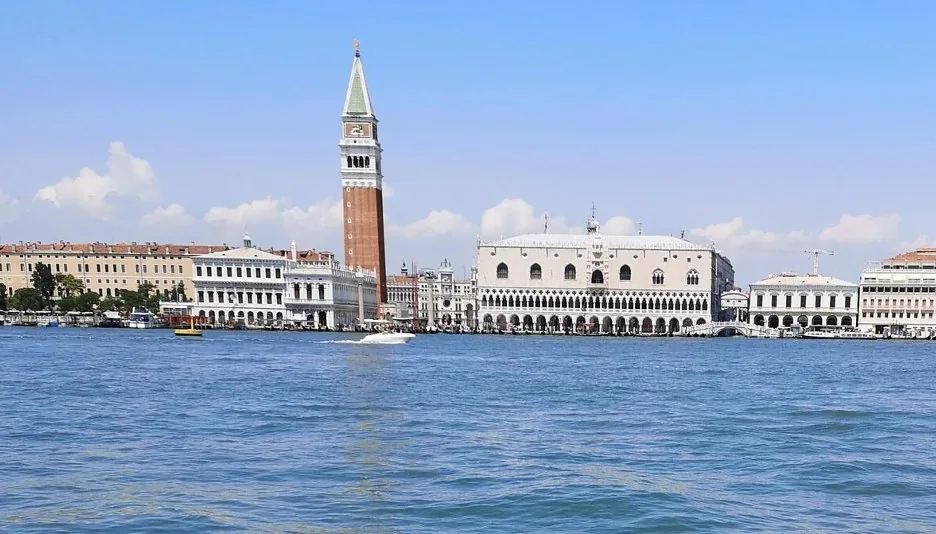
How many days in Venice?
Three nights are a good starting point.
We would rarely recommend Venice as a day trip for someone who is genuinely interested in the city.
The experience of Venice changes considerably throughout the day.
Staying overnight gives you access to mornings and evenings that are absent from most day-trip itineraries.
Three or four nights also allow time to explore neighbourhoods beyond the area immediately surrounding Piazza San Marco.
If your interests include Venetian painting, textiles, architecture or the lagoon, a longer stay can be particularly rewarding.
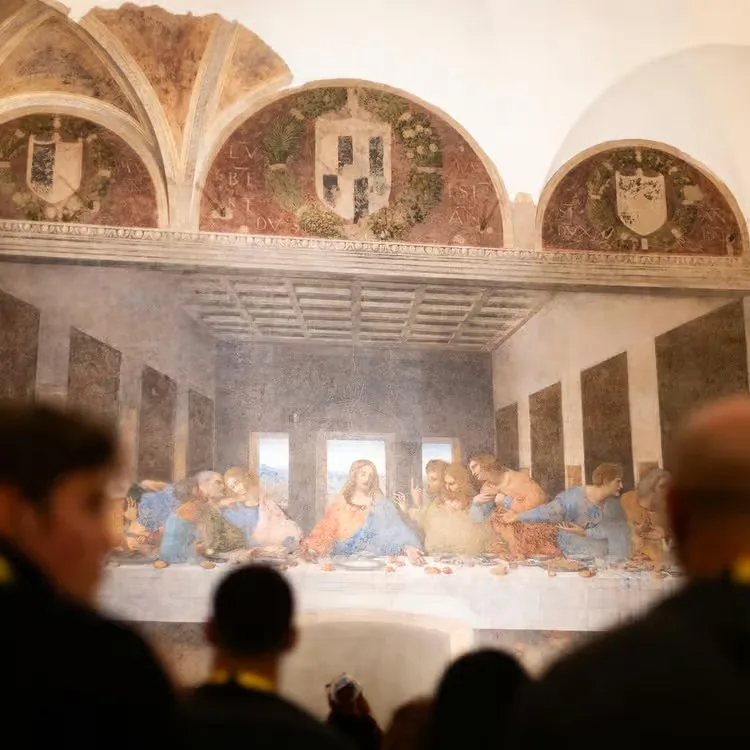
How many days in Milan?
Two or three nights are sufficient for many first-time visitors.
However, Milan is often underestimated because its cultural identity is less immediately associated with the conventional image of historic Italy.
For someone interested in modern architecture, design, fashion, collecting or opera, the city can justify a much longer stay.
During important design and cultural events, the appropriate duration will depend on the programme you intend to follow.
How many days in Naples?
Three or four nights provide a useful introduction.
Naples has its own considerable cultural and artistic heritage, quite apart from Pompeii, Herculaneum and the Amalfi Coast.
If you intend to visit archaeological sites and explore the surrounding region, allow additional time.
Using Naples solely as a railway connection on the way to the coast overlooks one of Italy's most interesting cities.
How Long Do You Need in Italy's Different Regions?
Italy becomes considerably easier to plan when you stop treating every region as an excursion from a major city.
Some places deserve an entire journey.
| Region or area | Suggested duration |
|---|---|
| Tuscany | 5–8 nights, including Florence |
| Piedmont | 5–8 nights |
| Umbria | 4–6 nights |
| Lake Como | 3–5 nights |
| Amalfi Coast | 4–6 nights |
| Dolomites | 5–7 nights |
| Puglia | 6–9 nights |
| Sicily | 10–14 nights for a broader island journey |
| Sardinia | 7–10 nights, depending on the chosen coast |
| Emilia-Romagna | 4–7 nights |
These are editorial recommendations for travellers interested in experiencing a region rather than simply visiting its best-known destination.
Sicily is not a three-day excursion
Sicily deserves particular attention.
Its eastern and western areas contain different landscapes, cities, architectural traditions and historical associations.
A journey involving Palermo, Trapani, the interior, Syracuse, Noto, Etna and Taormina requires considerable time.
With five or six nights, we would generally choose one side of the island.
With ten to fourteen nights, a broader journey becomes more practical.
Even then, the itinerary should account for the distances between destinations and the kind of transportation required.
Puglia rewards longer stays
Puglia works particularly well when the traveller has time to enjoy both the historic towns and the countryside.
The Valle d'Itria, Lecce, the Adriatic coast and the southern Salento are not interchangeable.
Staying at a beautiful masseria can be a substantial part of the holiday.
If every morning begins with a long drive towards another destination, the accommodation loses much of its value.
We would rather select two suitable bases than attempt to cover the entire region from a single property.

Tuscany is more than Florence and a wine excursion
Florence provides an extraordinary introduction to Tuscan cultural history.
But the countryside deserves a different rhythm.
Medieval towns, agricultural estates, small churches, regional restaurants and vineyards can provide several days of travel without requiring particularly ambitious distances.
The most rewarding approach may be to spend three or four nights in Florence followed by several nights somewhere rural.
It allows the landscape to become part of the holiday rather than something seen through a car window.
For regional inspiration, consult the official Italian tourism board's collection of itineraries: Italia.it: itineraries
The Rule of Three Nights
There is a simple principle we often use when developing private Italian itineraries.
Whenever possible, spend at least three nights at each principal destination.
One night is essentially an arrival and a departure.
Two nights provide one complete day without moving accommodation.
Three nights allow two full days, which is often enough to begin experiencing a place without treating every activity as urgent.
This is particularly important for travellers staying in exceptional hotels.
There is little reason to reserve a historic country estate for one night if you will arrive shortly before dinner and leave immediately after breakfast.
The property may deserve more time than the itinerary gives it.
There are sensible exceptions.
An overnight stay can make a long road journey more comfortable. Two nights in Milan might be entirely sufficient before continuing elsewhere.
The principle is not intended to make travel rigid.
It is intended to prevent unnecessary movement.
A hotel change should have a reason beyond adding another destination to the itinerary.
How Many Cities Should You Visit in Italy?
This is where geography becomes particularly important.
Rome, Florence and Venice are relatively easy to combine because they have efficient direct railway connections.
Lake Como, the Amalfi Coast, the Dolomites and Sicily require different transportation arrangements.
It is not enough to count the number of cities or consult the distance between them.
You need to understand what happens after leaving the railway station.
In Venice, you may still require water transportation.
In Tuscany, your hotel may be a substantial distance from the nearest suitable station.
On the Amalfi Coast, road conditions, seasonal ferry schedules and the precise location of the property can influence the entire transfer.
A journey containing three well-connected cities can be less tiring than one involving two remote countryside hotels.
A useful starting framework
| Available time | Suggested approach |
|---|---|
| Up to 5 days | One main base, with optional excursions |
| 7 days | Two main bases; three if connections are straightforward |
| 10 days | Three well-chosen bases |
| 14 days | Three or four bases |
| 21 days | Five or six bases, with selected longer stays |
An accommodation base is not necessarily a city.
A countryside estate, lakeside hotel or private villa can serve the same purpose.
You may visit several towns during a four-night rural stay without packing a suitcase once.
That is often a better way to experience geographical variety.
Does Luxury Travel Require More Time in Italy?
In many cases, yes.
The value of certain luxury travel arrangements depends on having enough time to enjoy them.
A beautiful hotel on Lake Como, a private villa in Tuscany or a small countryside estate in Piedmont is not simply a place to sleep.
Its architecture, gardens, surroundings, hospitality and atmosphere form part of the reason for choosing it.
A particularly ambitious itinerary can undermine that value.
Imagine spending €1,500 per night on a hotel, leaving at eight each morning and returning after dinner.
You might have paid for an experience that the itinerary does not actually allow you to have.
The same consideration applies to specialist cultural visits.
A morning spent with someone who understands Venetian painting might deserve an afternoon in which you can return to one of the churches discussed during the visit.
An introduction to regional food can become more interesting if you have another day to explore a local market or visit a producer.
These are reasons to consider a longer stay, particularly if the journey has been designed around individual interests.
For an understanding of how duration and accommodation affect expenditure, read How Much Does a Luxury Trip to Italy Cost in 2027?
Should You Spend Your Budget on Better Hotels or More Days?
This is one of the most interesting decisions when planning Italy.
Suppose you have €20,000 available for a private journey for two people.
You could concentrate the budget on ten days of five-star hotels, specialist guides and extensive private arrangements.
Alternatively, you could spend fourteen or fifteen days in Italy, choose smaller independent properties and be more selective about private services.
The most suitable choice depends on why you are travelling.
Someone with limited holiday dates may particularly value exceptional accommodation and logistical efficiency.
Someone who has waited years to explore Italy might prefer the additional time.
Neither decision is inherently more luxurious.
However, we would encourage travellers to consider whether another three nights in a region might offer more satisfaction than moving into a more expensive room category.
You cannot extend a holiday once you have returned home.
For three detailed examples of complete private journeys at different spending levels, read What €10,000, €20,000 and €50,000 Can Buy You in Italy.
How Your Travel Season Should Influence the Length of the Trip
A ten-day itinerary in February should not necessarily resemble a ten-day itinerary in August.
The weather, daylight, cultural calendar and operating schedules change the way a journey works.
Spring
Spring is particularly suitable for combining cities, gardens and countryside.
Ten to fourteen days provide enough time to appreciate the different landscapes without relying on a beach holiday.
Travelling around Easter and important cultural events may require more careful reservation planning.
Summer
During July and August, the pace of city sightseeing deserves particular consideration.
Several consecutive hours outdoors in Rome or Florence may be considerably more tiring than the same programme in April.
A summer itinerary might benefit from longer stays, fewer scheduled daytime activities and accommodation with comfortable spaces for the afternoon.
The lakes, mountains and coastal areas provide different possibilities, although popular destinations can be busy.
Autumn
Autumn is particularly rewarding for journeys centred on regional food, wine, cultural exhibitions and architecture.
A week in Piedmont can be considerably more interesting for a gastronomically focused traveller than a ten-day itinerary covering several unrelated regions.
Allow time for the subject rather than simply the destination.
Winter
Winter lends itself particularly well to concentrated city journeys.
Five or seven days divided between Milan and Turin, for example, can provide a substantial programme of museums, architecture, restaurants and cultural events.
Some countryside and coastal properties may operate on reduced schedules or close during parts of the winter.
Longer stays in seasonal destinations should therefore be planned with care.
For practical advice about reservations and seasonal demand, read How Far in Advance Should You Plan a Trip to Italy?
How Many Days in Italy for Different Types of Travellers?
First-time visitors
Recommended duration: 10–14 days.
This provides enough time to explore several principal cultural destinations and introduce a quieter region.
Rome, Florence and Venice are a logical starting point, but there is no obligation to include all three.
Couples
Recommended duration: 7–14 days.
A combination of one or two cultural cities and a countryside or lakeside stay can work particularly well.
The itinerary should reflect shared interests rather than follow a conventional romantic travel programme.
Families with children
Recommended duration: 10–14 days.
We would generally favour fewer accommodation changes and more flexibility.
A family can experience considerable geographical variety through excursions from well-chosen bases.
The most appropriate programme also depends on the children's ages, interests and tolerance for long transfers.
Multigenerational families
Recommended duration: 10–14 days, often with fewer bases.
Different generations may have different expectations of the same journey.
Allow enough time for separate activities, rest and individual interests.
An extended stay at a villa or country estate can make this easier than a succession of short city stays.
Art and architecture enthusiasts
Recommended duration: 10–21 days.
Someone with a particular cultural interest can easily justify spending an entire week in Florence, Rome or Venice.
A longer journey provides the opportunity to connect subjects across different places.
Venice and Ravenna, for example, could become part of a journey exploring Byzantine artistic traditions.
Milan and Turin might provide the basis for a programme centred on modern Italian design and architecture.
Food and wine travellers
Recommended duration: 7–14 days.
We would usually concentrate the itinerary on one or two regions.
Piedmont and Emilia-Romagna, for example, offer distinctive culinary traditions that deserve more than a series of restaurant reservations.
Long lunches, visits to producers and time in local markets are difficult to appreciate when every day also involves a change of accommodation.
Repeat visitors to Italy
Recommended duration: 7–21 days, depending on the subject.
Someone who already knows the principal cities may benefit from abandoning the conventional national itinerary altogether.
A week in Umbria, ten days in Sicily or several days exploring the architecture of Turin can provide an entirely different understanding of the country.
The longer you have been interested in Italy, the more interesting a narrower itinerary can become.
Five Signs You Are Trying to See Too Much of Italy
1. You have more hotel reservations than full days in any destination
If you are moving accommodation every evening, the journey is likely to be dominated by transportation.
2. Every transfer day also contains several important reservations
Delays, check-in arrangements and luggage can make such days unnecessarily complicated.
We prefer to give transfer days one modest cultural or gastronomic purpose rather than a demanding schedule.
3. Your hotel is somewhere you have no time to enjoy
If the property is a significant part of your budget, make sure the itinerary reflects that investment.
4. You have included destinations simply because they are famous
A place may be extraordinary without belonging in this particular holiday.
The Amalfi Coast, Venice and the Dolomites all deserve attention. They do not necessarily belong in the same short itinerary.
5. You have no time to change your mind
You might discover a particular artist, neighbourhood or restaurant that deserves another visit.
If every remaining hour has already been reserved, following that curiosity becomes difficult.
Some of the pleasures of Italy cannot be anticipated before arrival.
Leave room for them.
How We Decide the Right Length of a Private Italy Journey
At Backstage Italy, our work in Italian cultural travel began in 2016.
When designing a private itinerary, we are particularly interested in the relationship between the available time and the traveller's reasons for coming.
If someone has five days, we would not attempt to compress a two-week journey into them.
We would design a different holiday.
If someone has three weeks, we would not automatically suggest fifteen destinations.
We would consider what the additional time allows them to understand, enjoy or experience more fully.
Our preferred approach is to establish:
- The actual number of nights in Italy.
- The arrival and departure arrangements.
- The cultural or personal interests behind the journey.
- The geographical areas that work together.
- The preferred number of accommodation changes.
- The time available for independent exploration.
- The overall budget.
Only then do we begin to consider individual reservations.
For a complete explanation of our planning methodology, read How to Plan a Luxury Trip to Italy: An Insider's Guide.
If you would prefer professional assistance with these decisions, read Is Hiring a Private Travel Planner for Italy Worth It?
Not sure whether you need seven days, two weeks or something in between? Discuss your travel dates with Backstage Italy.
If you are planning Italy with children, see our guide to planning Italy with children.
See also our notes on choosing an itinerary for an extended family.
See also our notes on planning a second Italian journey.
See also our notes on avoiding an overplanned Italy itinerary.
Frequently Asked Questions
How many days in Italy are enough for a first visit?
Ten to fourteen days is an ideal starting point for a first trip. It allows time for two or three major cultural destinations and potentially a countryside or coastal stay without requiring constant travel.
Is seven days enough to see Italy?
Seven days are enough to explore a selected part of Italy or visit two or three well-connected cities. It is not enough to experience the country as a whole. A focused itinerary will generally be more rewarding than attempting to visit several distant regions.
Is ten days enough for Rome, Florence and Venice?
Yes. Nine nights divided equally between Rome, Florence and Venice provide a practical first itinerary. Direct high-speed railway connections make the route relatively straightforward.
Is two weeks too long in Italy?
No. Two weeks provide a useful balance between cultural visits, regional travel and time without scheduled activities. Many travellers find fourteen days particularly suitable for a first international trip to Italy.
How many days should I spend in Rome?
Three to five nights are a useful planning range for a first visit. Four nights allow time for ancient history, major cultural institutions and independent exploration of the city.
How many days should I spend in Florence?
Three to four nights are generally suitable for a culturally focused first visit. Allow additional time if you intend to explore several Tuscan destinations from Florence.
How many days should I spend in Venice?
Three to four nights allow time for the city's principal cultural sites, independent walks and potentially a visit to the surrounding lagoon islands.
How many days do you need in Tuscany?
Five to eight nights are a useful starting point for an itinerary combining Florence and the Tuscan countryside. A more extensive regional journey can easily justify a longer stay.
How many days do you need in Sicily?
For a broader journey covering eastern and western Sicily, ten to fourteen nights are preferable. With five or six nights, concentrating on one part of the island is generally more practical.
Can I visit northern and southern Italy in ten days?
It is possible to combine selected northern and southern destinations, particularly using high-speed rail. However, attempting to include several northern cities, the southern coast and Sicily within ten days will generally require considerable travel time.
How many hotel changes should I plan for a two-week Italy trip?
Three or four accommodation bases, involving two or three hotel changes, usually provide a comfortable balance. The ideal number depends on transportation, geography and your preferred pace.
Is three weeks enough to travel around Italy?
Three weeks allow for a substantial multi-region journey, but not a comprehensive experience of the entire country. It is preferable to focus on a coherent geographical route rather than attempt to cover every major destination.
How long should a luxury Italy vacation be?
Ten to fourteen days is particularly suitable for a luxury multi-destination journey. This provides time to appreciate exceptional accommodation, private cultural experiences and quieter periods without excessive transportation.
Is it worth visiting Italy for only five days?
Absolutely. Five days can provide an excellent city-based or compact regional holiday. Choose one or two nearby destinations rather than attempting to reproduce a conventional two-week itinerary.
Stay Long Enough for the Place to Become Familiar
There is a particular moment in a longer Italian holiday that we find rather interesting.
Perhaps it happens on the fourth morning.
You no longer need to consult a map to find the café.
You recognise the street that leads back to the hotel.
You know which bakery opens early and which part of the neighbourhood is particularly pleasant in the evening.
The place begins to feel less like a destination you are visiting and more like somewhere you know.
That is difficult to achieve when every second morning involves checking out.
It is also one of the reasons we rarely recommend measuring an Italian journey by the number of cities it contains.
Italy is a country you can return to for the rest of your life without exhausting its possibilities.
There is no need to finish it on the first visit.
How much time would you like to spend in Italy?
Five days, two weeks or an entire month. We design private journeys around the time you have, the places that interest you and the way you enjoy travelling.
Tell us your dates. We will help you decide what belongs in the journey.
Design your Italy itineraryMore from the journal
Travel Planning
How to Plan a Luxury Trip to Italy: An Insider's Guide
How we turn your interests into a day-by-day plan for Italy.
Travel Planning
How Much Does a Luxury Trip to Italy Cost in 2027?
A practical guide to hotel prices, private experiences, and what is actually worth paying for.
Travel Planning
Private Drivers or First-Class Trains in Italy?
Where a chauffeur is worth the expense, when the railway is considerably better, and how to combine both in a private Italian journey.