Family Travel
Luxury Family Travel in Italy: Beyond the Usual Attractions
How to introduce children to Italian culture without spending the entire holiday asking them to behave in museums.
By Backstage Italy · · 35 min read
A six-year-old who knows the names of dozens of insects may have very little interest in a conventional introduction to Venetian painting.
Take the same child to Venice's Natural History Museum and you might find yourself discussing prehistoric animals, scientific expeditions and the history of collecting for the rest of the afternoon.
An older sibling fascinated by fashion might be interested in Venetian textiles, historic costumes and the extraordinary fabrics represented in Renaissance portraits.
Their parents might have come to Venice for its architecture.
These interests are not incompatible.
They simply require a different kind of itinerary.
One of the mistakes adults make when travelling with children is assuming that cultural experiences must either be simplified for the young or endured by them.
Italy offers considerably more possibilities than that.
Our approach to luxury family travel in Italy begins with understanding what each member of the family is already curious about. The country provides the material from which those interests can develop.
There is no particular reason why a family holiday should contain a separate adult programme and a separate children's programme.
The most interesting journeys often find the connection between the two.
What Makes a Family Trip to Italy Feel Luxurious?
For families, luxury has a rather practical dimension.
It may mean having enough space in the hotel room for everyone to sleep comfortably.
It may mean arriving at a museum with the right guide, rather than spending forty minutes negotiating tickets with tired children.
It may mean spending four nights in the same place, instead of packing everyone's belongings every second morning.
A private driver can be valuable because the family needs appropriate child seats and room for luggage.
A villa can be valuable because grandparents, parents and children can spend time together without following the same timetable.
Luxury, in this context, is closely connected with reducing unnecessary friction.
| Conventional family sightseeing | A more individual approach |
|---|---|
| Visiting every major attraction | Selecting places according to the family's interests |
| Long general museum tours | Shorter, focused visits with suitable specialists |
| Changing hotels frequently | Longer stays with carefully chosen excursions |
| Activities categorised as adult or child-friendly | Experiences that connect different generations |
| Filling the entire day | One substantial activity and flexible remaining time |
| Choosing hotels primarily by star rating | Prioritising space, location and practical family requirements |
The result may contain fewer reservations than a conventional luxury itinerary.
That does not mean less thought has gone into it.
Start With the Child, Not the Destination
When developing family itineraries, we find it particularly useful to know what children are interested in before deciding what they should see.
School subjects can provide a starting point, but so can hobbies, books, games, sports and the things children talk about when nobody has asked them to learn anything.
A child interested in samurai may discover connections between Japanese armour and European collecting traditions in Florence.
A child fascinated by machines may approach Leonardo da Vinci through engineering before encountering him as a painter.
Someone who loves gymnastics might become curious about the representation of movement and balance in Renaissance sculpture.
A teenager interested in clothes may find that historic textiles reveal considerably more about Italy than another general sightseeing tour.
These connections can help shape an entire family journey.
Italy according to your child's interests
| Interest | Destinations and experiences to consider |
|---|---|
| Dinosaurs and animals | Venice Natural History Museum, MUSE in Trento |
| Knights, armour and samurai | Stibbert Museum in Florence, Castelvecchio in Verona |
| Inventions and engineering | Leonardo Museum in Vinci, Science and Technology Museum in Milan |
| Cars and racing | Ferrari museums in Modena and Maranello |
| Ancient civilisations | Rome, Pompeii, Herculaneum, Museo Egizio in Turin |
| Fashion and textiles | Florence, Milan, Palazzo Mocenigo in Venice |
| Painting and drawing | Florentine museums, sketching sessions, suitable art workshops |
| Architecture and construction | Brunelleschi's Florence, Roman engineering, Venetian buildings |
| Food and cooking | Emilia-Romagna, Sicily, Tuscany |
| Nature and outdoor activity | Dolomites, Trentino, Italian lakes |
| Music and performance | Milan, Venice, Verona, Florence |
| Mythology and storytelling | Ancient Rome, Sicily, Renaissance painting |
The important part is not attaching an educational objective to every activity.
It is recognising that children already have reasons to be interested in the country.
Florence With Children Who Think They Don't Like Museums
Florence is often presented to families as a city that requires considerable cultural patience.
There are important museums, religious buildings and works of art that parents would like their children to appreciate.
But the history of Florence can be approached through rather different subjects.
Inventions.
Powerful families.
Secret passageways.
Clothing.
Armour.
The practical problem of building an enormous cathedral without modern machinery.
These can be just as useful as beginning with a chronological explanation of Renaissance painting.
Palazzo Vecchio: power, architecture and family life
Palazzo Vecchio is one of the places where the political history of Florence becomes particularly tangible.
The building was the centre of the city's government and later became a residence of the Medici family.
Its rooms offer opportunities to discuss how power was represented, how influential families lived and how architecture communicated political authority.
For younger visitors, MUS.E, which operates educational activities in Florentine civic museums, offers family programmes at Palazzo Vecchio and other institutions.
Depending on the programme, visits may involve storytelling, observation, theatrical interpretation or creative activities.
Check the current schedule, age recommendations and language options.
Official family programmes: Musei Civici Fiorentini: families with children
For families, Palazzo Vecchio can be a more engaging introduction to Renaissance Florence than attempting to explain the entire period through paintings alone.
The Stibbert Museum: knights, samurai and the art of collecting
Few museums in Florence lend themselves so naturally to a conversation between different generations as the Stibbert Museum.
Frederick Stibbert assembled extensive collections of arms, armour, costume and decorative objects from different parts of the world.
The theatrical presentation of some rooms makes the collection particularly memorable.
A child interested in medieval knights or Japanese samurai can begin with the objects themselves.
An adult may be more interested in nineteenth-century collecting, the design of the interiors or the relationship between European and Asian decorative traditions.
Both are looking at the same collection.
The visit does not need to be divided into separate experiences.
Official regional museum information: Visit Tuscany: Stibbert Museum
Brunelleschi's dome: an engineering problem
The dome of Florence Cathedral provides an excellent starting point for children interested in construction and problem-solving.
How do you build something of that scale?
How do materials behave when placed at such a height?
How did Renaissance builders transport enormous quantities of stone, brick and timber?
A private cultural visit can introduce the cathedral through these questions rather than concentrate exclusively on architectural terminology.
Depending on the children's ages and abilities, additional visits to the cathedral complex may be considered.
Climbing the dome is physically demanding and subject to specific visitor conditions. It should not automatically be included in every family itinerary.
Leonardo's inventions
For children interested in machines, flight and mechanical movement, Leonardo provides a particularly interesting connection between art and science.
A visit to the Museo Leonardiano in Vinci can become the focus of a day in the Tuscan countryside.
The museum explores Leonardo's ideas through models and studies connected with his technical work.
Rather than beginning with his reputation as a great painter, begin with the questions that occupied him.
How do birds fly?
How can water be moved?
What happens when different mechanical parts work together?
Official museum information: Museo Leonardiano di Vinci
A Renaissance workshop
Florentine craftsmanship can provide a useful counterbalance to museum visits.
Depending on the children's ages and the availability of suitable businesses, families might participate in a paper-marbling workshop, drawing session, bookbinding activity or another introduction to a traditional craft.
The quality of the experience depends on how much participants can actually do and understand.
A demonstration may be fascinating for an older teenager.
A younger child might need an activity involving materials, movement and a finished object they have made themselves.
All private workshops should be confirmed individually, including age restrictions and safety arrangements.
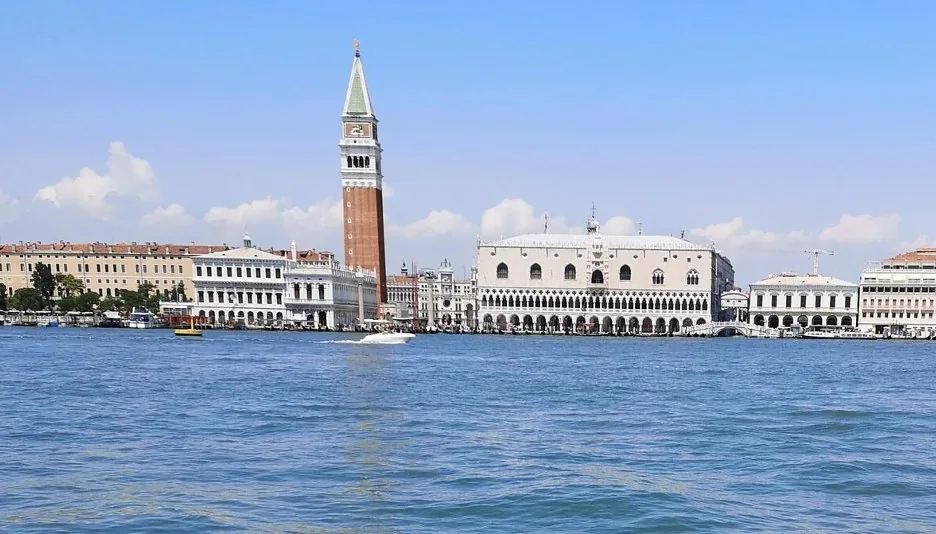
Venice: A City Children Can Learn to Read
Venice has a quality that makes it unusually suitable for family travel.
The city itself raises questions.
Why are there no ordinary streets for cars?
How do people receive deliveries?
How are buildings supported?
Why are there so many bridges?
How do families move around the city in everyday life?
These questions provide an introduction to architecture, engineering, geography and history before entering a single museum.
The Natural History Museum
Venice's Giancarlo Ligabue Natural History Museum occupies the historic Fondaco dei Turchi on the Grand Canal.
Its collections introduce subjects including prehistoric life, animals, scientific research and the history of natural history collecting.
For children interested in dinosaurs, one particularly memorable exhibit is the skeleton of Ouranosaurus.
The museum can also provide adults with another perspective on Venice: a city whose intellectual and commercial connections extended well beyond painting and maritime trade.
Official museum information: Natural History Museum of Venice
How Venice moves
A journey through Venice by water can become an architectural and geographical experience in itself.
Rather than simply arrange a boat because it is considered a luxury activity, consider what the journey reveals.
The relationship between buildings and canals.
The difference between the Grand Canal and smaller waterways.
The way goods are transported.
The relationship between the historic city and the lagoon.
For suitable ages, a Venetian rowing lesson may also be worth investigating with an appropriate professional provider.
Confirm swimming ability requirements, safety equipment, weather conditions and minimum ages before including such activities.
Glassmaking and the islands
Murano provides an opportunity to introduce children to the relationship between temperature, materials, colour and craftsmanship.
A glassmaking visit becomes more interesting when the artisan is able to explain the process in a way that suits the family's ages and interests.
However, working glass furnaces involve high temperatures and professional equipment.
Not every workshop is suitable for children, and observation should never be confused with permission to participate.
Age restrictions and safety conditions must be established directly.
Palazzo Mocenigo: the history of clothes
For older children and teenagers interested in fashion, costume or perfume, Palazzo Mocenigo offers another approach to Venice.
Its historic interiors and collections relating to clothing, textiles and perfume help explain the importance of luxury goods within Venetian commercial and social life.
A discussion might develop around the difference between clothing as personal expression and clothing as an indication of wealth, social position or profession.
The subject can be surprisingly relevant to a teenager interested in contemporary fashion.
Why families should stay overnight in Venice
We generally prefer several nights in Venice rather than a day trip.
The city becomes easier to experience when there is no pressure to complete the entire visit before catching a train.
Choose accommodation carefully.
A property that requires several bridges and a long walk with luggage may be inconvenient for families with younger children.
Check water access, room configurations and the availability of appropriate assistance.
Venice is particularly rewarding when the practical arrangements allow everyone to enjoy walking through it.
Rome and Pompeii: Ancient History Without a History Lesson
Many children encounter ancient Rome through school, mythology, films or games.
This creates a useful starting point.
The difficulty is that a conventional Roman sightseeing programme can require several hours of walking through archaeological sites while listening to explanations designed for adults.
The material itself is often fascinating.
The format is the problem.
The Colosseum and the Roman Forum
For a family visit, we would focus on a manageable number of subjects.
How did people attend public events?
How was the city organised?
Who built its monuments?
What can buildings tell us about Roman society?
The visit should be adapted to the children's ages, attention spans and physical requirements.
A two-hour focused experience may be considerably more rewarding than a long attempt to introduce every important monument.
Admission remains subject to official booking procedures.
Official information: Colosseum Archaeological Park: opening times and tickets
Roman homes and everyday objects
Museums can provide a particularly interesting introduction to ancient life when children are encouraged to look at ordinary objects.
What did people eat?
How did they light their houses?
What did rooms look like?
How did people communicate their status through clothing, jewellery and decoration?
Palazzo Massimo alle Terme and other archaeological collections can provide material for these discussions.
The emphasis is on helping children recognise that the ancient world was inhabited by people rather than simply populated by emperors and historical dates.
Check current exhibitions and museum opening arrangements.
Pompeii
Pompeii can be particularly compelling for children because much of the ancient town remains recognisable.
There are streets, houses, public buildings, shops and spaces associated with daily life.
The archaeological site also raises questions about volcanoes, geology and the methods through which archaeologists reconstruct the past.
Rather than attempt to cover the entire site, we would develop a route around several connected subjects.
In summer, particular attention should be paid to heat, walking distances, water and rest periods.
Pompeii Children's Museum
The Pompeii Children's Museum introduces younger visitors to the archaeological and cultural heritage of the area through interactive educational activities.
It operates within the context of the Pompeii Archaeological Park and related heritage sites.
This can be particularly useful for families interested in combining an archaeological visit with a more participatory experience.
Check the current programme, location of individual activities, age suitability and language availability.
Official information: Pompeii Children's Museum
For many families, Pompeii is best approached as one important part of a broader Campania journey rather than combined with several other demanding excursions on the same day.
Milan for Children Interested in the Future
Milan offers families a different version of Italy.
The city's interests extend beyond Renaissance painting towards engineering, industry, transport, architecture, fashion and design.
This makes it particularly appealing to children and teenagers whose interests are not primarily historical.
The National Museum of Science and Technology
The Museo Nazionale Scienza e Tecnologia Leonardo da Vinci is one of the most interesting places in Milan for families interested in science and engineering.
Its collections cover several technological fields, including transport, industrial development and scientific research.
The museum also provides educational activities for different age groups.
Playlab, for example, has been developed for younger children aged three to six, combining creative exploration with museum experiences.
Check current activity schedules and reservation requirements.
Official information: National Museum of Science and Technology Leonardo da Vinci: visiting
A family might spend an entire morning here without needing to describe the visit as a compromise between education and entertainment.
Milan through design
For an older child interested in drawing, objects or contemporary culture, Milan can become an introduction to the way things are designed.
Chairs, lamps, buildings, clothes and everyday objects can all provide material for observation.
A visit to a design collection, a discussion about a particular building or an appropriately arranged workshop may be more engaging than a conventional sightseeing programme.
Parents interested in interiors and architecture can participate in the same experience.
The cathedral as a family experience
Milan Cathedral offers several possible introductions to architecture.
For one child, the interest may lie in the hundreds of sculptural figures.
For another, it may be the building's engineering and the extraordinary complexity of its construction.
A child who loves animals might enjoy identifying creatures within its decorative programme.
Someone interested in drawing might pay particular attention to the shapes and details of the Gothic architecture.
A visit becomes more individual when the family has something specific to look for.
Rooftop visits should account for current access conditions, heights, weather and the children's abilities.
Emilia-Romagna: Where Food Becomes the Subject of the Holiday
Children do not necessarily need another cooking class.
Sometimes the more interesting experience is understanding where food comes from and why it tastes the way it does.
Emilia-Romagna offers numerous possibilities.
Fresh pasta.
Parmigiano Reggiano.
Traditional balsamic vinegar.
Small agricultural businesses.
Markets and restaurants with longstanding regional traditions.
A family journey can develop around the relationship between ingredients, time, geography and technique.
Making pasta together
A private pasta-making experience can be particularly rewarding when the family participates rather than simply watches.
Different generations can work together.
The process gives children an immediate relationship with the food they will later eat.
For younger participants, the experience should be sufficiently practical and not require prolonged attention to technical explanations.
Dietary requirements, allergies and food-handling conditions should be confirmed beforehand.
Visiting a cheese producer
A visit to a Parmigiano Reggiano producer can introduce several questions.
Why is milk transformed into cheese?
What happens during maturation?
Why do cheeses of different ages taste different?
What role does the surrounding agricultural landscape play?
These subjects can interest children who enjoy science, food or farming.
Producer visits depend on operating hours, production schedules, hygiene rules and age suitability.
A working dairy is not a children's attraction and should be visited with appropriate preparation.
Modena and traditional balsamic vinegar
The long maturation process associated with traditional balsamic vinegar provides another way to discuss time and food.
Children can see that some agricultural products cannot simply be produced more quickly because demand increases.
For adults, the visit may provide a deeper understanding of regional gastronomic traditions.
For children, it offers something more immediate: the relationship between the ingredients, the barrels and the final taste.
Ferrari and Italy's Motor Valley
A gastronomic itinerary through Emilia-Romagna can also include the region's automotive history.
The Enzo Ferrari Museum in Modena and the Ferrari Museum in Maranello provide different perspectives on the history, design and technology of Italian motor vehicles.
For children interested in racing, engineering or design, these can become major cultural experiences rather than occasional entertainment.
Official visitor information: Visit Modena: the Ferrari museums
Simulator experiences, driving-related activities and factory-area visits have individual age, height and access requirements. Do not assume that museum admission includes them.
A family that spends the morning discussing engines and the following day learning how cheese matures has experienced two important aspects of the same region.
The Dolomites and Trentino: Science, Nature and Physical Curiosity
For families who prefer outdoor activity to intensive urban sightseeing, northern Italy offers an entirely different kind of journey.
A stay in the Dolomites can introduce geology, mountain environments, weather, plants and animals through the landscape itself.
The quality of the experience depends considerably on selecting appropriate routes.
A walk suitable for an active fifteen-year-old may be unsuitable for a younger sibling or grandparent.
We would choose accommodation and activities according to the family's actual abilities rather than the appearance of a particular mountain trail in photographs.
MUSE in Trento
The MUSE science museum provides an interesting connection between an outdoor mountain holiday and scientific subjects.
Its exhibitions explore natural environments and scientific questions, while dedicated family facilities support visits with younger children.
The museum can become a particularly useful part of a regional itinerary during periods when the weather makes outdoor activities less appealing.
Official family information: MUSE: families
Outdoor experiences
Depending on the season, ages and abilities of the travellers, a mountain holiday might include:
- Guided nature walks.
- Gentle mountain trails.
- Visits to Alpine farms.
- Appropriate cycling routes.
- Botanical observations.
- Activities connected with local agricultural traditions.
All outdoor activities should be assessed according to weather, terrain, equipment and the requirements of the individual family.
Choose appropriately qualified professionals for activities that require specialist supervision.
Luxury family travel in the mountains is often less about arranging more activities than choosing an accommodation base from which everyone can enjoy the landscape at their own pace.
What Changes When Travelling With Children of Different Ages?
A family itinerary should not treat a four-year-old and a fourteen-year-old as interchangeable visitors.
Their interests, physical needs and ability to concentrate can differ substantially.
The following framework is a starting point rather than a developmental rule.
| Age group | Travel planning priorities |
|---|---|
| Under 3 | Sleep, meals, comfortable accommodation, short transfers |
| 3–5 | Movement, stories, sensory experiences and flexible routines |
| 6–9 | Questions, puzzles, animals, making things and manageable cultural visits |
| 10–12 | More developed subjects, practical workshops and opportunities to investigate |
| 13–17 | Independence, personal interests, contemporary culture and meaningful participation |
Individual children vary considerably. Their interests should matter more than the category into which their age places them.
Travelling with toddlers
Accommodation becomes particularly important.
A separate sleeping area, suitable cot, refrigeration, lift access and a convenient location may matter more than the hotel's reputation.
Consider how easily you can return to the hotel during the day.
A historic property with several flights of stairs may be beautiful but impractical for your family.
We would also avoid too many timed admissions.
Younger children's routines do not necessarily correspond to museum booking schedules.
Travelling with primary-school children
This is often a particularly interesting age for cultural travel.
Many children have strong interests and enjoy collecting information about particular subjects.
A private museum quest, for example, can be built around observation rather than a simplified lecture.
Instead of being told that a painting is important, a child can be asked to identify a detail, compare two objects or work out why something was made in a particular way.
The activity should have a purpose beyond keeping the child occupied while the adults listen.
Travelling with teenagers
Teenagers are particularly poorly served by activities designed for generic family entertainment.
A fifteen-year-old interested in photography, fashion, music or architecture may appreciate being involved in the actual decisions about the itinerary.
Milan's contemporary design culture, Florence's textile traditions, Turin's automotive history or Venice's relationship with photography may provide a more interesting starting point than another family cooking class.
Allow older children to choose part of the programme.
Where appropriate, give them some independence within arrangements that suit their age, maturity and the family's safety expectations.
The holiday should not require them to perform enthusiasm for every activity selected by their parents.
Multigenerational Family Travel in Italy
A family consisting of grandparents, parents and children introduces several different ways of experiencing the same journey.
The grandparents may be particularly interested in historic architecture.
The parents may want to spend time in restaurants and galleries.
The children may have entirely different priorities.
There is no reason to expect everyone to participate in every reservation.
For a multigenerational holiday, we often find a combination of shared and separate activities particularly useful.
A morning can contain two different experiences, followed by lunch together.
Some members of the family might visit a museum while others spend time at the hotel.
One afternoon can be devoted to a shared workshop.
Another may remain open.
Accommodation has a particularly important role in such a journey.
A country estate, villa or hotel with sufficient communal spaces can make it easier to spend time together without requiring the entire group to move in the same direction throughout the day.
What to prioritise
- Suitable bedroom and bathroom arrangements.
- Ground-floor access or reliable lifts where needed.
- Shared spaces for meals and conversation.
- Privacy for individual family members.
- Appropriate transportation capacity.
- Manageable walking distances.
- Flexibility regarding meal times.
- Opportunities for different activities to take place simultaneously.
For some families, the greatest luxury is not having to negotiate the entire day's programme before breakfast.
Where to Stay in Italy With Children
The most luxurious family hotel is not necessarily the most expensive one.
A historic grand hotel can be wonderful for a couple but unsuitable for a family that needs connecting bedrooms and somewhere for younger children to play.
A country estate with attractive gardens may become difficult if every meal requires a long transfer.
A private villa can be exceptional, but only when the practical arrangements support the family.
City hotels
For Rome, Florence, Venice and Milan, we would prioritise location and room configuration.
A centrally located hotel makes it easier to return during the day.
This is particularly valuable when younger children become tired or when different family members want to follow different programmes.
Check whether connecting rooms are guaranteed or simply requested.
The distinction can materially affect the suitability of the reservation.
Country estates
A countryside property can provide an important pause between cultural cities.
Families may appreciate gardens, outdoor dining, suitable swimming facilities and room to spend time without leaving the accommodation.
A good countryside stay should not require a full programme of external excursions.
The property itself should contribute something to the holiday.
Private villas
A villa becomes particularly interesting for larger families or groups spending a week in one region.
It can provide space, privacy and greater control over the family's routines.
Before confirming a property, ask about:
- Exact bedroom configurations.
- Pool fencing and supervision arrangements.
- Stairs, terraces and balconies.
- Air conditioning.
- Kitchen facilities.
- Housekeeping.
- Distances to restaurants and medical services.
- Transportation requirements.
- Availability and qualifications of any childcare providers.
- Additional staffing and service costs.
A villa should be selected according to the practical needs of the family, not simply the quality of its photography.
Family-friendly properties worth researching
The following hotels represent different approaches to family hospitality and may be worth considering according to the ages, preferences and budget of the travellers.
| Property | Location | Why consider it |
|---|---|---|
| Hotel Savoy | Florence | A central city base for cultural visits |
| Borgo Santo Pietro | Tuscany | Countryside hospitality and an estate-based stay |
| Borgo Egnazia | Puglia | A resort environment with structured family facilities |
| Cavallino Bianco Family Spa Grand Hotel | Ortisei, South Tyrol | A property specifically focused on family holidays |
| Lefay Resort & SPA Dolomiti | Pinzolo, Trentino | A mountain resort worth assessing for older children and families prioritising wellness |
These are property research suggestions, not confirmed recommendations for every family.
Individual hotels may apply age restrictions, seasonal children's programmes, minimum stays and particular room occupancy conditions.
Always verify these before including a property in an itinerary.
A hotel described as family-owned is not necessarily suitable for children. The two terms should not be confused.
Private Guides and Museum Quests: What Actually Works?
A private family tour should be more than a conventional adult tour delivered in simpler language.
The format matters.
For children, a museum visit may be more rewarding when it includes observation, comparison, storytelling and the opportunity to ask questions.
For adults, those same activities can reveal aspects of the collection they might otherwise have overlooked.
Consider a visit to a historic church.
One child is looking for animals represented in the architectural decoration.
Another is interested in the building's construction.
A parent wants to understand the paintings.
A knowledgeable guide can connect these interests through the history of the building.
The visit becomes a shared experience.
How we approach a family cultural visit
Our work in private cultural travel began in 2016.
When developing individual experiences for families, we find it useful to learn about children's interests before preparing the programme.
Rather than simply asking their ages, consider the subjects they enjoy, what they already know and how they respond to different activities.
A child fascinated by mythology may approach a Renaissance painting differently from a child who enjoys drawing or sport.
A museum quest can reflect those distinctions.
It might involve recognising particular objects, solving a visual puzzle or following a subject through several parts of a building.
The objective is to encourage children to look more closely.
Not to turn the museum into an examination.
The best family cultural visits also give children permission to disagree, ask unexpected questions and become interested in something that was not originally part of the programme.
How Long Should a Luxury Family Trip to Italy Be?
For a first multi-destination family journey, we generally recommend ten to fourteen days.
A week can be enough for two well-chosen destinations.
Shorter holidays are particularly suitable for a single city or a countryside stay with selected excursions.
The principal consideration is the number of accommodation changes.
Families often require more time to move between hotels than couples travelling alone.
Packing, meals, luggage, transport and children's routines need to be accounted for.
| Holiday length | Suggested accommodation bases |
|---|---|
| 5 days | 1–2 |
| 7 days | 2 |
| 10 days | 2–3 |
| 14 days | 3–4 |
| 21 days | 4–5, with longer individual stays |
These are recommended planning ranges, not fixed requirements.
For more information about selecting the right duration, read How Many Days Do You Really Need in Italy?
Three Luxury Family Itineraries in Italy
The following journeys illustrate how different family interests can influence the choice of destinations.
They are not fixed travel packages or confirmed arrangements.
Itinerary one: Art, inventions and the Renaissance
Ten days for a family interested in history, creativity and architecture.
| Destination | Nights | Possible experiences |
|---|---|---|
| Florence | 4 | Palazzo Vecchio, Stibbert Museum, private cultural quest, creative workshop |
| Tuscan countryside | 3 | Leonardo Museum in Vinci, countryside activities, cooking |
| Venice | 2 | Water-based architecture, Natural History Museum, glassmaking visit |
| Total | 9 |
This itinerary combines cultural cities with a quieter countryside stay.
The transfer from the Tuscan accommodation to Venice should be planned according to the exact property location and available connections.
It would particularly suit children interested in art, stories, inventions and making things.
Itinerary two: Ancient Italy and the Mediterranean
Ten days for a family fascinated by archaeology, mythology and volcanoes.
| Destination | Nights | Possible experiences |
|---|---|---|
| Rome | 4 | Ancient Roman history, archaeological collections, family cultural visits |
| Naples | 2 | Archaeological collections and regional food |
| Sorrento Peninsula | 3 | Pompeii, suitable coastal experiences, time outdoors |
| Total | 9 |
We would avoid combining Pompeii and several additional demanding excursions on the same day.
The coastal portion should account for the children's swimming abilities, weather conditions and the suitability of any boat arrangements.
Itinerary three: Machines, food and the mountains
Fourteen days for families with older children or teenagers.
| Destination | Nights | Possible experiences |
|---|---|---|
| Milan | 3 | Science museum, architecture and design |
| Modena or Bologna | 3 | Ferrari museums, pasta making, food producers |
| Trentino or Dolomites | 7 | MUSE, nature walks, suitable outdoor activities |
| Total | 13 |
This route can work particularly well for a family whose interests extend beyond conventional historical sightseeing.
The final mountain stay provides the opportunity to reduce the number of reservations and spend more time outdoors.
The itinerary should be adapted to the season, weather and individual activity requirements.
For a broader explanation of regional planning and accommodation choices, read How to Plan a Luxury Trip to Italy: An Insider's Guide.
How Much Does a Luxury Family Vacation in Italy Cost?
Family travel cannot be calculated simply by multiplying the cost of a couple's holiday by the number of travellers.
Some expenses are shared.
A private guide may cost the same for two people or a family of four, subject to group size and service conditions.
A private vehicle may accommodate several family members, although luggage and child-seat requirements can change the vehicle category.
Accommodation, however, can become substantially more expensive if the family requires two rooms, a suite or a private residence.
For a family of four travelling for ten days and nine nights in 2027, we would consider the following illustrative land budgets.
| Travel style | Estimated family budget |
|---|---|
| Boutique-focused private journey | €14,000–€20,000 |
| Luxury hotels and extensive private experiences | €22,000–€35,000 |
| Landmark properties, premium accommodation and complex arrangements | €40,000–€70,000+ |
These are editorial planning estimates rather than measured market averages or Backstage Italy quotations.
International flights are excluded.
The actual expenditure depends particularly on accommodation requirements, season, destinations, the children's ages and the scope of private services.
An illustrative €25,000 family vacation
Assume two adults and two school-age children travelling for ten days and nine nights.
| Expense | Illustrative cost |
|---|---|
| Accommodation | €11,700 |
| Private guides and museum admissions | €2,200 |
| Transportation | €3,100 |
| Private workshops and family experiences | €2,200 |
| Restaurants and meals | €3,000 |
| Professional planning allowance | €2,000 |
| Local taxes, gratuities and contingency | €800 |
| Total | €25,000 |
The accommodation allowance averages €1,300 per night for the entire family.
This could cover different room configurations according to the property and travel dates. It does not guarantee connecting rooms or suites at any named hotel.
The professional planning allowance is an illustrative calculation, not a published Backstage Italy service fee.
International flights, insurance, personal shopping and separately arranged childcare are excluded.
For more information about the individual expenses involved in private Italian travel, read How Much Does a Luxury Trip to Italy Cost in 2027?
When Is the Best Time for a Family Holiday in Italy?
For families, school holidays often determine the available travel dates.
This can make the conventional advice to avoid summer somewhat impractical.
The solution is to adjust the journey according to the season.
Spring school holidays
Spring can work particularly well for cities, gardens and the countryside.
Check Easter dates, local events and museum opening arrangements.
The weather may not always support swimming or extended outdoor programmes.
Summer holidays
For July and August, consider fewer demanding urban sightseeing days and longer stays in suitable accommodation.
The Dolomites, Italian lakes and countryside can provide particularly interesting alternatives to a holiday concentrated entirely around major cities.
Coastal destinations require earlier planning, particularly if connecting rooms or family suites are important.
In Rome and Florence, avoid assuming that young children will comfortably tolerate several consecutive hours outdoors in intense heat.
Autumn holidays
Autumn can be particularly rewarding for families interested in food, agriculture and cultural history.
Piedmont, Emilia-Romagna and Tuscany provide opportunities to explore regional products and seasonal traditions.
Producer activities remain subject to actual operating schedules.
Winter holidays
Winter can suit families with older children interested in museums, design, archaeology and city life.
Mountain holidays require appropriate equipment, professional instruction and accommodation suited to the intended activities.
For Christmas and New Year, check operating arrangements and demand before committing to reservations.
Read How Far in Advance Should You Plan a Trip to Italy? for guidance on seasonal booking windows.
Private Drivers or Trains When Travelling With Children?
Families have different transportation requirements from couples travelling with little luggage.
Between Rome, Florence, Milan and Venice, high-speed trains remain a practical option.
For some children, the railway journey is itself enjoyable.
For parents, the shorter travel time can make a substantial difference.
However, the process of reaching the station, handling luggage and coordinating seats should be considered.
Private transportation becomes particularly valuable for:
- Countryside accommodation.
- Multi-stop excursions.
- Families travelling with substantial luggage.
- Children requiring appropriate car seats.
- Groups with different mobility needs.
- Transfers to properties without convenient railway access.
Before confirming private transportation, verify vehicle capacity, luggage arrangements and suitable age- and size-appropriate child restraints under applicable Italian requirements.
Do not assume that a premium vehicle automatically includes the necessary child seats.
For a detailed comparison, read Private Drivers or First-Class Trains in Italy?
Seven Family Travel Mistakes We Would Avoid
1. Assuming children dislike culture
Often, they dislike the way it has been presented.
Begin with their interests and find the relevant cultural connection.
2. Filling the itinerary with compulsory activities
Children may need more time to recover from travel and stimulation than adults anticipate.
Allow afternoons that can change according to how everyone feels.
3. Choosing hotels without checking bedroom arrangements
Confirm connecting rooms, extra beds, occupancy limits and practical facilities before committing to the reservation.
4. Visiting too many cities
A family may experience more of Italy by remaining in one region than by spending several days moving between distant destinations.
5. Treating teenagers like younger children
Involve them in choosing subjects and activities.
Their preferences may provide some of the most interesting directions for the journey.
6. Assuming private experiences are suitable for every age
Workshops, boats, mountain activities, archaeological visits and working businesses can have individual restrictions.
Check them before booking.
7. Forgetting that parents are on holiday too
A family itinerary should not require adults to abandon everything that interests them.
The objective is to establish a programme in which the interests of different generations can coexist.
Some activities can be shared.
Others can take place separately.
Both approaches belong in a well-designed family journey.
How We Design Family Journeys at Backstage Italy
When planning a family trip, we are particularly interested in the people behind the reservation.
What are the children curious about?
What do the parents want to experience?
Are grandparents travelling?
Which activities does the family enjoy together?
Does someone need a slower pace, additional privacy or particular practical arrangements?
The itinerary develops from these answers.
Our cultural travel background allows us to approach Italy through subjects that can be adapted to different ages.
Art can become a conversation about animals, movement, clothes or stories.
Architecture can become a question of engineering.
A food experience can become an introduction to agriculture, science and the passage of time.
A museum visit can begin with something a child already knows rather than something an adult believes they ought to know.
This approach also influences the practical decisions.
How long should a visit last?
Where should the family stay?
Which journeys are worth making privately?
When should different family members have time to themselves?
The answers will differ considerably between families.
That is why we would not begin with a standard family package.
Tell us what your children are interested in, how your family likes to travel and what you would like to experience together. Discuss a private family journey with Backstage Italy.
We have also written about planning Italy with several generations of your family.
We have also written about personal assistance during a family holiday.
Frequently Asked Questions
Is Italy a good destination for luxury family travel?
Yes. Italy offers a particularly interesting combination of cultural heritage, regional food, countryside accommodation, science museums, outdoor activities and opportunities for private experiences. The quality of the holiday depends on choosing an itinerary appropriate to the family's interests and requirements.
What are the best places in Italy for families with children?
Florence, Rome, Venice, Milan, Emilia-Romagna, Tuscany and the Dolomites are particularly interesting starting points. The most suitable destinations depend on the children's ages, interests, travel season and preferred pace.
How much does a luxury family vacation in Italy cost?
For two adults and two children travelling for ten days, an illustrative 2027 budget might range from €14,000 for a carefully selected boutique-focused journey to €35,000 or more for extensive luxury accommodation and private arrangements. Exceptional suites, villas and complex itineraries can increase expenditure considerably.
Can children enjoy the Uffizi and Vatican Museums?
Yes, particularly when the visit has been adapted to their ages and interests. A focused private programme may be more suitable than a comprehensive museum tour. Actual admission arrangements remain subject to official booking rules.
What can children do in Florence besides visiting museums?
Florence offers craftsmanship workshops, architectural experiences, drawing activities, gardens and opportunities to explore the city through its history and everyday life. The surrounding countryside provides further possibilities.
Is Venice suitable for young children?
Yes, with appropriate preparation. Consider hotel access, bridges, narrow streets, water transportation and the need for close supervision near canals. Longer stays and fewer timed reservations can make the experience more manageable.
Is Italy suitable for travelling with teenagers?
Yes. Milan's design culture, Ferrari museums, Venetian craftsmanship, ancient archaeology, photography, fashion and outdoor experiences provide numerous possibilities for teenagers with different interests.
How many days should a family spend in Italy?
Ten to fourteen days is a useful starting point for a multi-destination family journey. A shorter holiday can be rewarding when concentrated on one or two well-connected destinations.
Should families stay in a villa or luxury hotel in Italy?
A villa can provide space, privacy and flexibility for larger families. Hotels offer professional hospitality and may provide useful family services. The decision should account for location, transportation, staffing, safety, room configuration and the children's ages.
Can private cultural tours be designed around a child's hobbies?
Yes, when suitable specialists and experiences are available. Interests such as animals, mythology, fashion, engineering, drawing or sport can provide the starting point for an individual cultural programme.
Can a luxury travel planner arrange childcare in Italy?
Some travel planners can assist with identifying appropriate childcare providers, subject to the agreed scope of service and local availability. Qualifications, references, safeguarding arrangements, language requirements and parental consent should be confirmed before booking.
When should I start planning a luxury family vacation to Italy?
Six to twelve months ahead is a sensible recommendation for a substantial family journey, especially during school holidays or when specific room configurations, villas and private services are important.
Can you organise a multigenerational family trip to Italy?
A multigenerational journey can be designed around shared accommodation, suitable transportation, individual interests and activities that accommodate different ages and physical requirements. The exact arrangements depend on the family and the available services.
What Children Remember About Italy
Children may not remember the name of every museum they visited.
They may remember the extraordinary size of a dinosaur skeleton in a Venetian palazzo.
They may remember the afternoon they made something with their own hands.
They may remember discovering that the artist whose paintings they had been looking at was also interested in machines and flight.
They may remember a question they asked and an answer they had not expected.
And they may return to Italy years later with interests that began during an apparently ordinary family holiday.
For us, that possibility is one of the most interesting reasons to travel with children.
There is no need to present the entire history of Italy to them in ten days.
It is enough to find something that makes them want to know more.
Editorial note: The suggested experiences, itineraries and accommodation options are recommendations for individual research, not confirmed travel arrangements. Museum programmes, language availability, age restrictions, accommodation policies and safety requirements may change. The 2027 budget figures are illustrative planning assumptions and do not represent published Backstage Italy tariffs or live supplier quotations.
What is your family curious about?
An interest in dinosaurs. A fascination with Renaissance painting. A love of cars, architecture, fashion or good food.
Tell us about your family, the things your children enjoy and the places you would like to understand together. We design private Italian journeys around the people taking them.
Design your family journeyMore from the journal
Travel Planning
How Many Days Do You Really Need in Italy?
Why a week can be enough, why two weeks are considerably better, and why the number of places you visit is a rather poor measure of a holiday.
Travel Planning
How to Avoid Crowds in Italy Without Missing Its Masterpieces
An approach to Italian cultural travel that begins with knowing where the art is, rather than simply knowing where the tourists aren't.
Travel Planning
How to Plan a Luxury Trip to Italy: An Insider's Guide
How we turn your interests into a day-by-day plan for Italy.