
Travel Planning
Private Drivers or First-Class Trains in Italy?
Where a chauffeur is worth the expense, when the railway is considerably better, and how to combine both in a private Italian journey.
By Backstage Italy · · 31 min read

Where a chauffeur is worth the expense, when the railway is considerably better, and how to combine both in a private Italian journey.
Suppose you are staying near the Pantheon in Rome and have a lunch reservation in Florence.
A private driver collects you from your hotel at nine in the morning. You leave Rome, join the motorway and spend the next three hours or more travelling through central Italy.
Alternatively, you take a short transfer to Roma Termini, board a high-speed train and arrive in Florence approximately ninety minutes later.
The private car may cost several times more.
It may also be the less comfortable option.
Now imagine that you want to spend the following day visiting two wine producers in the countryside around Montalcino, with lunch somewhere between them.
Suddenly, the private driver makes perfect sense.
This distinction is important when planning a luxury journey through Italy. The quality of the transportation depends considerably more on the route than on the price of the vehicle.
For most private itineraries, we would recommend a combination of first-class trains, private drivers and, in certain destinations, boats.
The interesting question is where to use each one.
Private Driver vs Train in Italy: Which Is Better?
For journeys between major Italian cities, high-speed trains are generally faster and less expensive than private cars.
A private driver becomes more valuable when travelling through the countryside, visiting several places in one day, carrying substantial luggage or reaching accommodation far from railway stations.
| Consideration | First-class train | Private driver |
|---|---|---|
| Major city connections | Usually more efficient | Often slower |
| Countryside access | Limited to the railway network | Excellent |
| Cost for one or two people | Usually lower | Usually higher |
| Cost for larger families | Individual tickets add up | Vehicle cost can be shared |
| Luggage | Passengers generally manage their own luggage | Driver can assist within the agreed service |
| Privacy | Shared carriage, with selected private compartments available | Private vehicle |
| Flexibility | Fixed departure times and fare conditions | Agreed departure time and route |
| Stops along the way | Require separate arrangements | Can be incorporated into the journey |
| Traffic | Unaffected by road congestion | Journey times depend on road conditions |
| Hotel-to-hotel travel | Requires local transfers | Often possible, subject to vehicle access |
Neither option works equally well everywhere.
A chauffeur-driven vehicle is not an automatic upgrade from the railway. In Italy, it is often a different solution to a different geographical problem.
Why Italy's High-Speed Trains Are Particularly Good for Luxury Travel
Italy's principal cities are connected by an extensive high-speed railway network.
Trenitalia operates Frecciarossa services, while Italo provides a competing high-speed network.
On suitable routes, Frecciarossa trains can reach speeds of up to 300 kilometres per hour.
The railway has an advantage that is particularly relevant to private travel: many important stations are located within or close to the historic centres of the cities they serve.
Firenze Santa Maria Novella is within walking distance of much of central Florence.
Venezia Santa Lucia brings you directly onto the island city.
Roma Termini provides connections to several parts of Rome.
The journey can be considerably shorter than driving between the same cities, even after allowing for transfers to and from the railway stations.
There are also practical advantages to travelling by train.
You can stand up, read, work or have a coffee without spending several hours in the same car seat.
For travellers who dislike long motorway journeys, this can make a meaningful difference.
Italian First-Class Trains: Which Service Should You Book?
The terminology can be slightly confusing.
Italy's principal high-speed operators use several branded service categories rather than a simple first-class and second-class system.
Frecciarossa Business
Business is the category we would consider first for many private journeys between Italian cities.
It generally provides more space and a less dense seating arrangement than Standard class, with luggage storage and a comfortable environment for longer journeys.
Specific features depend on the train model and service.
For a journey between Rome and Florence, or Florence and Venice, Business can be entirely sufficient even for travellers staying in exceptional hotels.
It provides a comfortable journey without requiring you to pay considerably more for a short period on board.
Official service information: Trenitalia: Business service
Frecciarossa Executive
Executive is the highest service category available on selected Frecciarossa trains.
It offers a more spacious environment, a smaller number of passengers and additional onboard services.
It can be particularly interesting for longer journeys, business travel or travellers who place substantial value on personal space.
Lounge access is available under applicable ticket conditions at participating stations.
Executive is not available on every Frecciarossa service.
Before booking, check the actual train configuration rather than assume that all high-speed departures offer identical facilities.
Official Frecciarossa information: Trenitalia: Frecciarossa
Italo Prima Business
Prima Business is Italo's premium category positioned above its standard Smart service.
It offers a comfortable option for travellers who want additional space and a more considered onboard environment.
It is particularly worth comparing with Frecciarossa Business when both operators serve the intended route.
The most suitable choice may depend less on the operator than on the departure time, arrival station, fare conditions and available seats.
Italo Club Executive
Club Executive is Italo's highest service category.
It includes additional onboard hospitality and access to Italo Club lounges where available under the relevant conditions.
Selected trains also offer private Salotto compartments.
These can be particularly interesting for families, small groups or travellers requiring additional privacy.
Availability and booking conditions should be checked directly with Italo.
Official service information: Italo: travel ambiences, Italo: Club Executive
Which premium train class is worth the additional cost?
| Service | Our suggested use |
|---|---|
| Frecciarossa Business | Most private intercity journeys |
| Frecciarossa Executive | Longer journeys and travellers prioritising personal space |
| Italo Prima Business | Comfortable premium travel between major cities |
| Italo Club Executive | Additional hospitality, privacy and selected longer journeys |
For a ninety-minute journey between Rome and Florence, we would often prefer a conveniently timed Business-class departure to an Executive service that requires rearranging the entire day.
The train should fit the itinerary.
The itinerary should not revolve around the train.
Train vs Private Driver: Italy's Most Popular Routes
The following journey times are useful when beginning to design an Italian itinerary.
Rail times refer to approximate direct high-speed services between stations. They do not include hotel transfers or waiting time.
Road times are indicative planning allowances, not live traffic estimates.
| Route | Direct high-speed train | Approximate private car journey | Our usual preference |
|---|---|---|---|
| Rome–Florence | 1h 30m | 3–4 hours | Train |
| Florence–Venice | 2h–2h 15m | 3–4 hours, plus Venice transfer | Train |
| Milan–Florence | Around 2 hours | 3h 30m–4h 30m | Train |
| Milan–Venice | Around 2h 30m | 3–4 hours, plus Venice transfer | Train |
| Rome–Naples | Around 1 hour | 2h 30m–3h 30m | Train |
| Rome–Milan | Around 3 hours | 6–7 hours | Train |
| Florence–Tuscan countryside | Depends on the destination | Depends on hotel and route | Usually private driver |
| Naples–Amalfi Coast | No direct railway to most coastal towns | Varies considerably with traffic and destination | Private driver or seasonal boat connection |
| Milan–Lake Como | Depends on lakeside destination | Depends on destination and traffic | Hotel-specific |
| Venice–Dolomites | Usually requires onward road transport | Depends on mountain resort | Often private driver |
Sources for indicative high-speed rail journey times: Italo: destinations and timetables, Trenitalia: destinations
Actual schedules, journey times and service categories vary by departure and travel date.
Rome to Florence: When Paying More Means Travelling Longer
Rome and Florence provide perhaps the clearest example of the advantages of Italian high-speed rail.
The direct railway journey takes approximately ninety minutes.
A private transfer generally takes several hours, depending on the starting address, destination and traffic.
Published chauffeur prices also demonstrate how different the financial arrangements can be.
In November 2026, Elysium Exclusive listed Rome-to-Florence private transfers from €770. Cerrato Limo published a fixed price of €1,077 for its selected sedan service for up to two passengers.
These are individual supplier examples, not a market-wide average or Backstage Italy quotation.
Sources: Elysium Exclusive: transfers, Cerrato Limo: Rome to Florence private transfer
For two travellers moving directly between centrally located hotels, we would usually choose the train.
But there is an exception.
If the journey itself becomes part of the holiday, a private driver can be a better choice.
You might leave Rome in the morning, visit Orvieto, have lunch in the countryside and continue towards Florence.
The transfer becomes a day of travel with a cultural purpose rather than several hours spent moving between addresses.
The distinction is important.
If you simply want to reach Florence, take the train.
If you want to explore central Italy along the way, consider the car.
The Real Cost of a Private Driver vs a First-Class Train in Italy
Private cars and railway tickets are priced according to different principles.
Train tickets are generally purchased per passenger.
A private transfer is usually quoted for the vehicle, route and agreed service.
This means the comparison changes considerably according to the number of people travelling.
A couple will generally find high-speed rail much less expensive between major cities.
A family of five or six may discover that the financial difference is smaller once premium train tickets, luggage and transfers to and from the stations have been considered.
Indicative transport allowances
The following amounts are planning estimates for 2027, informed by published 2026 supplier rates. They are not live fares or confirmed quotations.
| Transport service | Illustrative planning allowance |
|---|---|
| Short premium high-speed rail journey | €60–€150 per person |
| Higher-end Executive or Club Executive journey | €120–€250+ per person |
| Local or airport private transfer | €100–€300+ per vehicle |
| Full day with a private driver | €600–€1,000+ per vehicle |
| Long-distance private transfer | €700–€1,200+ per vehicle |
| Larger premium vehicles or complex itineraries | Individually quoted |
Rail prices vary according to route, departure, service category, fare conditions and availability.
Private transport prices depend on vehicle type, distance, waiting time, season, driver arrangements and included expenses.
An eight-hour chauffeur service is not necessarily available for unrestricted mileage or unlimited changes to the itinerary.
A realistic comparison for two travellers
Consider a hypothetical journey between central Rome and central Florence.
| Expense | Premium train option | Private car option |
|---|---|---|
| Transfer to departure station | €35 | Included |
| Transport for two people | €200 | €900 |
| Transfer to arrival hotel | €35 | Included |
| Illustrative total | €270 | €900 |
The difference is €630.
These figures are illustrative assumptions, not actual bookable fares.
In this example, the railway leaves more than €600 available for other parts of the holiday.
That could pay for a substantial private cultural visit, several excellent meals or a meaningful contribution towards a more desirable hotel room.
We would only spend the additional money on the car if it solved a particular problem or allowed us to create a more interesting day.
What changes when four people are travelling?
Using the same hypothetical rail ticket allowance of €100 per person, four passengers would spend €400 on train tickets.
Station transfers would then need to accommodate four people and their luggage.
Assuming €60 for each station transfer, the total becomes €520.
A suitable private vehicle might cost €1,000 rather than €900, depending on its capacity.
The difference is now €480.
The railway may still be preferable, particularly between major cities, but the financial comparison is less dramatic.
For larger groups, families with children or travellers requiring assistance with luggage, the decision deserves more individual consideration.
Do not simply divide a sedan quotation among six passengers. A vehicle suitable for a group and its luggage may belong to a different pricing category.
Where a Private Driver Is Worth Every Euro
There are parts of Italy where the advantages of the railway diminish very quickly once you leave the principal cities.
The railway can bring you into a region.
It cannot necessarily take you to the places that make the region interesting.
Tuscany: vineyards, country estates and small towns
A day in Tuscany may involve several places that are individually accessible but difficult to combine using public transport.
A winery near Montalcino.
Lunch in the countryside.
A visit to the abbey of Sant'Antimo.
A few hours in Pienza.
The distances may not look particularly substantial on a map.
The problem is the relationship between the individual stops, their opening hours and the absence of convenient connections.
A private driver makes it possible to build the day around the places themselves rather than around transport timetables.
It also allows everyone to participate in a wine tasting without having to designate someone to drive afterwards.
For a Tuscany-focused journey, we would generally arrange private transportation for specific countryside days rather than keep a driver throughout a stay in central Florence.
If you are staying at a rural property, the accommodation location may justify a different approach.
Piedmont: the Langhe and its wine producers
A wine journey through Piedmont is another excellent example.
Barolo, La Morra, Monforte d'Alba and Serralunga d'Alba are relatively close to one another.
But the individual vineyards and producers are distributed across the landscape.
A day built around two appointments and a long lunch is much easier to organise with appropriate private transportation.
The additional expense buys control over the route and timing.
We would not necessarily arrange a driver for every day in Turin or Alba.
The countryside is where the service becomes particularly valuable.
Umbria: beyond the principal railway stations
Umbria offers another kind of journey.
Some destinations, including Orvieto, have useful railway connections. Others require more careful planning.
Combining historic towns, rural restaurants, small churches and countryside accommodation can be difficult without road transport.
A private driver can make sense for a day visiting several locations or transferring between properties while stopping somewhere interesting along the way.
The important consideration is whether you are moving through a landscape or simply travelling to a city.
Puglia: travelling between masserie and coastal towns
Many of Puglia's most interesting accommodation options are located in the countryside.
Historic masserie may be several kilometres from restaurants, railway stations and the towns you intend to visit.
Rail connections can be useful between certain destinations, but they are less practical for a programme involving several rural properties, smaller towns and individual food experiences.
Depending on your itinerary, a rental car or private driver may be worth considering.
For travellers who prefer not to drive, individually arranged transfers and selected chauffeur days can provide considerable flexibility.
Sicily: the distance between places matters
Sicily is substantially larger than many first-time visitors expect.
A journey through eastern Sicily, involving Taormina, the slopes of Etna, Syracuse and the countryside around Noto, can require considerable road travel.
A private driver becomes particularly useful when visiting several archaeological sites, vineyards or historic towns in the same day.
For longer journeys across the island, it is worth considering whether railway services, private transportation or a combination provides the most sensible arrangement.
We would avoid keeping a car unnecessarily while staying in a walkable historic centre.
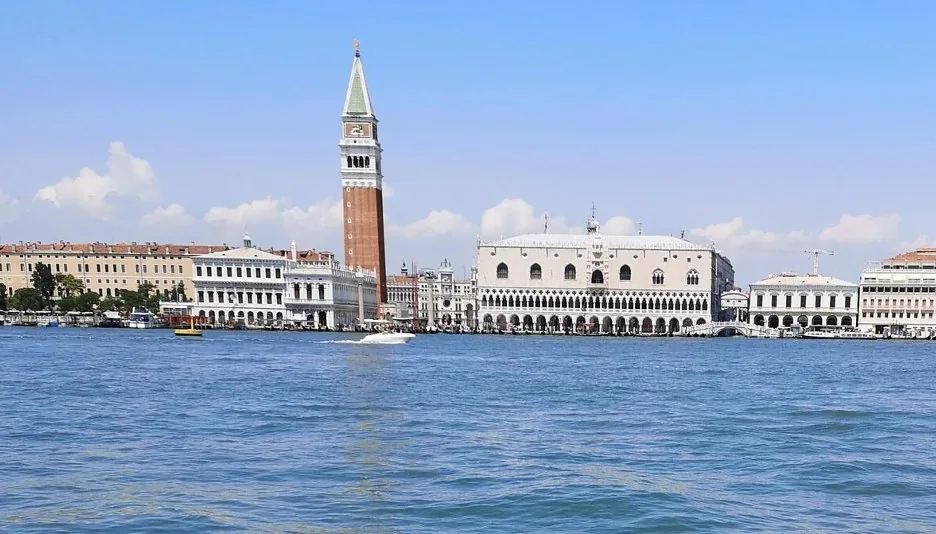
Venice: The Place Where the Car Stops
Venice requires a different understanding of private transportation.
A conventional car cannot bring you to the door of most hotels in the historic island city.
Road vehicles can reach places such as Piazzale Roma and Tronchetto. Beyond those access points, movement generally takes place on foot or by water.
This makes the railway particularly attractive.
Venezia Santa Lucia station is already on the island, beside the Grand Canal.
Depending on your hotel's location, you can continue by foot, vaporetto or private water taxi.
Arriving by private car
If you travel by car from Milan, Florence or another Italian city, the vehicle still needs to stop at an accessible road terminal.
You then need to arrange the remaining journey to your accommodation.
This can introduce another transfer, another luggage movement and another expense.
Arriving by train
A direct train to Venezia Santa Lucia avoids the need to cross from the mainland by road.
For many travellers, the most practical luxury arrangement is a premium railway ticket followed by a pre-arranged private water taxi.
However, the hotel's location determines whether a water taxi can provide access directly to the property.
Not every hotel has its own water entrance.
Some require a short walk from the nearest suitable landing point.
Before booking any Venice transfer, check:
- The precise arrival station or airport.
- Whether the hotel has a private water entrance.
- The closest suitable water taxi landing point.
- The amount of luggage.
- Any mobility requirements.
- Whether porter assistance is included or needs separate arrangements.
In Venice, the quality of a transfer is often determined by the last two hundred metres.
Naples to the Amalfi Coast: Where the Train Stops Being Enough
The railway is particularly efficient between Rome and Naples.
High-speed services can complete the journey in approximately one hour.
Continuing from Naples to the Amalfi Coast is a different matter.
There is no direct railway service into most of the coastal towns, including Positano and Amalfi.
Depending on the intended destination, seasonal connections and weather, the onward journey may involve a private car, ferry or a combination of transportation methods.
The arrangement we would usually consider
For travellers arriving from Rome:
- High-speed train from Rome to Naples or, where more suitable, Salerno.
- Pre-arranged onward transfer appropriate to the hotel location.
- Private driver or boat connection for selected excursions during the stay.
This avoids paying for several additional hours of motorway travel between Rome and Campania.
It also gives you more flexibility in choosing how to approach the coast.
When a boat may be preferable
During the operating season and in suitable weather, boat connections can provide an appealing alternative to some coastal road journeys.
But boats introduce their own considerations: luggage, embarkation points, sea conditions, operating schedules and access to the final hotel.
A hotel located above a coastal town may still require a road transfer after disembarkation.
The most elegant route on a map is not always the simplest route with four suitcases.
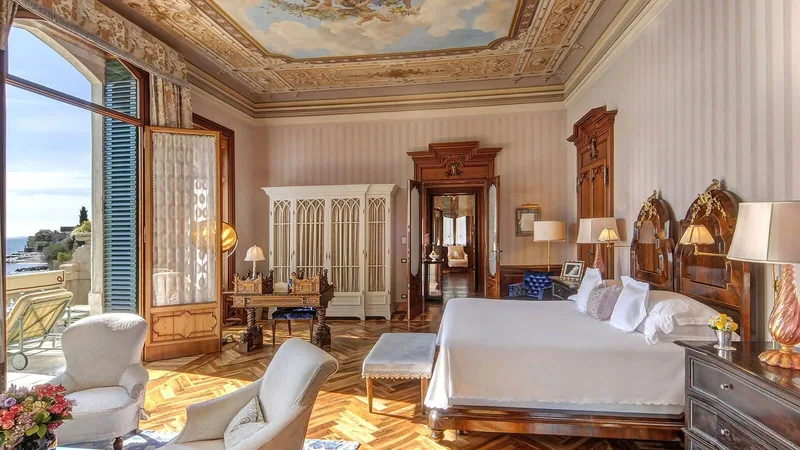
Lake Como: Decide According to Your Hotel
A transfer from Milan to Lake Como cannot be assessed without knowing where on the lake you intend to stay.
Como town, Cernobbio, Tremezzo, Bellagio and Varenna have different transport arrangements.
Como and Varenna have railway stations. Other lakeside destinations require additional road or water transportation.
A train journey that looks remarkably efficient may involve several more steps before you reach the hotel.
For this reason, we would compare the complete journey rather than simply the fare between Milan and the nearest station.
For two people arriving with substantial luggage, a private transfer from Milan or Malpensa Airport to a lakeside hotel may justify its cost.
A traveller staying close to a railway station and carrying relatively little luggage may prefer the train.
Published 2026 examples include MilanobyCar transfers from Milan to Lake Como starting at €215, depending on vehicle and destination.
Source: MilanobyCar: private driver in Italy
This is a specific supplier's starting price, not a universal transfer rate.
Once beside the lake, a private car is not always the most interesting way to move between places.
Public ferries and individually arranged boats can be practical or rewarding, depending on the route.
Sometimes the best transportation around Lake Como is not a more expensive car.
It is a boat.
When Hiring a Private Driver for the Entire Italy Trip Makes Sense
For most itineraries involving several major cities, we would not automatically retain a chauffeur throughout the journey.
There are circumstances, however, in which a continuous private transportation arrangement can be appropriate.
Multigenerational family travel
A family travelling with grandparents, young children and substantial luggage may value the consistency of having suitable transportation arranged throughout the trip.
The relevant comparison includes the effort of moving everyone through railway stations, managing bags and coordinating separate seating arrangements.
The vehicle must still suit the passengers, luggage and any child-seat requirements.
Travellers with particular accessibility requirements
Private transportation can be useful when walking distances, changes between transport modes or railway station navigation present difficulties.
A conventional premium sedan may not necessarily meet a traveller's accessibility needs.
The exact vehicle configuration and required assistance should be confirmed in advance.
Italian railway services also offer accessibility assistance through relevant operators and station services. For some travellers, assisted rail travel may be the more suitable option.
Official railway assistance information: RFI: assistance for persons with disability
Journeys concentrated in rural regions
If the entire trip involves smaller towns, countryside accommodation and individual appointments, continuous access to road transportation can make more sense.
A journey through Umbria and southern Tuscany may have very different requirements from an itinerary linking Rome, Florence and Milan.
Extensive professional or cultural appointments
A traveller visiting galleries, workshops, private collections and businesses in several locations may need transportation that can accommodate changes to the timing of appointments.
In this case, flexibility can be worth considerably more than the shortest theoretical travel time.
The agreed chauffeur arrangement should specify how changes, additional hours and mileage are handled.
What Exactly Are You Paying for With a Private Driver in Italy?
Professional chauffeur services in Italy are commonly described as NCC, short for noleggio con conducente.
The service generally involves a vehicle with a professional driver, booked in advance under agreed conditions.
It is distinct from ordinary street-hail taxi transportation.
When requesting a quotation, establish whether you are booking a point-to-point transfer or a vehicle at your disposal for a defined period.
These arrangements are priced differently.
Point-to-point transfer
A private driver collects you from a specified address and brings you to another.
The quotation normally relates to the agreed route and vehicle.
Additional stops, extended waiting or significant itinerary changes may cost extra.
Hourly or full-day chauffeur service
The vehicle and driver remain available for a defined number of hours, according to the agreed route, mileage and operating conditions.
This arrangement is particularly useful for countryside excursions, multiple appointments and days involving several stops.
Published supplier examples in 2026 include:
- MilanobyCar: full-day chauffeur service starting from €600 for eight hours.
- Cerrato Limo: eight-hour service examples of €792 for a selected sedan and €1,000 for a selected larger vehicle.
Sources: MilanobyCar: private driver in Italy, Cerrato Limo: private driver in Italy, prices
These figures illustrate individual providers' advertised pricing rather than an industry-wide tariff.
Questions to ask before booking
- Is the price for the vehicle or per person?
- Which vehicle category is included?
- How many passengers and suitcases can it accommodate?
- Are motorway tolls, parking and fuel included?
- Is VAT included where applicable?
- How much waiting time is included?
- What happens if the journey takes longer than expected?
- Are additional stops permitted?
- Does the driver speak your preferred language?
- Are child seats available if required?
- Is the operator appropriately authorised and insured?
- What are the cancellation conditions?
For multi-day services, also clarify driver accommodation, operating hours, return mileage and any additional expenses.
Do not assume that every item is included simply because the service is described as luxury transportation.
A Private Driver Is Not Necessarily a Tour Guide
This distinction deserves particular attention.
A knowledgeable driver may be able to recommend restaurants, suggest useful stopping points and provide practical information about the surrounding area.
However, professional driving and specialist cultural guiding are different services.
A chauffeur is not automatically qualified to provide a professional museum visit or detailed historical interpretation.
If the purpose of a journey is to understand the architecture of Renaissance villas, the history of a particular collection or the development of Italian painting, we would arrange an appropriate specialist.
Sometimes this means combining a driver with a separate guide.
In other cases, the guide may meet you at an individual destination.
The transportation enables the experience.
It does not replace the expertise that makes the experience valuable.
Luggage: The Practical Detail That Can Change Everything
Travelling in Business or Executive class does not necessarily mean that someone will carry your luggage between the hotel and your railway seat.
Passengers generally remain responsible for managing their luggage unless separate assistance has been arranged.
This matters particularly when travelling with several large cases, children, mobility equipment or shopping accumulated during the journey.
Premium high-speed rail services provide designated luggage storage, but the amount and configuration of space vary.
Italo publishes specific luggage guidance for its different travel categories.
Official luggage policy: Italo: luggage
For some journeys, a private station transfer and separately arranged porter assistance can address the principal inconvenience of travelling by train.
Luggage delivery services may also be worth investigating for longer itineraries.
Trenitalia provides information about luggage transportation services: Trenitalia: luggage transport services
Check availability, delivery timing and coverage before relying on a luggage service.
You may not need to pay for a private driver between Rome and Florence simply because you would prefer not to carry two heavy suitcases through the station.
What About Privacy, Comfort and Flexibility?
These three considerations are frequently grouped together, although they describe different things.
Privacy
A private car provides an environment shared only with your travelling companions and driver.
This can be particularly valuable for business conversations, families or travellers who prefer not to spend several hours in a public carriage.
Selected premium rail services offer private compartments, but these are not available on every departure.
Comfort
For a short motorway transfer, a premium car can be extremely comfortable.
For a six-hour journey, even a very good car may become less appealing than a train that allows you to stand, move around and reach your destination several hours earlier.
Some people also experience discomfort on winding mountain or coastal roads.
The vehicle category does not remove the characteristics of the road.
Flexibility
A private car can depart at an agreed time and incorporate planned stops.
A railway journey has a fixed schedule, although certain fares permit changes.
It is worth remembering that private drivers also have other commitments, operating limitations and agreed service hours.
A chauffeur arrangement does not necessarily mean unrestricted availability.
If flexibility is particularly important, establish precisely what is included before booking.
What Happens During Transport Strikes or Disruptions?
Italy's railway services can be affected by industrial action, infrastructure work, weather and other disruptions.
A private driver can sometimes provide an alternative, but arranging one at the last minute may become difficult when many other travellers require the same solution.
Road transportation has its own uncertainties, including congestion, accidents, weather conditions and access restrictions.
We would approach disruption planning according to the importance of the journey.
A railway delay between Florence and Venice may be inconvenient.
A delay that causes you to miss an international flight can have considerably greater consequences.
For important flight connections, allow sufficient time and consider alternative arrangements.
Check official operator notices rather than rely on general travel reports.
A well-designed itinerary should not depend on every connection working perfectly.
For more information about transport reservations and planning timelines, read How Far in Advance Should You Plan a Trip to Italy?
How We Combine Trains and Private Drivers in a 10-Day Italy Itinerary
Consider a journey through Rome, Florence, the Tuscan countryside and Venice.
Four destinations, nine nights and several different transportation requirements. (See also how transportation affects the length of an Italy itinerary.)
We would approach the route as follows.
| Journey | Recommended arrangement |
|---|---|
| Rome airport to hotel | Private transfer where appropriate |
| Three nights in Rome | Walking, local transportation and selected transfers |
| Rome to Florence | Premium high-speed train |
| Two nights in Florence | Mainly walking, with individual transfers if needed |
| Florence to Tuscan estate | Private driver |
| Two nights in rural Tuscany | Selected chauffeur services |
| Tuscan estate to Florence railway station | Private transfer |
| Florence to Venice | Premium high-speed train |
| Venice railway station to hotel | Walking or private water taxi, depending on location |
| Two nights in Venice | Walking and water transportation |
| Hotel to departure airport | Appropriate private water and/or road transfer |
This is an illustrative route rather than a fixed travel package.
The arrangement uses private transportation where it has a purpose.
It avoids retaining a chauffeur during periods when the traveller is mainly walking through historic city centres.
It also takes advantage of the railway for the journeys where high-speed services offer the greatest benefit.
For a detailed approach to building a private Italian itinerary, read How to Plan a Luxury Trip to Italy: An Insider's Guide.
How Much of Your Italy Budget Should Go Towards Transportation?
There is no universally appropriate percentage.
A journey through Rome, Florence and Venice can require relatively little private road transportation.
An itinerary involving several wineries, rural hotels and individual countryside visits will naturally have a higher transport allocation.
A multigenerational family may require larger vehicles.
A couple travelling with little luggage may be comfortable using the railway extensively.
The transportation budget should reflect the journey.
In our illustrative €10,000, €20,000 and €50,000 private Italy vacation budgets, transport expenditure varies according to the destinations, the number of private services and the level of logistical flexibility required.
A larger total budget does not necessarily justify replacing every railway journey with a private car.
Read What €10,000, €20,000 and €50,000 Can Buy You in Italy for examples of how transportation fits into three complete travel budgets.
For broader estimates covering accommodation, private guides, dining and other travel expenses, see How Much Does a Luxury Trip to Italy Cost in 2027?
Seven Transportation Mistakes to Avoid in Italy
1. Booking a private car for every intercity journey
Compare actual travel times before committing to road transportation between cities with excellent high-speed rail connections.
2. Assuming every premium railway ticket includes lounge access
Service categories, ticket conditions and station facilities differ. Check the actual benefits included with your reservation.
3. Ignoring hotel location
A railway journey may appear ideal until you discover that the hotel is forty kilometres from the nearest suitable station.
4. Forgetting luggage capacity
Passenger capacity and luggage capacity are not the same thing.
A vehicle advertised for six passengers may not accommodate six people and six large suitcases.
5. Treating Venice as an ordinary road destination
Always establish how you will complete the journey from the vehicle access point or railway station to the hotel.
6. Booking a countryside driver without agreeing on the route
Check the planned stops, included hours, mileage and overtime conditions before confirming the service.
7. Choosing transport according to prestige
A more expensive vehicle is not necessarily the most comfortable, efficient or interesting solution.
Choose transportation according to what the day requires.
Our Approach at Backstage Italy
When we design a private Italian journey, transportation is considered alongside the geography, accommodation and cultural programme.
We do not begin by deciding that a particular client needs a car throughout the trip.
We begin by understanding where the traveller wants to go and how they want to spend their time.
If the journey involves moving between Rome and Florence, we are likely to recommend the railway.
If it involves a day studying Romanesque architecture across several small Tuscan towns, we are likely to consider private road transportation.
If the traveller is staying on Lake Como, the answer may involve a car, a railway journey and several boat connections.
These decisions affect the budget, the pace and the character of the holiday.
A travel designer should be able to explain why a particular form of transportation has been chosen.
For more about the role of destination expertise in private travel, read Italy Travel Designer vs Travel Agent: What's the Difference?
Planning a journey through several Italian regions? We can help you decide where private transportation is worthwhile and where the railway will serve you better.
We have also written about travelling through Italy with children.
We have written separately about private transportation for multigenerational families.
See also our notes on the coordination of private transfers and travel arrangements.
We have also written about common Italian transport planning mistakes.
Frequently Asked Questions
Is it better to travel by private driver or train in Italy?
High-speed trains are generally preferable between major cities such as Rome, Florence, Milan and Venice. Private drivers are particularly useful for countryside journeys, multi-stop excursions, rural accommodation and places without convenient railway connections.
Is first class on Italian trains worth it?
For many travellers, premium railway categories provide worthwhile additional space and comfort. Frecciarossa Business and Italo Prima Business can be particularly suitable for private intercity travel. Executive categories may be worth considering for longer journeys or additional privacy.
Is a private driver faster than a train from Rome to Florence?
Generally, no. Direct high-speed trains take approximately ninety minutes between stations, while a private road transfer usually requires several hours. Actual door-to-door times depend on hotel locations, traffic and the selected departure.
How much does a private driver cost in Italy?
Published rates vary considerably. An illustrative planning allowance is €600–€1,000 or more for an eight-hour chauffeur service, while long-distance transfers can cost €700–€1,200 or more. Vehicle type, mileage, waiting time and included expenses affect the final quotation.
Can I hire a private driver for an entire Italy vacation?
Yes. Multi-day chauffeur services can be arranged, subject to the agreed route, vehicle, driver schedule and supplier conditions. For itineraries involving several major cities, combining trains and selected private transfers may be more efficient.
Do private drivers in Italy also provide guided tours?
Some drivers have considerable local knowledge, but chauffeur services and professional cultural guiding are distinct. Specialist museum and historical visits may require appropriately qualified guides.
Is Frecciarossa Business better than Italo Prima Business?
Both can provide comfortable premium travel. Compare the available departure times, stations, seating arrangements, fare conditions and train configurations rather than assume that one operator is always preferable.
Is Frecciarossa Executive worth the extra money?
It can be worthwhile for travellers who prioritise additional space, premium onboard services or a quieter environment. For short journeys, Business class may provide sufficient comfort at a lower cost.
Can I travel to the Amalfi Coast by train?
Not directly to most of its coastal towns. High-speed rail to Naples or Salerno can be combined with private road transportation or suitable seasonal boat connections.
Should I take a train or hire a driver for Tuscany?
Trains are useful for reaching several Tuscan cities. A private driver is generally more practical for countryside hotels, wineries, small villages and days involving several rural stops.
Can a private driver take me directly to my hotel in Venice?
Not if the hotel is within the car-free historic island city. A road transfer must end at an accessible vehicle terminal, after which you normally continue by foot or water transportation.
Is a private driver cheaper for a family travelling in Italy?
Not necessarily, but the comparison becomes closer as the group grows. Consider individual railway fares, station transfers, luggage, suitable vehicle capacity and the value of door-to-door assistance.
How far in advance should I book a private driver in Italy?
For countryside excursions and premium private transportation during popular travel periods, beginning two to four months ahead is a useful planning guideline. Complex multi-day arrangements or large groups may require earlier coordination.
Choose the Journey, Then Choose the Vehicle
One of the pleasures of travelling through Italy is that the experience changes according to how you move through the country.
Arriving in Venice by train, seeing the Grand Canal as you step outside the station, is a particularly beautiful introduction to the city.
Driving through the Langhe allows you to understand the relationship between its villages, vineyards and individual producers.
Approaching a historic villa on Lake Como from the water reveals an aspect of the architecture that you would miss from the road.
These are not interchangeable experiences.
The transportation is sometimes simply a practical necessity. At other times, it becomes part of what makes the journey interesting.
We would spend money accordingly.
Editorial note: Railway journey times and service categories were reviewed against official operator information in November 2026. Private transportation prices include illustrative 2027 planning allowances and examples of published 2026 supplier rates. They are not live quotations or Backstage Italy tariffs. Actual prices, schedules, vehicle availability and included services should be confirmed for the intended travel dates.
Spend your time in Italy, not getting across it.
The right transportation can give you more time for the places you came to see. We design private Italian journeys that combine comfortable railway travel, carefully selected drivers and individual arrangements according to the geography of your trip.
Discuss your Italy itineraryMore from the journal
Travel Planning
How to Plan a Luxury Trip to Italy: An Insider's Guide
How we turn your interests into a day-by-day plan for Italy.
Travel Planning
How Much Does a Luxury Trip to Italy Cost in 2027?
A practical guide to hotel prices, private experiences, and what is actually worth paying for.
Travel Planning
What €10,000, €20,000 and €50,000 Can Buy You in Italy
Three budgets, three private journeys and a closer look at how money changes the way you experience Italy.