
Travel Planning
The Most Common Mistakes Even Experienced Travelers Make in Italy
Why knowing how to travel is not necessarily the same as knowing how to travel through Italy.
By Backstage Italy · · 31 min read
Experienced travellers rarely need to be told to reserve accommodation in advance or arrive at the airport on time.
They know how to compare hotels. They understand cancellation policies. They have used private drivers, booked excellent restaurants and organised complicated international journeys before.
Yet Italy has a peculiar ability to undermine otherwise competent travel planning.
A hotel that appears perfectly located turns out to require a substantial drive for every evening meal.
A beautifully organised itinerary leaves almost no time to enjoy the properties that account for most of its budget.
A carefully selected museum programme ignores the churches and historic buildings that explain the very paintings the traveller has come to see.
Sometimes the problem is a lack of local knowledge.
More often, it is the application of perfectly reasonable international travel habits to a country that operates according to its own geography, institutions, seasons and daily rhythms.
Our work in Italian cultural travel began in 2016. Over the years, certain planning decisions have emerged as particularly consequential.
These are the Italy travel planning mistakes we would pay attention to, even if you have travelled extensively and already know the country.
1. Planning the Journey Around Places You Want to Visit Rather Than Places That Belong Together
Italy looks remarkably manageable on a map.
Rome is somewhere below Florence. Venice is further north. Lake Como appears reasonably close to Milan, while the Amalfi Coast seems like a natural addition to a journey beginning in Naples.
Individually, these are perfectly sensible destinations.
Collectively, they may produce a rather exhausting holiday.
Consider a hypothetical ten-day journey:
- Rome: two nights.
- Florence: two nights.
- Venice: two nights.
- Lake Como: one night.
- Amalfi Coast: two nights.
Nine nights in five accommodation bases.
The traveller has certainly included several extraordinary destinations.
They have also committed to four hotel changes and a substantial transfer between northern and southern Italy.
The problem is not whether the journey is technically possible. It is the amount of time and energy required to make it possible.
Italy's geography should be considered in terms of actual transportation, rather than straight-line distances.
The connection between Rome and Florence is straightforward.
The connection between a remote country estate in Tuscany and a particular hotel on the Amalfi Coast requires a different calculation.
What we would do instead
Choose a geographical direction.
For ten days, consider three accommodation bases that have a logical relationship.
Rome, Florence and Venice.
Turin, the Langhe and Lake Maggiore.
Naples, the Amalfi Coast and the Sorrento Peninsula.
Each journey provides geographical variety without repeatedly changing direction.
The route should also respond to your arrival and departure arrangements.
Sometimes the most useful improvement is simply choosing a different departure airport.
Read our guide How Many Days Do You Really Need in Italy? for practical recommendations on trip duration and accommodation bases.
2. Booking the Hotels Before Designing the Journey
Beautiful hotels have considerable persuasive power.
A photograph of a terrace can determine where someone decides to spend four nights.
An interesting article about a historic villa can introduce an entirely new destination into an otherwise coherent itinerary.
There is nothing wrong with travelling somewhere because you want to experience a particular property.
The mistake is confirming several expensive reservations before understanding how those properties work together.
Imagine that you have booked a hotel near Montalcino, another in central Florence and a third on the southern shores of Lake Garda.
Only afterwards do you begin researching the places you want to visit.
You discover that your preferred wine producers are closer to another part of Tuscany. The Florentine museums you want to see are closed on your only full day in the city. The journey to Lake Garda occupies much of the following day.
The hotels may be excellent.
Their sequence may be less so.
What we would do instead
Identify the geographical route before confirming non-refundable accommodation.
Establish the approximate number of nights in each area and the principal reasons for staying there.
Then select the hotels.
If a particular property is genuinely the reason for travelling, allow it to determine that portion of the itinerary.
But recognise that this is a conscious choice rather than an incidental accommodation decision.
For a more detailed explanation of our planning approach, read How to Plan a Luxury Trip to Italy: An Insider's Guide.
3. Choosing Hotels According to Prestige Rather Than Location
A famous hotel can be a wonderful place to stay.
It can also be the wrong hotel for a particular journey.
Location in Italy is more complicated than a description such as central, countryside or lakeside suggests.
In Venice, a property with exceptional interiors may require several bridges and a considerable walk to reach the nearest convenient water transport.
On Lake Como, a hotel may be beautifully positioned for enjoying the property itself but less practical for the excursions you intend to make.
In Tuscany, a country estate can be within a reasonable distance of a town while remaining inconvenient for repeated evening restaurant visits.
These differences are particularly important when travelling with children, older relatives or substantial luggage.
Ask what the location means in practice
| Hotel description | What to establish before booking |
|---|---|
| Central Venice hotel | Water access, bridges and luggage arrangements |
| Tuscan countryside estate | Realistic driving times to restaurants and cultural destinations |
| Lakeside property | Ferry access, road connections and orientation |
| Historic city hotel | Walking routes, noise, vehicle access and neighbourhood |
| Secluded luxury villa | Staffing, independent transportation and nearby services |
| Amalfi Coast hotel | Stairs, beach access, road access and elevation |
A hotel can be exceptional without being convenient.
Sometimes that inconvenience is entirely acceptable.
A remote country house may be precisely what you want from a holiday.
The important thing is understanding the consequences before confirming the reservation.
4. Spending Too Much on Accommodation You Have No Time to Enjoy
One of the stranger features of luxury travel is the willingness to spend considerable sums on a hotel while organising an itinerary that allows remarkably little time to experience it.
You arrive at six in the evening.
The following morning, a private driver collects you at eight.
You return shortly before dinner.
The next day involves another excursion.
Then it is time to leave.
Consider a three-night stay costing €1,500 per night.
The accommodation alone amounts to €4,500.
If the property has historic gardens, beautifully designed interiors, a swimming pool and an excellent restaurant, those facilities presumably contributed to the decision to stay there.
An excessively demanding itinerary can prevent you from appreciating most of them.
This is particularly relevant to Italian lakeside hotels, rural estates and coastal properties, where the accommodation may be a substantial part of the experience.
What we would do instead
Distinguish between two kinds of accommodation.
A hotel that primarily enables you to experience a city.
And a property that is itself one of the reasons for travelling.
For the first, location and practical comfort may be the priorities.
For the second, the itinerary should include meaningful time at the property.
An afternoon in the garden does not need to be justified by another reservation.
For examples of how accommodation decisions influence the complete travel budget, read What €10,000, €20,000 and €50,000 Can Buy You in Italy.
5. Assuming Private Transportation Is Always Better
Hiring a private driver is often considered an automatic component of luxury travel.
In Italy, this assumption can produce unnecessary expense and considerably longer journeys.
Between Rome and Florence, Milan and Bologna, or Florence and Venice, high-speed rail can provide an efficient and comfortable alternative.
A private driver becomes particularly valuable in the countryside, where the railway cannot easily connect individual wineries, smaller towns and rural accommodation.
The quality of the transportation depends on the geography of the journey.
Consider travelling between central Rome and central Florence.
A direct high-speed train generally takes approximately ninety minutes between stations.
Driving usually requires several hours.
Even when the additional station transfers are considered, the railway may remain the more efficient choice.
A different calculation applies to a day visiting two vineyards, a medieval abbey and a countryside restaurant.
Here, private road transportation may make the entire experience possible.
What we would do instead
Choose the transport according to the purpose of the journey.
| Journey | Often the more appropriate option |
|---|---|
| Rome to Florence | High-speed train |
| Milan to Venice | High-speed train followed by suitable local transportation |
| Several wineries in the Langhe | Private driver |
| Florence to a remote country estate | Private transfer |
| Exploring multiple Tuscan hill towns | Private driver or suitable rental car |
| Moving around central Venice | Walking and water transportation |
| Amalfi Coast excursions | A combination of road or seasonal boat transportation |
Actual decisions should reflect the travellers, luggage, accommodation locations, mobility requirements and available services.
For a detailed comparison of costs, journey times and service categories, read Private Drivers or First-Class Trains in Italy?
6. Relying on Transport Advice From Your Previous Trip
Returning visitors often assume that the railway, museum and local transport procedures they used several years ago remain unchanged.
This is particularly risky when relying on old travel articles.
Italy's transport operators periodically revise their ticketing systems, fare conditions and validation requirements.
Regional railway tickets
There is an important distinction between different types of railway tickets.
Trenitalia's current Digital Regional Ticket is automatically validated at the scheduled departure time of the selected train.
A separate manual check-in is no longer necessary for this specific digital ticket type.
Paper regional tickets and tickets issued under other systems may have different requirements.
Do not apply the instructions for one operator or ticket format to every Italian railway journey.
Official information: Trenitalia: digital regional tickets
Driving in historic city centres
Many Italian cities operate restricted traffic zones, commonly known as ZTL.
Access depends on local regulations, vehicle permissions, dates and operating hours.
A navigation application suggesting a particular route does not establish that you are permitted to drive along it.
If your hotel is within a restricted area, ask the property about the applicable vehicle access procedures.
Do not assume that a hotel reservation automatically authorises entry.
Official driving information: Italia.it: driving in Italy
Venice's visitor regulations
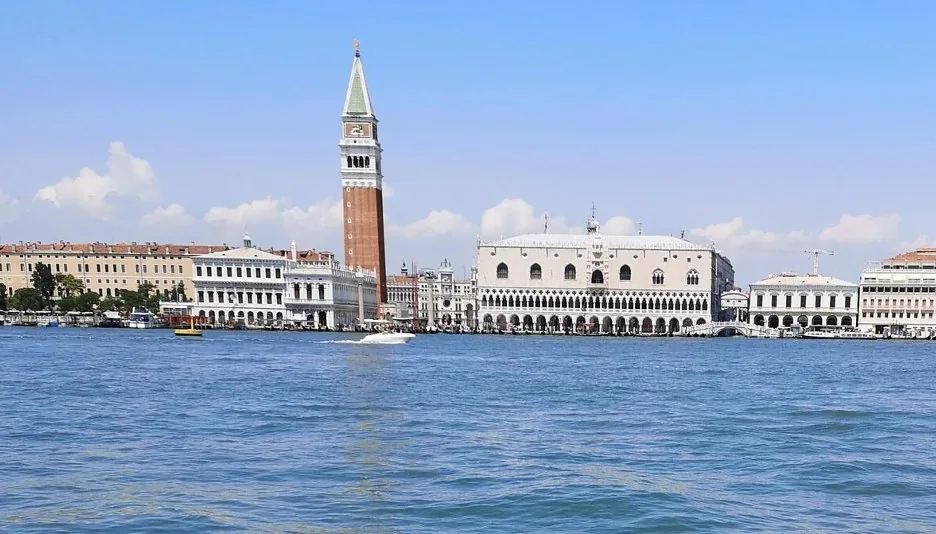
Venice has announced the continuation of its visitor access fee experiment in 2027.
Under the municipal announcement of 20 November 2026, the system is scheduled to apply on 72 selected dates between 26 March and 15 August 2027, during designated daytime hours.
The announced charge is €5 for eligible visitors paying at least ten days ahead and €10 for later payments.
Exemptions and exclusions apply.
Overnight visitors should also check whether any registration or exemption documentation is required under the rules applicable to their stay.
Official information: Venice access fee (Contributo di Accesso)
The relevant point is not the relatively small cost of the fee.
It is that practical arrangements can change between one Italian holiday and the next.
Always consult the current official information before travelling.
7. Believing That May and September Are Automatically Quiet
For years, travellers have been advised to visit Italy in May or September.
The weather is often appealing. The countryside is attractive. The intense heat of midsummer can generally be avoided.
These are entirely reasonable arguments.
The difficulty is that May and September are now highly desirable travel periods in many Italian destinations.
Florence, Venice, Rome and popular countryside properties can experience substantial demand.
Piedmont's autumn gastronomic calendar creates another pattern.
Milan's design and fashion events can influence accommodation availability independently of the conventional tourism seasons.
The Dolomites have separate summer and winter demand.
There is no single national calendar that reliably describes when Italy will be quiet.
Plan according to the destination
If the principal purpose of the holiday is art, January or November may deserve more consideration than September.
If you want to explore historic gardens, spring may be appropriate despite higher demand.
If you are travelling for a wine-related experience, agricultural schedules and local events matter as much as visitor numbers.
And if a particular coastal property is central to the holiday, establish its actual seasonal operating dates.
Choosing the right month requires understanding what you intend to do during it.
Read How to Avoid Crowds in Italy Without Missing Its Masterpieces for a more detailed approach to seasonal cultural travel.
8. Booking the Easy Things First and Leaving the Difficult Things Until Later
Experienced travellers are often comfortable arranging accommodation and transportation independently.
The difficulty arises when a journey has been built around an experience that cannot be confirmed at the same time as the other reservations.
Perhaps the entire reason for travelling to Milan is a performance at La Scala.
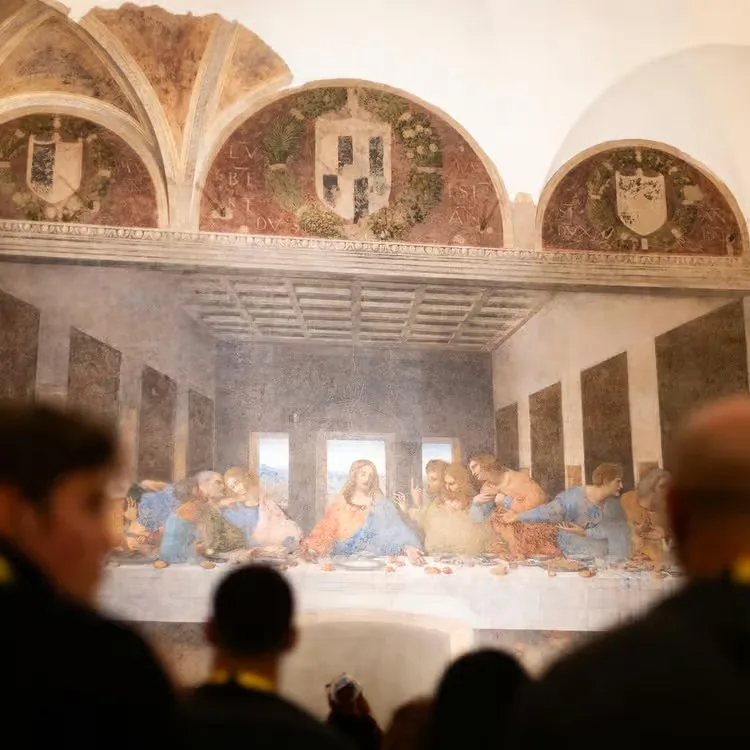
Perhaps a visit to Leonardo's Last Supper is the most important part of a short stay.
Perhaps you want to spend three days with a particular specialist in Venetian architecture.
Each arrangement has its own calendar.
Different services become available at different times
The Colosseum currently releases timed admission tickets 30 days before the intended visit.
Leonardo's Last Supper requires reservations, with admission released in scheduled batches.
Individual theatre productions have their own sales-opening dates.
Specialist guides may accept reservations months before the museum tickets required for the visit become available.
A desirable villa may require early commitment even though the restaurants you want to visit have not yet opened their booking calendars.
| Reservation | What to establish |
|---|---|
| Landmark hotel or private villa | Availability, cancellation conditions and required deposit |
| Major performance | Actual programme and ticket-release schedule |
| Specialist guide | Individual availability and scope of the visit |
| Museum admission | Official booking window and entry requirements |
| Private restaurant or chef | Booking conditions and operating schedule |
| Private cultural appointment | Whether the institution or business accepts the proposed visit |
What we would do instead
Identify which reservations are essential and which can be replaced.
If an experience determines the entire holiday, establish its practical availability or booking process before committing to the rest of the journey.
Where reservations have not yet opened, maintain suitable flexibility.
Official cultural booking references: Colosseum Archaeological Park: opening times and tickets, Cenacolo Vinciano: visitor information
For a complete reservation calendar, read How Far in Advance Should You Plan a Trip to Italy?
9. Overestimating What a Private Guide Can Provide
A private guide can transform a cultural visit.
The right person can help you understand the relationship between artworks, architecture, patronage and the historical circumstances in which they were created.
But the word private is frequently misunderstood.
A private guided tour does not necessarily include private admission.
A timed ticket does not guarantee an empty museum.
A guide's professional relationships do not automatically provide access to a restricted building or a collection that is closed to the public.
These are separate arrangements.
Understand what you are purchasing
| Service | Actual purpose |
|---|---|
| Private guide | Individual cultural interpretation |
| Timed admission | Entry during a specified booking period |
| Priority admission | Access under the venue's applicable priority arrangements |
| After-hours visit | Specifically authorised admission outside public opening hours |
| Exclusive-use visit | An arrangement granting a defined group individual access |
| Specialist appointment | A visit agreed with the relevant professional, institution or owner |
If a premium experience promises something beyond ordinary admission, ask for the precise details.
Which spaces are included?
Will other visitors be present?
Who has authorised the visit?
Are admission tickets included?
What happens if access conditions change?
The price of the experience alone cannot answer these questions.
Good cultural guiding deserves to be valued for its intellectual quality, even when it takes place during ordinary public opening hours.
10. Treating Italian Art as a Museum Checklist
The Uffizi, the Vatican Museums and the Gallerie dell'Accademia are extraordinary institutions.
But Italy's artistic heritage is not confined to museums.
Much of the country's most interesting art remains connected to the buildings, religious communities and social institutions for which it was created.
In Florence, Masaccio's Holy Trinity belongs to Santa Maria Novella.
Pontormo's Deposition can be found in Santa Felicita.
In Rome, Caravaggio's paintings relating to Saint Matthew remain in the Contarelli Chapel at San Luigi dei Francesi.
In Venice, Tintoretto's work at the Scuola Grande di San Rocco cannot be understood independently of the building it occupies.
A conventional museum itinerary may contain several celebrated paintings while overlooking the world that produced them.
What we would do instead
Choose a cultural subject and follow it through the city.
For example, a Florentine journey concerned with Renaissance patronage could combine painting at the Uffizi with churches, guild-related sculpture and historic domestic interiors.
A Roman journey concerned with seventeenth-century art could connect churches, palaces and architectural works rather than consist entirely of museum visits.
Venice could be approached through painting, textiles, maritime commerce and historic residences.
These connections require more preparation than a list of essential attractions.
They also produce a considerably more coherent cultural experience.
Check current visiting arrangements, restoration work and religious services before planning visits to individual institutions.

11. Choosing Restaurants According to International Prestige
Italy has some extraordinary fine-dining restaurants.
It also has extraordinary restaurants that would never belong in the same category.
One can provide a highly developed contemporary interpretation of regional ingredients.
Another may prepare the same small selection of local dishes that its customers have been ordering for decades.
Neither needs to be assessed according to the other's standards.
A mistake frequently made in luxury travel is treating every important evening as an opportunity to reserve the most prestigious available restaurant.
The result can become repetitive.
Several consecutive tasting menus may tell you less about regional Italian cooking than a more varied selection of establishments.
Plan a gastronomic rhythm
In Piedmont, spend time with traditional regional cooking and its relationship to wine.
In Emilia-Romagna, explore the products and preparations that shape everyday food culture.
In Venice, consider the relationship between the lagoon, local ingredients and the city's historic commercial connections.
In Rome, pay attention to neighbourhood traditions and the distinction between different kinds of Roman cooking.
For a traveller interested in contemporary gastronomy, selected ambitious restaurants may form an important part of the journey.
They need not determine every evening.
A useful dining framework for seven nights
| Type of meal | Suggested approach |
|---|---|
| Destination restaurant | One or two carefully chosen evenings |
| Traditional regional cooking | Several meals in appropriate local establishments |
| Country lunch | A longer meal connected with a regional excursion |
| Informal evening | Leave space for something simpler |
| Hotel dining | Particularly worthwhile when the property itself is important |
| Unreserved meal | Allow the day to develop independently |
This is an illustrative framework rather than a prescribed number of restaurant reservations.
The objective is variety and relevance.
For additional editorial context, Italy Segreta's discussion of tourist-oriented restaurant choices provides useful considerations: Italy Segreta: the tourist trap handbook
12. Ignoring Italy's Daily Rhythm
It is possible to organise a perfectly logical itinerary on paper that does not correspond to the way a particular Italian destination operates.
A visitor arrives in a small town expecting to find several independent shops open in the middle of the afternoon.
A family intends to visit a particular church during a religious service.
Someone expects to have an early dinner in a traditional restaurant whose kitchen opens later.
Another traveller assumes that a small agricultural producer will accept visitors throughout the working week.
These are not necessarily failures of hospitality.
They are differences between the visitor's proposed schedule and the actual organisation of local life.
Opening hours vary considerably
Larger cities, tourist-oriented businesses, rural towns and independent workshops do not follow identical daily schedules.
Some establishments close for part of the afternoon.
Others operate continuously.
Museums have different weekly closure days.
Restaurants may serve lunch and dinner within defined periods.
Churches are active religious institutions, not simply cultural attractions.
Working ateliers may organise visits around their own production commitments.
What we would do instead
Consider the actual opening hours of the places you intend to visit.
Allow lunch to occupy a reasonable part of the day.
Avoid organising an itinerary that requires every independent business to operate according to your preferred schedule.
For a family travelling with young children, restaurants should also be selected according to realistic meal times.
A cultural day works considerably better when its timing corresponds to the place in which it is taking place.
13. Assuming That Returning to Italy Means Visiting More Destinations
A first trip to Italy often contains an understandable ambition to see the country's principal cultural cities.
The second trip does not need to contain the next ten destinations on a longer list.
It can instead become more specific.
Suppose you particularly enjoyed Venetian painting during your first journey.
A subsequent holiday could explore the relationship between Venice, Ravenna and the eastern Mediterranean.
If you became interested in Renaissance court culture, Mantua, Ferrara and Urbino offer a coherent direction.
A fascination with twentieth-century design could lead to Milan, Turin and the Veneto.
An interest in regional food might justify an entire week in Piedmont or Emilia-Romagna.
The journey begins to acquire a subject.
Organise your return around an interest
| Interest | Possible geographical focus |
|---|---|
| Renaissance courts | Mantua, Ferrara, Urbino |
| Historic gardens | Lake Maggiore, northern lakes, Tuscany |
| Italian design | Milan, Turin, Veneto |
| Byzantine and early Christian art | Ravenna, Aquileia, Venice |
| Wine and agricultural traditions | Piedmont, Friuli, Etna |
| Literary history | Trieste, Recanati |
| Traditional craftsmanship | Florence, Faenza, Venice |
| Mediterranean cultural history | Palermo, Syracuse, Campania |
You may also discover that returning to Florence for five nights is more rewarding than visiting five places you have never seen.
Familiarity can improve the experience of a city.
It allows you to look beyond the things you noticed the first time.
Read Italy for Returning Visitors: Where to Go After the Classics for more detailed regional and thematic suggestions.
14. Designing One Holiday for Several People Without Asking What They Want
A luxury itinerary can be extraordinarily detailed and still fail to suit the people taking it.
This becomes particularly apparent when couples, friends or several generations of a family travel together.
One person wants to spend substantial time in museums.
Another is interested in gardens and regional food.
A teenager wants to explore contemporary fashion.
Someone else simply wants several mornings without having to be ready at a specified time.
The itinerary may have been constructed according to the interests of the person who did the research.
Everyone else has agreed to it without quite understanding what the actual days will involve.
What we would do instead
Ask each traveller what would make the holiday worthwhile.
The answers need not be conventional travel preferences.
A child may love insects, drawing or mechanical objects.
An adult may be interested in historic furniture or photography.
An older relative may want to spend a substantial amount of time in one particular collection.
Someone may prefer to remain at the hotel while the others visit another town.
These requirements should influence the programme from the beginning.
The solution does not necessarily involve finding activities that appeal equally to every traveller.
There can be separate cultural visits, followed by lunch together.
One person can spend an afternoon at a museum while another remains at the accommodation.
This is particularly useful for extended families.
A private journey should create enough flexibility for individual interests rather than make everyone conform to one schedule.
For more information, read:
Luxury Family Travel in Italy: Beyond the Usual Attractions
How to Plan a Multigenerational Trip to Italy
15. Mistaking a Fully Booked Itinerary for a Well-Planned Holiday
This may be the most consequential mistake of all.
There is a particular satisfaction in receiving a travel document in which every reservation has been confirmed.
The hotels are organised.
The drivers know where to collect you.
Every morning has a cultural activity.
Every afternoon has a destination.
Every evening has a restaurant.
The problem becomes apparent after several days.
You have discovered a particular artist you want to understand better.
A guide mentioned a church that sounded fascinating.
The countryside hotel is considerably more beautiful than you expected.
You would like to spend another hour at lunch.
But the itinerary is already waiting for you somewhere else.
Experienced travellers can be particularly vulnerable to this mistake because they are good at organising things.
They understand the value of preparation and dislike unnecessary uncertainty.
Yet there is a distinction between preparing for a journey and determining everything that will happen during it.
What we would do instead
Identify the arrangements that genuinely require advance commitment.
Reserve those carefully.
Then protect certain periods from additional reservations.
A free afternoon in Florence is not an omission.
An evening without a restaurant booking may become a particularly good evening.
An extra morning at a country house may be one of the reasons you remember the property so fondly.
A well-planned itinerary should leave enough room for the traveller to discover something the planner could not have anticipated.
An Example of How We Would Redesign an Overplanned Italy Trip
Consider a hypothetical couple planning ten days in Italy.
They have already travelled extensively, enjoy excellent hotels and want to experience art, regional food and the countryside.
Their original itinerary includes five accommodation bases.
The original itinerary
| Destination | Nights |
|---|---|
| Rome | 2 |
| Florence | 2 |
| Venice | 2 |
| Lake Como | 1 |
| Amalfi Coast | 2 |
| Total | 9 |
The itinerary contains several of Italy's most recognisable destinations.
It also requires four accommodation changes.
Moving from Lake Como to the Amalfi Coast introduces a particularly substantial geographical transition.
The couple has chosen places they genuinely want to visit, but the structure gives them relatively little time in each one.
The redesigned itinerary
| Destination | Nights |
|---|---|
| Florence | 3 |
| Tuscan countryside | 3 |
| Venice | 3 |
| Total | 9 |
The redesigned journey has a different character.
Florence provides several days of focused cultural travel.
The countryside introduces regional food, agricultural landscapes and time at a substantial property.
Venice offers a culturally interesting conclusion without requiring a transfer across the entire country.
The couple now has two accommodation changes rather than four.
They can devote more of their budget to selected specialist visits and appropriate accommodation.
The total duration has not changed.
What has changed is the amount of the holiday that can actually be experienced.
Why the revised itinerary may be better
| Consideration | Original itinerary | Redesigned itinerary |
|---|---|---|
| Calendar days | 10 | 10 |
| Accommodation nights | 9 | 9 |
| Accommodation bases | 5 | 3 |
| Hotel changes | 4 | 2 |
| Very long geographical transfer | Required | Avoided |
| Time at countryside accommodation | None | 3 nights |
| Cultural focus | Broad introduction | More concentrated |
| Flexibility | Limited by frequent movement | Greater scope for independent time |
This is an illustrative planning exercise, not a real client case study.
Another couple might prefer a Rome–Campania itinerary or a journey through Piedmont and the lakes.
The appropriate redesign depends on the people travelling.
The principle remains the same: reducing the number of competing destinations can improve the quality of the whole journey.
The Most Expensive Italy Travel Mistakes Are Not Always Financial
Some planning mistakes have obvious costs.
An unsuitable non-refundable hotel reservation.
An unnecessarily expensive private transfer.
An additional night required because of poorly coordinated transportation.
Others are less immediately visible.
Consider spending several thousand euros on accommodation that you hardly experience.
Consider using an entire afternoon to move between destinations when the journey could have been structured differently.
Consider paying for a private museum visit that has little relationship to your cultural interests.
The invoice may be entirely correct.
The expenditure may still have contributed relatively little to the holiday.
Before allocating more money, consider what is missing
Perhaps the itinerary needs another night rather than a better suite.
Perhaps you need a specialist guide rather than another private transfer.
Perhaps the hotel is already excellent, but the location requires a different daily programme.
Perhaps the family needs more independent time rather than additional shared activities.
The most useful financial decision may be to redistribute the existing budget.
For a more detailed discussion of accommodation, cultural visits and transportation costs, read How Much Does a Luxury Trip to Italy Cost in 2027?
A Pre-Booking Checklist for Experienced Italy Travellers
Before confirming the principal reservations, we would review the following questions.
Geography
- Does the route follow a logical geographical direction?
- Are the actual door-to-door transfer times reasonable?
- Have arrival and departure airports been selected according to the complete itinerary?
- Is every accommodation change necessary?
Accommodation
- Does each property suit the purpose of that particular stay?
- Is its location practical for the intended experiences?
- Have the actual room categories and configurations been checked?
- Is there enough time to enjoy the most important properties?
Cultural experiences
- Are the principal museum visits and specialist appointments relevant to your interests?
- Have official admission procedures been checked?
- Is the difference between private guiding and private access clear?
- Have temporary exhibitions, restoration work and weekly closures been considered?
Restaurants and daily organisation
- Does the dining programme reflect regional food culture?
- Are restaurant locations compatible with the itinerary?
- Have individual opening hours been checked?
- Are there enough opportunities for informal meals and independent time?
Transportation
- Have high-speed trains and private drivers been compared according to the route?
- Are luggage capacity and accessibility requirements established?
- Have current ticketing and driving regulations been checked?
- Is there a reasonable alternative if an important connection is disrupted?
People and preferences
- Does the itinerary reflect the interests of everyone travelling?
- Are mobility, dietary and family requirements accounted for?
- Have responsibilities for managing reservations and changes been established?
- Does the itinerary leave space for the unexpected?
If several of these questions remain unanswered, it may be worth revisiting the structure of the journey before making further commitments.
When Should You Ask a Travel Designer to Review Your Italy Plans?
You do not necessarily need someone to organise the entire holiday.
Experienced travellers may already have substantial knowledge of Italy, established hotel preferences and confidence in making reservations.
Professional assistance can still be useful when the itinerary becomes more complex.
Perhaps you have selected several properties but are unsure whether they work geographically.
Perhaps you want a specialist cultural programme rather than conventional sightseeing.
Perhaps you are travelling with an extended family and need to reconcile different interests.
Perhaps you have already arranged the main journey and require assistance with individual reservations.
The appropriate service depends on the work that remains.
A private travel designer can help reconsider the structure of the itinerary.
A concierge can assist with selected arrangements within an existing journey, subject to the agreed scope.
A specialist guide can provide individual cultural interpretation.
These are related but distinct forms of assistance.
Read Is Hiring a Private Travel Planner for Italy Worth It? if you are considering comprehensive professional planning.
If your hotels and flights are already organised, read What Does a Private Concierge in Italy Actually Do?
Our Approach at Backstage Italy
Our work in Italian cultural travel began in 2016.
The experience accumulated over those years influences how we look at an itinerary.
We are interested in what the traveller intends to understand, not simply which places they intend to visit.
We want to know whether the accommodation supports the journey, whether the transportation has been chosen appropriately and whether the cultural experiences have a meaningful relationship to the traveller's interests.
Sometimes the most useful recommendation is to remove something.
A destination that does not belong geographically.
A private transfer that offers little practical advantage.
A hotel change that interrupts an otherwise interesting regional stay.
A museum reservation that has been included simply because the institution is famous.
Removing these arrangements can create space for something considerably more valuable.
The traveller may discover that the journey they want is simpler than the journey they initially imagined.
That does not make it less sophisticated.
It usually means the planning has become more precise.
Already planning Italy but unsure whether your itinerary works as well as it could? Discuss your existing plans with Backstage Italy.
Frequently Asked Questions
What are the biggest mistakes travellers make when planning Italy?
The most consequential mistakes include visiting too many destinations, booking accommodation before establishing the route, underestimating transfer times, choosing hotels without considering their locations and filling the itinerary with too many scheduled activities.
What should I avoid when planning a luxury trip to Italy?
Avoid assuming that more expensive services are always better. Consider whether private transportation, premium accommodation and individual cultural experiences actually improve the particular journey you want to take.
Is visiting five Italian cities in ten days a mistake?
It is possible, but five accommodation bases in nine nights can create considerable logistical work and leave relatively little time in each destination. Three well-connected bases generally provide a more manageable starting point.
Should I book hotels or flights first when planning Italy?
Establish the geographical structure, check accommodation and transport availability together, and identify any essential events or experiences before confirming restrictive reservations.
Is September less crowded than summer in Italy?
Not necessarily. September can be particularly popular in cultural cities, wine regions and desirable countryside properties. Visitor patterns vary according to destination and local events.
Do private guides in Italy provide exclusive access?
An ordinary private guided tour does not automatically include exclusive or after-hours admission. Such arrangements require separate authorisation and confirmation from the relevant institution.
Should I hire a private driver throughout my Italy vacation?
Not necessarily. High-speed trains are often preferable between major cities, while private drivers can be particularly valuable in rural areas and for excursions involving several stops.
Do digital train tickets in Italy still need to be validated manually?
Trenitalia's current Digital Regional Ticket is automatically validated at the scheduled departure of the selected train. Other ticket types and operators may have different conditions. Check the instructions applicable to your specific ticket.
Can I drive directly to my hotel in an Italian historic centre?
Not always. Many cities operate restricted traffic zones. Check the local rules and ask the hotel about the appropriate vehicle access procedures before entering the area.
Should I book every restaurant before travelling to Italy?
No. Reserve particularly important restaurants and meals requiring advance coordination, but allow some flexibility. The right balance depends on the destination, season, group size and culinary interests.
What is the best way to avoid overplanning Italy?
Limit accommodation changes, identify one principal activity for most days and protect certain periods from additional reservations. Distinguish essential advance bookings from arrangements that can remain flexible.
Can a travel designer improve an itinerary I have already planned?
Yes, depending on the scope of assistance. Reviewing geographical connections, hotel locations, transportation and cultural priorities can reveal opportunities to improve an existing itinerary. Confirmed non-refundable reservations may limit the available changes.
What mistakes do returning visitors make in Italy?
Returning visitors may try to visit an increasingly long list of destinations, rely on outdated practical information or overlook opportunities to develop more specialised journeys around their interests.
Do I need a travel planner if I am already an experienced traveller?
Not necessarily. Professional assistance becomes particularly useful when the journey involves several regions, specialist cultural interests, complex family logistics or individual arrangements that require substantial destination knowledge.
Italy Does Not Need to Be Conquered
There is a certain pleasure in having organised a complicated journey successfully.
Everything happens at the intended time. Every reservation works. Every destination has been reached.
But there is another kind of satisfaction that comes from travelling through Italy.
Knowing why a particular building matters.
Understanding something about the landscape through which you have spent several days travelling.
Recognising a dish, an architectural detail or a subject in a painting that you would not have noticed before.
Having enough time to follow an unexpected interest.
These experiences are difficult to measure through the number of destinations visited or the value of the reservations made.
They are also rather difficult to arrange when every hour of the journey has already been allocated.
The purpose of good travel planning is to make those experiences more possible.
Not to demonstrate how much can be fitted into ten days.
Editorial note: The itineraries and financial examples in this article are hypothetical. Official Trenitalia ticketing information, Italian driving guidance, cultural admission procedures and Venice's announced 2027 visitor access fee arrangements were reviewed on 24 November 2026. Regulations, schedules, admission procedures and supplier availability may change. Seasonal and itinerary recommendations reflect editorial travel-planning considerations rather than guaranteed outcomes.
A better itinerary begins with better questions.
Already have a list of hotels, destinations or experiences in mind? We can help you understand how they fit together and whether the journey reflects what you actually want from Italy.
Our approach combines cultural knowledge with practical travel design.
Discuss your Italy plansMore from the journal
Travel Planning
How to Plan a Luxury Trip to Italy: An Insider's Guide
How we turn your interests into a day-by-day plan for Italy.
Travel Planning
Is Hiring a Private Travel Planner for Italy Worth It?
What professional travel planning actually buys you, when it makes financial sense, and when you are better off organising Italy yourself.
Travel Planning
How Many Days Do You Really Need in Italy?
Why a week can be enough, why two weeks are considerably better, and why the number of places you visit is a rather poor measure of a holiday.